
As we head toward a new year, data centers can look forward to seeing new technologies and practices that have long-term benefits. For instance, sustainable cooling is on track to become a major part of data center infrastructure. We’ll examine some of the sustainable cooling practices that should make a big splash in 2023, which you can start implementing now.
Three of the biggest practices we’ll see are liquid immersion cooling, renewable energy, and heat recycling. Each of these methods cuts the unnecessary use of environmental resources. As a result, businesses can proceed at high speed while leaving more resources available for future generations.
Learn what’s going to be cool in 2023. These exciting techniques can save you money while contributing to environmental programs that protect the planet. Some data centers have already started implementing these sustainable cooling practices, and more will do so in the coming year.

The Need for Sustainable Cooling
Sustainable cooling describes methods to remove excessive server heat from data centers while preserving natural resources. Previous data center cooling efforts often didn’t consider sustainability, but recently it’s become a hot topic. A the pressure is growing. Data centers have become the number one accelerators of global electricity generation.
While some businesses worry that transitioning to sustainable cooling may negatively impact their bottom line, this isn’t the case. Sustainable solutions like Green Revolution Cooling’s (GRC) liquid immersion cooling can even improve profits quite substantially.
Sustainable cooling has become an environmental, economic, and political necessity, and it’s becoming more urgent. Other sectors of the economy have already made rapid headway in their sustainability initiatives, and data centers need to catch up.
IT hardware and demand are expanding each year. Technologies like artificial intelligence (AI), blockchain and cryptocurrency, and the Internet of Things (IoT) will exacerbate data center energy use. Decision-makers must therefore respond to the need for sustainable cooling. New techniques make this possible. A key example is GRC’s liquid immersion cooling, which is setting higher expectations for the industry.
Liquid Immersion Cooling Gets Bigger
Data centers have experimented for some time with liquid instead of air cooling. Liquid carries away far more heat than air. To date, high-performance computing (HPC) has been one of the main users of liquid cooling. However, current trends indicate liquid immersion cooling is increasingly expanding into more types of facilities.
Immersion cooling is on track to go from a niche solution in data center cooling to a mainstream practice. Sustainability and efficiency are the key advantages driving this transition. For instance, processors for modern workloads are becoming more power-intensive, and they increasingly require sustainable cooling techniques. In 2023, many data centers will adopt this hyper-efficient technology, with strong growth forecast for the subsequent years as well.
There are several variants of immersion cooling available, and they differ considerably in their usefulness. The most efficient approach is to submerge entire servers in safe-for-electronics liquid, a process called immersion cooling. There’s single-phase and two-phase immersion cooling, and the single-phase technique used by GRC is far more practical for industry use.
Single-phase liquid immersion is the most exciting advance in data center cooling technology now available. It slashes electricity use, greenhouse gas emissions, water waste, e-waste, and many other environmental problems. Both large and small facilities are embracing single-phase immersion cooling systems like GRC’s. Immersion cooling is the king of sustainable data center cooling and the big development for 2023.
Renewable Energy
Companies will increasingly turn to renewable energy sources for their data center cooling and IT power. These green sources include solar panels, wind turbines, and hydrogen fuel cells, as well as geothermal energy. Renewable resources are more sustainable than conventional fossil fuels have limited supplies and emit many toxins into the air.
Some data centers will only buy renewable energy certificates from utilities. Others will directly use these sources for primary or backup power dedicated to the facility. A certificate states that electricity is generated from green resources.
Cooling is one of the heaviest electricity draws in data centers, using up to around half of a facility’s power. As such, it’s critical to use environmentally friendly sources of electricity. Cutting emissions at the source is a smart way to go green that’s gaining steam. Incidentally, liquid immersion cooling eliminates much of your cooling electricity needs, so it complements renewables.

Heat Reuse
In 2023, it will become increasingly popular to recycle server heat into other applications. This is partly because sustainable cooling technology like GRC’s liquid immersion cooling system makes this heat reuse practical. There are also new regulations requiring this practice in some areas.
Liquid works better than air for heat reuse because the heat remains in the liquid. You can then pump the heat to wherever it’s most profitable. By contrast, with conventional air cooling, most of the heat is lost as it dissipates into the atmosphere, worsening global warming in the process.
Data centers that recycle heat have a growing number of options for how to reuse the heat. Among the more common uses are heating air and water, which you can do for your own building or for entire municipal heat distribution systems. There are also plenty of creative ideas, from growing tomatoes to cooling facilities.
Use Sustainable Cooling With GRC
Next year is shaping up to become one of the most innovative for data center cooling. More facilities will upgrade to sustainable solutions like liquid immersion cooling and renewable energy sources. Recycling heat will also become increasingly popular, building on the advantages of immersion cooling.
The best news is there’s no need to wait for 2023. It’s never too soon to make your data center greener: you can already implement these exciting techniques. Immersion cooling systems from GRC can be deployed within weeks, and they enable you to reuse server heat. Talk to us today about increasing your sustainability and profitability.
Data center servers produce vast amounts of heat. As a result, several cooling techniques have been developed over the last few decades to keep server temperatures low. These techniques are part of an intentional long-term trend of ongoing improvements to cooling technology. Looking broadly, we see a journey from old and inefficient air cooling to today’s highly efficient liquid immersion cooling systems.
These cooling techniques differ in the mechanisms they use to dissipate heat. In general, they have an air or liquid coolant that transports heat from the servers. The choice of coolant and the design of the system affect how efficiently you can cool a data center.
Without appropriate cooling, servers overheat and slow down, eventually suffering serious damage. Severe overheating can even cause fires. Cooling is also one of the more costly operations of a data center, so it’s essential to select the best and most cost-effective cooling system available. At present, that’s single-phase liquid immersion cooling.
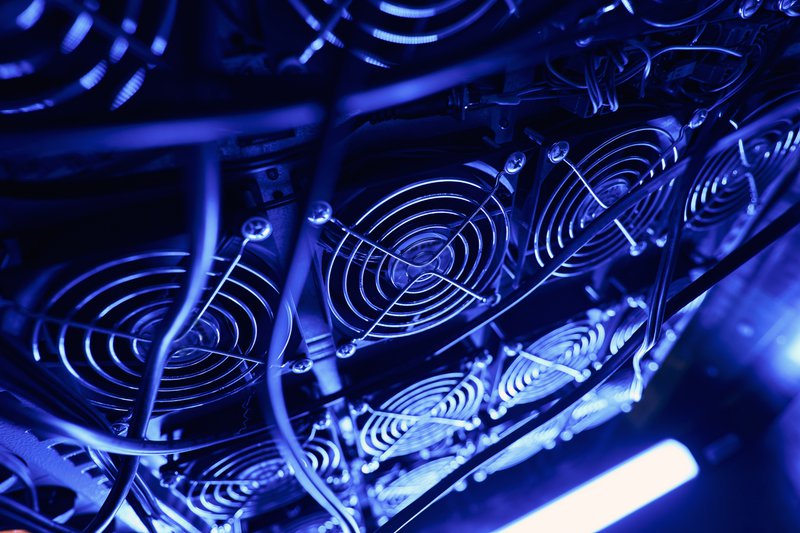
Early Air Cooling Techniques
When people started assembling servers, they needed a way to remove the resulting concentrations of heat from the data centers and closets. An obvious solution was to pump cold air into the room; similar to cooling the room with air conditioners. It’s not particularly efficient, but back then efficiency wasn’t a huge concern. The industry was still in its infancy, and environmental worries hadn’t penetrated board rooms.
A few older and smaller facilities still use basic air cooling, although most data centers are striving to make at least some improvements to efficiency. Also, the inefficiency of air cooling means it can only handle low-density racks. More powerful new processors and high-performance applications simply generate too much heat for air to dissipate.
Hot and Cold Aisles
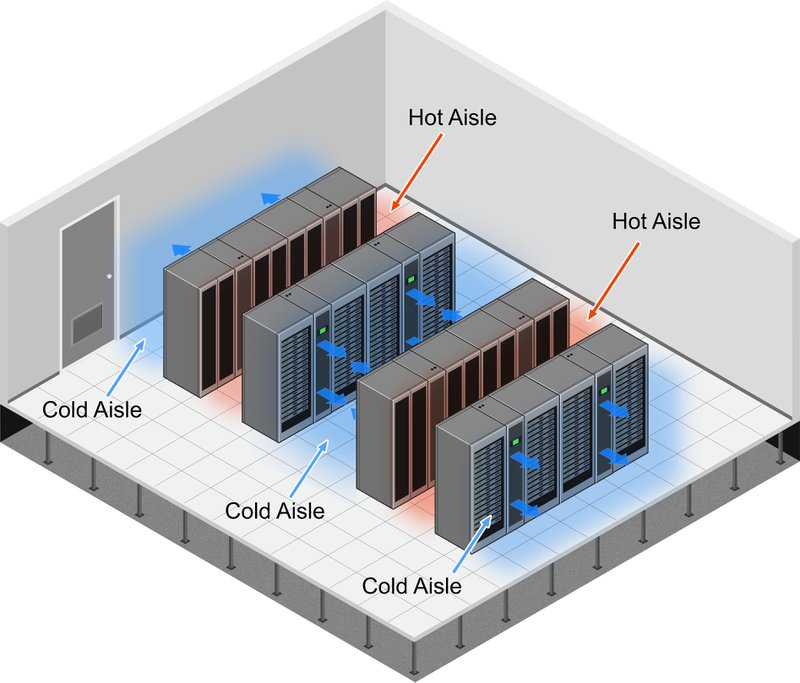
As society continues using more data, data centers are growing ever larger. To handle increasing server densities, data centers have started to use heat containment strategies with separate aisles for hot and cold air; focusing cooling efforts on one side of the racks and channeling removed heat out of the other side.
Hot and cold aisles work more efficiently than cooling the whole room; the cold air goes where it can do the most good, so you waste less. This increases the performance of the data center’s cooling system, but it remains a far cry from modern liquid immersion cooling.
Temperature and Humidity Control
Two of the most important variables for performance and safety in a data center are temperature and humidity. Data centers have increasingly learned to control these variables to achieve desired goals. For example, keeping the temperature too high risks slow or damaged processors, but keeping the temperature too low costs extra and causes environmental problems. It also puts your electrical equipment at risk.
Too much or too little moisture also causes problems for servers, so data centers using air cooling have to manage the humidity to protect their electronics. However, those running Green Revolution Cooling’s (GRC) liquid immersion cooling system don’t have to worry about temperature and humidity control; the coolant automatically protects servers.
Liquid Immersion Cooling Techniques
Liquid immersion cooling is a crucial advancement in data center cooling. It didn’t happen overnight though. Several related innovations and different immersion cooling techniques were devised. Immersion cooling innovations that bring the liquid closer to the IT equipment result in increased efficiency and a higher cooling capacity.
The liquid immersion technology itself goes back to before some other cooling techniques, but for uses in industrial applications and supercomputing applications. Data centers mainly used air cooling, then experimented with various immersion cooling techniques.
Alternative cooling types include a rear door heat exchanger (RDHx), in which radiator-like doors are attached to the server rack to transfer heat to a liquid. Similarly, “touch,” “direct-to-chip,” or “liquid-to-chip” cold plate cooling connects a metal plate to the processor, and liquid carries the heat away. However, neither of these alternatives is as direct or effective as immersing the entire store of servers in a liquid coolant.
All of these cooling techniques involving liquid have more capacity than air cooling. For high-performance computing projects, liquid has already become a critical technique because air doesn’t cool well enough. With processors becoming more power-hungry, immersion cooling is now becoming more important for data centers in general.
Single-Phase Liquid Immersion Cooling
The previous stages in the evolution of data center cooling techniques have brought us to the newest solution. Factoring in upfront and operating costs, compute density, environmental impact, reliability, and other key concerns of data center operators, GRC’s single-phase liquid immersion cooling offers the best all-around package for data centers.
There are two approaches to liquid immersion cooling that seem similar at first glance: single-phase and two-phase. While these both rank among the most efficient cooling techniques on the market, there are important differences. Single-phase is a much simpler technology GRC has devised into a practical system for real data centers. By contrast, two-phase has numerous technical and environmental challenges that make it more of a theoretical development.
Also, the two-phase coolant can be difficult to acquire, while GRC makes single-phase coolant available anywhere on the planet. Single-phase cooling is also significantly less expensive than two-phase. So, if you want the most effective, cost efficient cooling solution available today for your data center, single-phase liquid immersion cooling is your answer.
Use the Latest Data Center Cooling with GRC
Data center cooling has come a long way from the old days of simply blowing cold air into the room. For example, we’ve seen the division into hot and cold aisles, temperature and humidity controls, and other refinements. More recently, a series of liquid cooling techniques have been developed, resulting in today’s leading technology: single-phase liquid immersion.
Single-phase immersion offers data centers the unbeatable combination of extreme efficiency and low cost. Its other benefits include environmental sustainability, efficient use of space, flexibility to install anywhere, and silent operation.
Find out how GRC’s liquid immersion cooling can improve your data center’s performance. Data centers of all sizes have already installed immersion tanks for cloud, enterprise, and many other use cases. There’s no need to wait—talk to us about your cooling goals today.
There are right ways and wrong ways to handle your data center’s cooling system, and knowing the difference is critical. Mishandling your cooling system doesn’t just cost you money; it also harms the environment and risks destroying IT assets. But by investing in smart data cooling systems such as liquid immersion, your data center will be much easier to manage.
Mishandling often occurs due to lack of awareness of the latest available technology. Older cooling technologies are exceedingly inefficient, but your data center manager may not know advanced cooling technology exists or that it’s easy to convert your old system to a new one. Knowledge can go a long way in steering data centers toward more responsible cooling.
Let’s look at the true costs of mishandling your data center cooling and explore how a liquid immersion cooling system will save you money and resources.

Data Center Cooling Done Wrong
Data center cooling can be quite complex, and there is a wide range of ways to handle this critical process. New methods have been developed over the decades in response to the growing need to dissipate server heat. Typically, each generation of cooling systems is more efficient than the last.
If you’re using an outdated cooling system, you’re running an inefficient technology that wastes electricity and money, burns through natural resources, and exposes IT equipment to hot spots and overheating. In fact, most data center inefficiency is caused by old cooling systems.
A prime example of data center cooling done wrong is attempting to run high-density computation in a conventional air-cooled environment. The denser installation of processors emits more heat than an air conditioner can handle. This is asking for trouble. Servers will eventually overheat, electronics could melt, and you may have to shut down your entire data center.
It doesn’t take a serious mistake for data center cooling to turn dangerous, but mistakes can worsen the situation. For instance, air cooling requires complex air flow calculations and containment strategies. If these are incorrect, you’ll have problems with overheating.
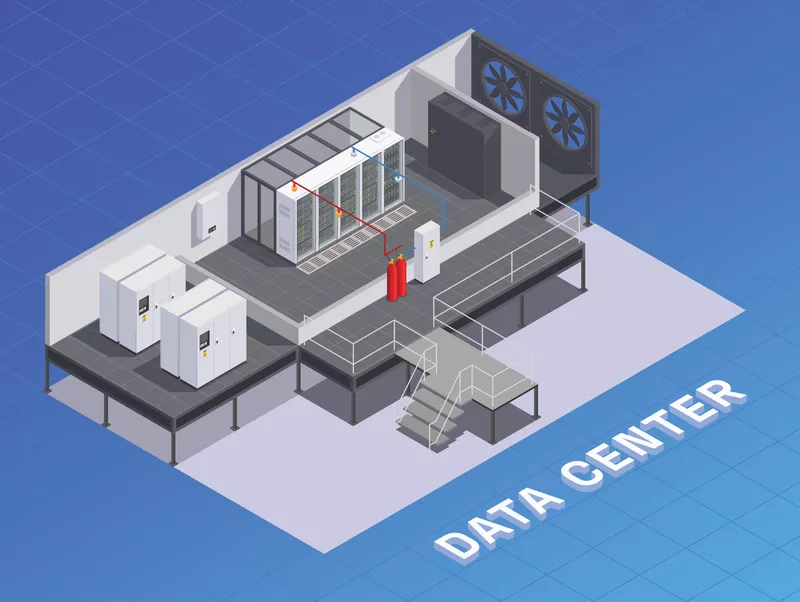
Bad Cooling Costs You and the Environment
Aside from the IT equipment, cooling systems rank among the biggest resource drains in a data center. Air cooling may be a legacy system, but its need for refrigeration and a large power infrastructure make it more costly and complex.
The electricity you buy to power the cooling system is an additional expense and emits carbon into the atmosphere. Burning electricity to run a poorly configured cooling system runs up operational expenses and adversely affects the environment. In fact, some large data centers use more environmental resources than entire countries. As much as half of the electricity used in data centers powers inefficient air cooling systems.
Endangers Your Assets
One of the more insidious problems with mishandling your data center’s cooling system is that you expose expensive IT assets to possible damage. For example, outdated cooling produces uneven temperatures. Even if you set the data center to have a cool enough average temperature, some areas will exceed that.
Suppose you have a rack in a location that happens to get warmer than average. Processors may slow down or a fan may fail, and you could end up disabling thousands of dollars’ worth of IT equipment. Even worse, you may lose sensitive customer data, all because of a poor cooling solution.
Even when the damage is minor, overheating and uneven heating result in wear and tear on servers, cooling equipment, and electrical infrastructure. Humidity extremes are also a risk. As a result, you’ll have to spend more on maintenance and repairs.
Avoid these risks altogether by investing in an efficient cooling system like Green Revolution Cooling’s (GRC) liquid immersion technology. The entire cooling volume maintains a stable temperature with a range of only two degrees, and the immersion coolant protects IT equipment against humidity.
Results in Costly Overcooling
In an attempt to prevent hot spots, you may be tempted to cool the data center below what’s strictly necessary. Many data centers do this, which adds costs of its own. For one thing, this burns through more economic and environmental resources—you overuse resources to accommodate poor cooling.
You’ll also make the room unpleasantly cold for IT staff who work there. Plus, running air conditioners too hard produces unsafe noise levels and strains the electrical infrastructure. This is not a sustainable solution and should be seen as a warning that it’s time to look for a better cooling system.
By contrast, liquid immersion cooling from GRC protects your servers against hot spots without the need to overcool. The tanks effortlessly dissipate heat from even the highest-density racks. In addition, the cooling ability of liquid is more than a thousand times more powerful, making it the most sustainable approach.
Liquid Immersion Cooling Is the Right Way
Liquid immersion cooling is like jumping in the water on a hot day —this is how data center cooling is supposed to work. It efficiently handles any amount of server heat and reduces financial costs, environmental problems, and server damage.
No more costly overcooling in a failed attempt to compensate for uneven air cooling. Sidestep the unnecessary electrical infrastructure, raised floors, and other complications stemming from outdated air cooling. Instead, experience the silent compact grace of liquid immersion cooling as you operate a clean and efficient facility.
Control Cooling Costs with GRC
You’ve seen how mishandling your data center’s cooling system can cost money, harm the environment, and damage expensive IT equipment. You’ve also seen how efficient liquid immersion is the right way to cool a data center.
Now’s the time to upgrade to a system from GRC. Whether you’re building a new data center or retrofitting an existing facility, consider the massive savings available by using responsible clean cooling. It’s the smart way to address the direct and hidden costs of poorly done data center cooling.
GRC’s liquid immersion cooling is easy for technicians to use. And as the leading green cooling solution, it’s proven to reduce your total costs. Contact GRC now to learn how to make your data center more profitable and sustainable.
Excitement is building in the data center industry over several cooling technologies that promise to make facilities more sustainable. These solutions include single-phase and two-phase immersion cooling and direct-to-chip cooling. There are indications that single-phase immersion cooling is the best sustainable cooling solution, but what’s the truth?
We’ve looked at the data, and there are clear differences in terms of how each of these systems performs ecologically. While each has some potential contribution to make, single-phase immersion cooling delivers the most practical improvement in terms of sustainability.
This is great news, since single-phase immersion cooling also offers numerous other advantages to data center operators. For instance, the technology cuts operational costs substantially, and it also cuts capital expenditures if you’re building or expanding a data center.
More people in the industry are paying attention to sustainability, so now is an ideal time to consider the most sustainable cooling technology and how it can help you.

The Need for Sustainable Cooling
A few years ago, only the most forward-thinking data center operators made any significant efforts toward sustainability. In the last few years however, sustainable cooling has become one of the most pressing issues for the industry.
For example, customers are demanding more and more that the businesses they patronize deliver their products and services in a more sustainable manner. In addition, regulations are increasing, along with the public outcry for green data centers. Board rooms have noticed and are moving sustainable cooling to the top of the agenda.
Sustainable cooling is no longer just an option for a few passionate data center operators; it’s an industry-wide need. All data centers must become sustainable, and cooling is one of the major areas in which this can be achieved.
The Contenders

Among the range of available data center cooling technologies, three are gaining attention for the potential to increase sustainability: single-phase immersion, two-phase immersion, and direct-to-chip. These offerings are stirring up excitement, but there’s also some misinformation out there.
The two types of immersion cooling work by submerging entire servers in a liquid coolant. In single-phase, the coolant remains liquid, while in two-phase the coolant also transitions to gas. Direct-to-chip works by pumping liquid coolant through a metal plate that connects to a processor.
Direct-to-Chip: Complex and Unsustainable
Also called cold plate cooling, direct-to-chip cooling brings the liquid to the processing units, such as the central processing unit (CPU). This doesn’t cool the other parts of the IT hardware, as immersion cooling does, so you also need to blow air over the hardware. And, you need a complex and unsustainable infrastructure to support that air cooling.
Direct-to-chip performs somewhat better than conventional air cooling, thanks to the liquid-fed cold plate. However, the liquid doesn’t reach as much of the equipment as immersion cooling, so it’s not as compelling a choice for sustainability. Also, direct-to-chip suffers from some serious drawbacks.
First, the technology is quite complex, and it becomes much more complex as you increase your use. This adds many points of potential failure and makes it impractical for large deployments. In addition, the fluids used for direct-to-chip may not be the most ecological, and they can destroy IT hardware.
While there are specific situations in which direct-to-chip cooling is useful, it’s too complex and inefficient to serve as the sustainable cooling solution.
Two-Phase Immersion: Expensive and Inaccessible
Two-phase immersion has also drawn some interest from large tech companies. Servers are placed in an engineered fluorocarbon liquid, and the server heat causes this liquid to boil into a gas. In theory, this system is extremely efficient, and a few data centers have started experimenting with it. However, these remain scattered experiments rather than large deployments.
Two-phase immersion seems destined to remain an interesting experiment rather than a practical solution. The systems are quite expensive, and the fluids tend to be unsafe for the environment, human health, and IT equipment. It’s also difficult to acquire and maintain fluid stocks.
Recently, this difficulty became even worse. The company 3M produces the main fluid for two-phase immersion cooling called Novec. Pollution recently closed 3M’s factory in Belgium, leading to a shortage of Novec fluid and adversely affecting the data centers depending on it. The United States and European Union are working to restrict production.
Additionally, when you perform maintenance on servers in two-phase tanks, you lose some of the expensive fluid to evaporation. When you account for the costs of replacement, two-phase immersion is no longer an energy-saving technique.
While two-phase immersion shows some theoretical promise, it’s too costly and impractical to serve as a sustainable solution.
Single-Phase Immersion: The Winner
Where direct-to-chip and two-phase immersion fall short, single-phase immersion cooling shines. This technology is simple and efficient, environmentally friendly, and already installed in large deployments globally.
Green Revolution Cooling’s (GRC) single-phase immersion tanks feature an extremely simple design that produces reliable cooling. This isn’t just some theory, it’s the economics of future-proof data center cooling. The technology is widely available and even more affordable than old air cooling. You can install it right now and cut your carbon emissions, water waste, and total cost of ownership.
The data center cooling industry sees single-phase immersion cooling as the best sustainable solution. It conserves resources and protects your IT equipment to minimize e-waste. In addition, the excess server heat is transferred into a liquid so you can reuse it to heat building air and water, among other applications.
This remarkable technology also supports high-density computing, making it ideal for the most demanding use cases. Even regular data centers can benefit from the ecological advantages. For data centers of any size in any location, single-phase immersion cooling dominates in terms of sustainability.
Use the Best Cooling Solution with GRC
Single-phase liquid immersion is the best sustainable cooling system you can buy. It’s available now and will cut your cooling costs in half while protecting the environment. This is the answer the data center industry has been waiting for.
While there’s been talk of several other technologies for sustainable cooling, such as direct-to-chip and two-phase immersion, those aren’t ready for prime time. Direct-to-chip is complex and of lesser ecological value. Two-phase immersion is expensive and impractical.
When one examines the data, single-phase liquid immersion emerges as the leading green cooling technology. It drastically cuts electricity use, carbon emissions, water waste, e-waste, and a range of other problems. The choice is clear. Talk with GRC about your sustainable data center plans today.
Data center cooling systems are key components in building and operating facilities. Too often they wind up facing delays, and a slowdown with the cooling system can set back the entire data center. The complexity of conventional cooling systems explains many of these delays, but these can now be eliminated through much-simpler liquid immersion technology.
Data center construction has been doing quite well as the economy turns more and more to the Internet. However, supply chain and infrastructure design issues threaten to disrupt the rate of building. In some cases, data centers can’t acquire components they need for conventional air cooling.
Green Revolution Cooling’s (GRC) extremely simple and powerful liquid immersion cooling system drastically redefines the process. Instead of months or years of delays, you simply deploy the production-ready tanks and install servers in the racks. Immersion is much faster and easier. It also has a lower total cost and can help you avoid delay-causing problems like those discussed below.

Shortage in Parts to Build the Cooling System
Building a data center complete with a cooling system requires numerous parts, but these aren’t always available given constraints on shipping, labor, and raw materials. If your data center doesn’t have certain parts necessary to reach the next stage, it will hold up the whole facility.
Air cooling systems and their extensive support infrastructure add many components to your process, which means more opportunities for slow-downs. You need generators, battery backups, and structural modifications to support air cooling. These add many months of delays, especially at times like the present when we’re facing supply chain disruptions. And if a wrong part arrives, you have to add another long delay.
The same problems delaying new construction are also delaying expansions. Increased prices and shortages are occurring globally, not just in one area. Capacity planning is a challenge even without these severe supply chain disruptions, so anything you can do to speed up the cooling system helps.
If you can plan early and stock some parts, you can alleviate some of these delays. But that’s not enough since there are still some cooling system parts that can take many long months to arrive. With the data center industry’s focus on speed to market, you can’t afford such delays. In fact, some companies have started buying equipment before committing to a project (adding on storage expenses), but even this may not be enough.
Liquid immersion cooling is ready now. GRC’s tanks have few parts and are quickly available. Furthermore, you don’t need the same complex infrastructure such as generators, so you won’t run into the same parts shortages that hold up other data center builds.
Dependency on Third-Party Suppliers

Modern data centers incorporate equipment from many vendors, including third-party suppliers. A failure at any of these points can derail the building process. Plus, the more complex your design, the more serious the risk of delays. Practically every raw material that goes into data centers is subject to supply problems, including electronics and generators. If you’re building with conventional air cooling, there’s a rough road ahead.
On the other hand, GRC’s liquid immersion cooling system is an elegant solution that reduces the number of third-party suppliers. The immersion tanks are compact, with few inner components and few external dependencies. You’re essentially buying an efficient solution that cuts out many of the supply chain headaches now plaguing the industry.
One of the most common problems causing delays is the integration of complex systems. Traditional air cooling systems and their dependencies multiply the complexity during both construction and operations. The simpler you can make your data center cooling design and build, the better. Liquid immersion is the easiest cooling system to integrate.
Conventional Cooling Is Too Complex to Design and Install
Air cooling is one of the most complex aspects of a data center. For instance, air flows must be modeled carefully to prevent uneven cooling and overheated servers. Elaborate containment strategies are needed to keep cold air and hot air from mixing together. And you need to install raised floors, UPS and generators, air handlers, and other expensive equipment.
The complications of air cooling make capacity planning a major problem, and installing such a complex system takes much longer than other systems. The complexity of the equipment means human error is more likely to occur, which may necessitate even more delays.
By contrast, GRC’s liquid immersion cooling system is exceedingly simple. You can easily install it anywhere fast. For example, you can put the racks on unimproved concrete, or you can install a self-contained shipping container with ultra-efficient immersion cooling outdoors. These can be built and delivered within eight weeks, then installed in mere days. The ease, speed, and flexibility are in a different league than air cooling.
Free yourself from the brutal complexity of air cooling. With liquid immersion cooling, you don’t need massive gray space infrastructure and excessive planning. It’s much faster, from the initial install to any capacity you want to add.
Cool Down Ahead of Schedule With GRC
The data center industry is now facing the combined pressures of having to build out capacity to meet customer demand while facing global supply chain and labor woes. Those stuck with legacy air cooling solutions have to contend with delays lasting months or years. However, more adept operators who transition to liquid immersion cooling can cut those delays and get on with business.
With liquid immersion cooling, you can deploy a ready-to-use solution in just weeks. Gone are the complications from part shortages, third-party suppliers, and convoluted data center modifications for conventional air cooling.
GRC’s liquid immersion cooling system is immensely simpler than other data center cooling methods, which makes it that much easier to keep your facility construction simple and on time. You’ll also save money and use the most environmentally sustainable cooling solution on the market. Ready to start? Talk with GRC today.
Liquid immersion cooling has earned a reputation as the top data center cooling technology, and for a good reason—it’s more effective than air cooling for high-speed computing and other activities. And now, new liquid immersion technology has made liquid immersion cooling the winning choice for practically any data center cooling needs.
Liquid immersion cooling offers particular advantages. For instance, the liquid coolant protects servers in edge data centers, and the high cooling capacity is ideal for blockchain computing, artificial intelligence (AI), and the Internet of things (IoT). Cloud hosts and hyperscalers are among those most eager to use immersion cooling technology.
The main benefits of immersion cooling include higher capacity, lower cost, and lighter impact on the environment. Additional advantages are the tech’s silent operation and protection against debris, oxidation, and other threats to IT assets. The server area also remains at a more comfortable temperature, and liquid immersion is much simpler to deploy in indoor and outdoor spaces.
Still hesitant about immersion cooling? Let’s look at the different types of cooling methods and how liquid immersion cooling and air cooling compare.
Types of Cooling
Data center cooling comes in several varieties. The two main categories are air cooling and liquid immersion cooling, based on which material they use as a coolant. This is a bit of an oversimplification, since some types of cooling use both air and liquid. However, as a generalization, there are older air cooling solutions and newer liquid cooling solutions.
Among the specific air cooling techniques is the rear door heat exchanger (RDHx), which uses a door on the rack to pass server heat from air into a liquid. There’s also cold plate (or direct-to-chip), which runs piping into a metal surface against the processors to transfer the heat into a liquid.
More recently, we’ve seen the development of two types of liquid immersion cooling: two-phase and single-phase. These systems lower the entire servers into a liquid without any intermediary material. In a two-phase immersion cooling system, the liquid coolant boils off to remove heat. In the single-phase immersion cooling system, the liquid coolant is pumped to where it can release the heat.
Each method has its purpose, but they differ considerably in performance. Therefore, it’s important to know how to decide which type of cooling to use for your data center.
How to Choose a Cooling Solution
To choose a cooling solution that will deliver consistent long-term satisfaction, it’s important to consider several metrics relevant to performance. Some of the main determinants include how quickly and densely the solution can cool, how much it costs, and its effects on the environment. There are also safety issues and whether the solution is practical to deploy.
The costs involved can be divided into capital expenses and operating expenses. Systems may cost more upfront or in the long-term, both of which are important considerations. There are also indirect costs to consider. For example, a cooling system may require extensive infrastructure additions in the data center.
Another issue affecting cooling systems is the degree to which they can withstand a harsh environment. This matters especially for edge deployments, but even regular data centers can be exposed to adverse conditions. Some cooling systems are quite sensitive, while others offer protection against the elements.
You can consider any number of other variables that may be relevant to your decision. For instance, cooling systems differ substantially in how much noise they make, how easy it is to service hardware, and the availability of systems and parts. Ultimately, you must decide what matters for your data center.
Liquid Can Cool Far More Than Air
Liquid is a far more efficient coolant than air, carrying away well over a thousand times as much heat. Because immersion cooling fully encompasses servers with liquid coolant, it ranks as the most powerful cooling solution.
With increasingly hotter GPUs and CPUs, air cooling can no longer keep pace. Green Revolution Cooling’s (GRC) liquid immersion cooling system can handle far more than a hundred kilowatts per rack. It also cools more densely so you use less precious floor space.
Liquid’s superior cooling ability has already made it a necessity for high-performance computing. With processors becoming more powerful, liquid is the right choice for broader applications. It makes sense to use immersion cooling for any size data center, and GRC offers systems for many different needs.
Immersion Cooling Costs Less Than Air Cooling
People often think of immersion cooling as a premium technique that must cost more. With GRC’s innovative technology, however, data centers are actually saving money by using liquid instead of air. In fact, it cuts both capital and operating expenses by half.
GRC’s immersion systems run so efficiently that you spend less on electricity. The IT parts are protected from corrosion and wear, so you also save on maintenance and replacement costs. Finally, servers run without fans so you save even more on electricity and wear-induced equipment costs.
The design is so simple and has so few dependencies that it eliminates many of the challenges of data center construction. That not only saves money, but it also cuts out major delays during builds.
Liquid Immersion Cooling Is More Environmentally Friendly
Sustainability is one of the big advantages of immersion cooling. In recent years, data centers have been taking flak for their thoughtless waste of resources. Liquid immersion cooling is now seen as one of the key approaches that can fix the data center climate catastrophe.
Traditional air cooling systems consume an excess of electricity and water, producing carbon emissions. By contrast, GRC’s liquid immersion cooling system eliminates most cooling electricity and carbon emissions and all water waste.
Another environmental advantage of liquid immersion cooling stems from the liquid’s ability to transport heat. As a result, you can recycle waste heat, selling it or using it yourself instead of letting it add to the global warming problem.
Use the Better Cooling System With GRC
Liquid immersion cooling removes more server heat for less money and is far better for the environment. This combination of advantages makes immersion the better cooling system, and it’s now available for data centers globally.
Join the green revolution and deploy the smartest cooling technology. It will improve your budget and power envelope, and it’s one of the best steps you can take toward your environmental sustainability goals. Moreover, your data center employees will have a much better work environment, since liquid immersion cools silently and uses only a small amount of floor space. Contact GRC and start enjoying the advantages of the better cooling solution today.
Electronic waste, commonly known as e-waste, is quickly growing into an ecological catastrophe of startling proportions. E-waste is the improper disposal of any products that use electricity. That includes servers, storage devices, networking equipment, battery backups, and other hardware you’ll find in data centers.
When these devices are thrown out instead of recycled or reused, they end up in incinerators or landfills. Electronics notoriously contain some of the highest concentrations of toxic materials. These seep into the ground, water, food supply, and, ultimately, people’s bodies.
Electronics have become such an integral part of society that we’re not about to eradicate the e-waste problem entirely. Nonetheless, if we’re smart about it, we can at least take steps to substantially reduce e-waste and improve the health of people and the planet.
The E-Waste Problem

The e-waste problem happens through the accumulation of many small bad decisions. It may seem innocuous enough to throw away that one broken part, but multiply this by millions of data centers, and suddenly we have a global emergency on our hands.
For instance, more than 50 million tons of e-waste were produced last year. In fact, a single plant processes millions of pounds of discarded electronics each month. E-waste is the fastest-growing solid waste stream on the planet.
One alarming e-waste issue is that throwing away servers exposes sensitive data. Criminals in countries that receive e-waste have found important information by snooping through discarded storage devices from wealthier countries.
Part of the problem is the ongoing drive to have the latest features. Data centers frequently purchase new equipment and discard old equipment, even when the old equipment still works. Some have accused manufacturers of pushing rapid obsolescence to speed up sales. Even without this, however, there’s pressure in the highly competitive tech industry to upgrade to the newest devices with faster performance and more features.
The United Nations has estimated that less than a quarter of U.S. electronics get recycled. Sadly, most data centers don’t have recycling programs, which contributes to the problem. In some states, it’s illegal to throw electronics in the garbage, although other states do allow this. Of course, people don’t always adhere to these laws.
Some geographical areas have laws requiring manufacturers to run recycling programs, but, again, this doesn’t apply everywhere. However, a few companies are making voluntary efforts to prevent their products from becoming e-waste.
Ways to Minimize E-Waste
The good news is we’re not helpless in the fight against e-waste. There are several easy actions anyone can take right now. If we all do our part, we can minimize e-waste and make our data centers and our planet cleaner.
One way you can decrease e-waste is by recycling old equipment instead of throwing it out. If you’re unsure how to recycle these items correctly, there are organizations that specialize in recycling electronics. Also, repurposing or reselling hardware will keep it out of e-waste streams.
In the long run, better product designs can minimize e-waste. While this isn’t an action with immediate payoff, you can consider it the first step toward future improvements. For example, some manufacturers are working to make their products safer, longer-lasting, and easier to repair or recycle. If you see any of these products, buying them will improve the situation.
One of the better ways you can minimize e-waste is to use environmentally sustainable cooling. Green Revolution Cooling’s (GRC) liquid immersion cooling system coats electronics in a protective fluid that extends their life. This reduces the amount of broken hardware that gets thrown out.
Furthermore, immersion cooling places far fewer demands on electrical infrastructure. You don’t need the same number of generators and battery backups, so you’re massively downsizing your use (and waste) of electrical components.
There are other environmental advantages to immersion cooling. Since it uses less electricity, there’s less pollution, fewer carbon emissions, and less water waste. All this complements the reduction in e-waste that you’ll see with liquid immersion—plus, you’ll cut your total costs in half.
Run a Green Data Center
Minimizing e-waste is just one part of broader efforts toward sustainable computing. The more steps you take to develop green data centers, the better off we all are. Customers will appreciate your efforts, and regulators may soon demand it.
Running a green data center gives you a competitive advantage. Plus, it’s the right thing to do. When you improve your power usage effectiveness (PUE), carbon usage effectiveness (CUE), and water usage effectiveness (WUE), you’re enhancing operational efficiency. It’s good for your bottom line and your reputation.
There are multiple approaches to running a green data center, and you can combine them to suit your unique situation. For instance, energy-efficient processors are a wise investment. It’s also valuable to find and responsibly eliminate old servers that are using electricity but not serving customers.
Of course, one of the easiest and most effective ways to run a green data center is to use GRC’s liquid immersion cooling system. Remember, this cuts e-waste, carbon emissions, and water use, all while costing less, so there’s really no excuse not to make the transition.
Cut the E-Waste With GRC
E-waste has become a massive problem for data centers and society. We all contribute to the problem if we dispose of electronics inappropriately, but we can all contribute to the solution by minimizing e-waste.
Maintaining parts carefully, recycling instead of trashing, and using the protective benefits of liquid immersion cooling can all go a long way toward keeping electronics from becoming e-waste. Each of these steps is manageable and can even be profitable.
Let’s join our efforts to run cleaner, greener data centers. A little bit of care now will prevent a lot of environmental problems later. It’s in everyone’s interest, especially those with data centers, and it can be as easy as upgrading to the coolest tech in town. Talk to GRC now about how we can make your data center green and reduce your e-waste.
As companies explore ways to be more environmentally friendly, they often look toward their power consumption and efficiency. Traditional data centers have decreased their energy demand in recent years. However, hyperscalers (large-scale facilities housing 5,000 servers or more) have nearly doubled their energy use. Converting these facilities into green data centers can help businesses decrease operating costs and increase building values.
There are more than 7.2 million data centers globally, and each one uses a significant amount of electricity to keep its equipment running and cool. Green data centers aim to deliver fast and reliable service at reasonable rates while using natural resources responsibly. To achieve this, sustainable data centers use a number of practices that reduce the hardships imposed on the environment.
From liquid immersion cooling to measuring power usage effectiveness, here are some best practices to consider when creating green data centers.

Find a Green Cooling Solution
Data centers rely on immense amounts of energy—nearly 10% of electricity globally—to run servers and keep equipment cool. However, generating electricity burns through natural resources and emits toxic byproducts into the environment. Demand for data is rapidly increasing amid concern for climate change, so it’s critical to find more efficient cooling technology.
Traditionally, conventional data centers have used chilled air to keep servers cool, and some managers may be hesitant to change. But for green data centers to use less electricity without negatively impacting customers, you need to find a green cooling solution. And as some of the largest data centers have discovered, moving to liquid immersion cooling delivers the results they want.
This is a proven system that can make your facility more eco-friendly. A cooling solution provider such as GRC can help you find environmentally responsible systems. For instance, its green cooling technology is just the solution data centers are looking for.
Should You Measure PUE Only?
An important measure of a data center’s efficiency is its power usage effectiveness (PUE). This industry metric tells you how efficiently the data center uses energy. It is determined by dividing the total amount of electricity going into a data center by the amount of power being used by the IT equipment alone. The closer the number is to 1, the more efficient the data center.
PUE is one way to tell whether your environmental actions are working. For example, if you upgrade from air cooling to GRC’s liquid immersion, you can improve your PUE from 1.35 to an impeccable 1.02. Immersion cooling is more energy efficient and uses a fraction of the electricity required for air cooling.
However, as important as the PUE is, it’s not enough to give you a complete picture of how sustainable the data center is. You should also consider water usage effectiveness (WUE) and carbon usage effectiveness (CUE). In addition, not all servers run productive workloads or shut off when their jobs are done, which wastes energy.
Liquid immersion also improves your CUE and WUE because it requires less carbon and little-to-no water. By expanding your metrics beyond PUE only, you’ll get a more comprehensive picture of how well your green efforts are paying off.
Don’t Fall into “Greenwashing”
One of the most common pitfalls in sustainability is called greenwashing, and it applies to all industries. Greenwashing is the practice of dishonestly presenting a business as adhering to environmental standards when it does not.
Going green can be a significant investment. In greenwashing, an organization tells people it’s taking environmental measures without actually doing it—so they look good without spending any money. This, of course, is not a best practice in creating green data centers. However, you can take valid environmental measures that cost less than the alternative.
For instance, when you go from air cooling to liquid immersion cooling, you’ll see substantial reductions in capital and operational expenses. Immersion cooling uses less electricity, so your power bill goes down. In addition, immersion cooling works in small spaces, so you’ll also save money on your facility costs.
Finally, governments and utility companies recognize the environmental superiority of liquid immersion cooling, so data centers using this tech can receive grants.
Greenwashing is unfair and unnecessary, and most people can see through it. Instead of deceiving consumers to cut costs, use genuinely green innovations that reduce resource use. GRC offers a line of highly efficient immersion cooling solutions that can make your data center green and save you money the honest way.
Aim to Achieve Sustainability Benchmarks and Certifications
Now that energy efficiency has become an important objective for data center operators, you should aim to meet the criteria for environmental certifications. These ensure your facility meets or exceeds acceptable levels of sustainability while assuring customers of your bona fides.
Several certifications now attest to data centers’ environmental practices. A well-known example is the Leadership in Energy and Environmental Design (LEED) certification. This globally relevant framework verifies the efficiency of buildings. It covers many categories of structure, including the design and operation of data centers. Your building’s entire life cycle should address the measured elements of sustainability, such as the use of efficient cooling systems and performance monitoring through analytics.
There are many country-specific certifications like BREEAM in the United Kingdom or CASBEE in Japan that, like LEED, measure the sustainability of the whole building. By contrast, some certifications focus exclusively on specific aspects like the water or electricity of a building. Which certification you use depends on what you want to measure and improve.
Certifications are excellent trust badges to prove your sustainability to customers. In addition to certifications, there are benchmarking services that conduct measurements to analyze performance. This can provide useful information for investors or for internal purposes. You can also test whether your facility is ready for the efficiency-oriented Open Compute Project and prepare to use immersion cooling.
Take Your Step Toward Going Green With GRC
Environmental sustainability is an important value for the data center industry to embrace. There are several practical methods to make your site greener, most of which involve improvements to energy efficiency. Cooling is the big expendable draw on data center electricity, so it’s the natural place to start your journey toward sustainability.
GRC’s liquid immersion cooling technology cuts electricity use to a fraction of what conventional data centers need. Immersion also improves other important measures of sustainability, including the amount of carbon and water necessary for operations. As your need for electricity, carbon, and water go down, so do your expenses.
There’s no room for greenwashing in the data center industry, especially when you can rely on immersion cooling to minimize costs, emissions, and waste. Contact GRC today to learn more about creating your own green data center.
As technology continues to evolve, data centers are growing in importance. Innovations build on each other and require ever-increasing computing capacity. In addition, the Internet of Things (IoT) and cloud computing have pushed the industry beyond the technical constraints of conventional data centers.
Today, data centers can host high-density servers with minimal site requirements and costs thanks to innovative cooling technology. The newest advancement is called liquid immersion cooling and it offers a generational leap over preceding systems.
Let’s look at how data centers have changed over the years, what the future might hold, and how your business can stay ahead.
Early Beginnings (1940s-1960s)
Computing as we know it started with the military. Back in 1946, the United States Army built the Electronic Numerical Integrator and Computer (ENIAC) to assist with artillery firing and nuclear weapon design. It was the first general-purpose electronic computer and opened the door to the ever-increasing complexity that has characterized IT in the ensuing decades.
While ENIAC filled an entire room and needed a massive air conditioner just to perform a few thousand calculations per second, today you can easily cool far more computers in a GRC ICEraQ. We’ve come a long way indeed.
By the 1950s, transistors had replaced vacuum tubes, increasing the hardware’s reliability while decreasing size and power consumption. However, it wasn’t until the 1960s that computers became commercially viable.
Mainframes from IBM spread throughout the industry as applications and programming languages made these devices more useful. IBM mainframes not only remain in use today, they also influenced the other systems that would eventually fill data centers.
The First Microprocessor and Other Firsts (1970s)
In 1971, Intel released the 4004; the first commercial microprocessor. Boasting more and faster transistors than preceding tech, it combined multiple computational functions on a single integrated chip. The 4004 worked as a reusable module, which engineers could incorporate into a range of electronics.
Today many servers in data centers use Intel processors with hundreds of millions of transistors. All those transistors emit heat that needs to be cooled, driving the development of better cooling solutions like GRC’s liquid immersion.
Also during this time, the Xerox Alto pioneered the first graphical user interface for desktop computers, making the machines more user-friendly. This research computer included a display screen and networking and set the direction for how regular users would come to depend on computers. Among other firsts, the Alto gave us visual tools for word processing, email, and graphics.
The earliest common networking technology, ARCnet, has connected computers since the late seventies. The forerunner of the Internet, this system worked with devices from different vendors to multiply processing power. The culmination of early networking and computing inventions would pave the way for data centers to grow into the workhorses they are today.
The First PC, Dot-Com Revolution, and More (1980s-1990s)
The personal computers of the 1980s and ‘90s overtook the large computers of previous decades. Information technology went mainstream; even more so when the Internet took off with the dot-com boom. Ever-faster connectivity drove the development of massive data centers to service the now-plentiful computer users.
Enterprises built their own server rooms and facilities, in some cases housing thousands of servers. In addition, businesses sprang up to operate data centers for public clients. However, the increasing reliance on data centers also raised the need for server cooling. Air cooling sufficed during this time, although data centers would later switch to liquid cooling—especially for high-performance computing (HPC).
Several other tools contributed to the popularization of data. For example, virtualization technology enabled each machine to serve more customers and increased compatibility among different operating systems. As a result, a single physical server could host multiple software environments, making it easier to manage applications.
Further Innovations (2000s)

In the first decade of the new millennium, features were developed to support more adaptable servers for the data center. For instance, Amazon Web Services started offering cloud storage services customers could use on demand. This marked the start of a transition from dedicated enterprise hosting to larger shared data centers, with both approaches now coexisting.
Virtualization technologies also advanced, assisting in the transition to the cloud. It became common to run virtual machines on cloud servers to which customers would connect, increasing performance and cutting costs. Database-backed apps became widespread, and mobile apps increasingly connected to cloud data centers.
A useful innovation from this period is the modular data center: a self-contained data center you can deploy anywhere. Modular units are efficient and convenient, and this approach remains valuable. For example, GRC’s ICEtank puts leading-edge liquid immersion cooling in a shipping container that companies can use anywhere.
The Cloud Revolution (2010s)
The cloud grew even bigger over the last decade, with many organizations moving most or all of their data and applications into the cloud. Hyperscalers like Google spent billions on data centers. And with more people working remotely, the trend continues.
A landmark in the move to the cloud is the Open Compute Project. This consortium brings together many of the top companies in technology to produce new data center designs. Members include HP, Dell, IBM, Intel, Google, Meta, Cisco, and Seagate, among others. Projects share efficient designs for servers, storage, and racks.
One key focus of the Open Compute Project is to make data center cooling more efficient. The most effective technique is liquid immersion cooling, which far outperforms the alternatives. As a result, data centers are more profitable and environmentally friendly. With the cloud taking on a larger role in society, these are necessary improvements.
What the Future Holds
Data centers continue to evolve, and we can expect to see more and bigger facilities that adapt to how data is used. For example, many data centers will continue to shift from an ownership-based model to one where users rent the resources they need.
This everything-as-a-service approach results in less waste and more productivity. The automatic allocation of resources keeps equipment working closer to its full capacity. It also becomes easier to use IT infrastructure securely. And since resources are carefully managed the entire data center, from the processors and storage to the power and cooling, is more sustainable.
Finally, we’ll see data centers of the future using supremely efficient green cooling technologies. Not only do they cost less and run quietly, these powerful systems will give data centers the capacity to run 5G, artificial intelligence (AI), IoT, and other applications people choose. The industry is already moving to cooling solutions like liquid immersion, and we expect to see the revolution well underway in the coming years.
Find the Right Data Center Solution for You With GRC
The future of data center cooling is already here: GRC’s innovative liquid immersion. It has lower upfront and operating costs, it’s far better for the environment, and it supports practically unlimited compute density. With immersion cooling in place, you’ll also eliminate many of the unnecessary carbon emissions produced by conventional air cooling.
Just as computer technology has improved over the years to become faster, data center cooling has improved to become more efficient. The industry is moving toward data centers that use less electricity to produce faster computations. GRC’s immersion cooling helps attain these goals by letting your data center capture and reuse server heat—another technological feat.
The future will ask more of technology at every level, and data centers will need to keep adapting to meet customer demands. Companies that want to stay ahead of the game can save money (and the environment) by deploying GRC’s next-gen liquid immersion cooling now. Contact us to learn more.
Environmental regulations are becoming more common and more restrictive for the data center industry. For narrow-sighted, business-as-usual centers, these regulations spell trouble. But for forward-thinking leaders, they present vast opportunities to advance technology—while protecting the planet.
As global internet usage has shattered countless records in recent years, the data center industry has grown tremendously. As a result, its increased environmental impact is being met with more regulations. Believe it or not, data centers already account for 2% of the world’s electricity usage—and that number is forecasted to reach 13% in the next 10 years. To put that in perspective, data centers already draw the equivalent energy of 33 nuclear power plants. And much of that energy is wasted by inefficient air cooling systems.
Since conventional data center cooling largely relies on fossil fuels, it’s an excellent place to start transitioning to a greener tomorrow. Incentivized by new environmental regulations, data centers are increasingly turning to liquid immersion cooling. GRC’s immersion cooling can eliminate most cooling energy use and emissions—and it can do it for a fraction of the price of traditional cooling methods.
Environmental Regulations Affecting Data Centers
We have environmental codes and regulations in place for good reason. It’s important to adhere to these rules; they are far from empty threats. Noncompliance fines can cost companies hundreds of thousands of dollars and in some cases, management can even bear personal responsibility. Not to mention, it’s also bad press for a brand to be associated with environmental violations.
Many of these regulations pertain to hazardous chemicals and electrical systems, like generators and battery backups. As it stands, most data centers are using fuel, batteries, coolants, fire suppressants, and other substances that fall subject to these rules.
GRC’s liquid immersion cooling eliminates the need for the very generators and uninterruptible power supply (UPS) systems that environmental regulations target most. Best of all, this eco-friendly solution cools data centers without any risk of global warming, while reducing your data center’s exposure to sustainability issues as a whole.
Smart cooling technology is an invaluable resource for regulatory compliance no matter where you are. Of course, environmental regulations for data centers vary by country and state. Generally, however, they aim to decrease electricity use and the negative ecological byproducts of the data centers we rely on to power our lives.
In addition to governmental regulations, there’s also an expected degree of self-regulation in the industry. Environmental rules continue to develop in response to new information and political pressures. Data center operators need to rigorously monitor these regulations to maneuver their challenges and reap their benefits.
Benefits of Environmental Regulations
Environmental regulations aim to protect the environment from undue harm. Implementing rules—and holding those who break them accountable—can reduce toxic emissions, resource waste, and the many other negative byproducts of air-cooled data centers.
Take the Clean Air Act, for example. It imposes limits on emissions and requires maintenance and testing programs for electrical equipment. Relying on fewer electrical systems—say, with GRC’s liquid immersion cooling—can alleviate these challenges while protecting the environment. Furthermore, some governments and utility services even offer incentives to data centers that put the planet first. These incentives include grants to upgrade to GRC’s liquid immersion cooling. That’s right. You can get paid to slash carbon emissions.
Upgrading data centers with eco-friendly equipment is no longer a question of if, but how. Cue GRC’s ElectroSafe coolant. Believe it or not, it has literally zero global warming potential—making it the perfect solution for environmentally-conscious organizations.
Challenges of Environmental Regulations

While environmental regulations undeniably benefit humanity, they also greatly restrict data centers. These restrictions can be costly, as they force managers to rethink operations. Not to mention, power usage effectiveness (PUE) now needs to meet higher standards than ever. The number of global internet users grows with each passing day. Conducting business as usual, particularly that of conventional data center air cooling, is quickly becoming unfeasible. This is precisely why regulations are on track to push data centers towards more efficient systems like GRC’s liquid immersion cooling.
In some municipalities, environmental regulations require data centers to recycle server heat. This is difficult and costly to do with conventional air cooling. The opposite is true for liquid immersion cooling. This successfully recycled server heat can be used however you like.
As with regulations imposed on any industry, there is a notable learning curve and even more challenges involved. Fortunately, GRC’s liquid immersion cooling alleviates many of these challenges instantly. With our state-of-the-art cooling solution, you save real estate, operational costs, and the greater good.
Go Green With GRC
Environmental regulations will continue to affect data centers, both positively and negatively. It’s up to data center operators to take the appropriate actions to thrive. With the right technology, we can transform data centers into cleaner, quieter, and safer facilities for all.
Liquid immersion cooling offers the most environmentally friendly cooling solution on the market. This sustainable technology makes complying with legislation a breeze. It also costs less to install and operate. Your green data center can even win grants for minimizing electricity consumption and carbon emissions.
Are you ready to lean into the green future—and even benefit from it? Learn what GRC’s liquid immersion cooling can do for you today!