
AI applications are currently straining the already limited resources of data centers, where server racks are drawing load capacities of between 50 and 75 KW. Conversely, without AI, power requirements drop to 8–10 KW. But it’s not all bad news. Integrating AI into your data center can also help enhance its performance, cut energy consumption, and lessen the environmental impact. Add to this the latest patented immersion cooling technology, and your data center operations can expect further reductions in server energy requirements; cooling energy costs by up to 20% and 95%, respectively.
Read on to find out how AI, coupled with immersion cooling, can optimize data center efficiency and best practices in energy management.
How AI Enhances Efficiency and Sustainability in Data Centers
To successfully integrate AI into a data center, you’ll need accurate and high-quality data. Once integrated, AI can optimize power consumption in multiple ways, such as:
- Monitoring traffic patterns and executing data center usage accordingly to minimize power consumption
- Utilizing its predictive maintenance capabilities for timely service and component changes.
Benefits of Implementing AI in Data Centers
Given the amount and types of information that data centers receive, security is paramount. AI systems protect servers from unauthorized access both internal and external. In addition, they help guard against malware and physical breaches, thanks to smart alarm and intrusion detection systems.
With AI, you can power down unused servers and machines, which is a big step toward decarbonization and making the system more efficient. Moreover, this process helps regulate data center operations according to requirements. It’s able to power up more data racks during high demand, and vice versa.
However, despite these multiple benefits, there’s also a major drawback. Integrating AI at this level requires very high computing power. In fact, AI-enabled data center operations have 15 times greater than normal density requirements.
How Does the Growing Demand for AI Impact Data Center Costs?
Data centers are already under the microscope because of the excessive energy they consume. The integration of AI is further straining existing power resources, increasing operational costs. The conundrum here is that, while AI is meant to help data centers reduce power consumption, ultimately, it’s leading to an increase in the same.
A single AI model can take up thousands of kilowatt hours. Generative AI models like ChatGPT can consume 100 times more than that. This is because the graphics processing units for operationalizing AI models are built to draw more power. Additional power is required to operate the system as well as to run the cooling systems. This is where an immersion cooling data center is an innovative solution that can significantly decrease cooling costs.
CAPEX (capital expenditure) is another financial consideration influencing data center operations. Microsoft’s 2023 second quarter CAPEX is $10.7 billion, up from $7.8 in the previous quarter. A major chunk of that is spent on data centers. Then, we also have operational costs (OPEX), such as maintenance, electricity, and service equipment.
According to CBRE’s 2023 Investor Sentiment Survey Results, investments in data centers are slated to increase. The ROI in this industry is positive because the demand for data centers continues to rise. Further, McKinsey predicts that, in the US alone, data center demand will increase by 10% per annum.
How AI Improves Data Center Operations
The world generates tremendous volumes of data every second. As a result, data center operators have to scale their designs and power infrastructure. And this includes cooling systems to manage all the data.
Together, AI and machine learning can operate data centers more effectively. For example:
- AI solutions administer racks and toggle their usage according to the requirements in real-time.
- AI allocates computing power, network bandwidth, and storage based on processing demands.
- The predictive capabilities of AI can help with timely maintenance. Moreover, using historical data and workload patterns, data center operators can optimize capacity planning.
- Once ML and AI have learned normal operational behavior, they can report any sort of deviation; potentially preventing data breaches and hacks.
That said, AI-enabled data server racks do create significant amounts of heat and need quick de-escalation. In addition, data center operators will face compliance challenges as regulatory authorities continue to bring in new operational parameters.
How Data Centers Can Mitigate the Cost Increase Caused by AI
Cloud computing is a phenomenal technology, delivering innovative ways in which to interact and share information. However, these facilities come at a price to the data center operators that need to process huge volumes of information. And it’s here that AI can be used to optimize costs.
AI automatically controls data center equipment to ensure consumption efficiency and reduce power expenditure. Further, it manages the data center power balance, combating cooling and performance degradation by positioning workloads in just the right, most cost-effective energy zones. Moreover, AI-based security setups are able to analyze potential security threats and prevent malicious attacks.
Other ways to reduce the operational overhead of data centers include:
- Smart software design. Removing underused applications and bloatware will decrease power demand, leading to cost reduction.
- Better airflow management. With expert assistance, you can install a robust airflow system to ensure zero air leakage. This dedicates 100% airflow to cooling the servers.
- Immersion cooling. This budget-friendly technology immerses data center equipment in a dielectric liquid. The immersion cooling systems require zero additional space and provide an effective solution for data center operators focused on bringing down the price of cooling.
An Innovative Solution: Immersion Cooling Your Data Center
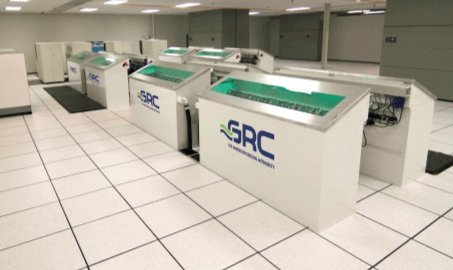
Data centers have taken a lot of heat because of their increased appetite for power consumption and negative environmental profile. It’s a cause of concern for data center operators, but one that immersion cooling can address on many levels.
GRC’s patented immersion cooling system can easily handle the demands of high performance, high density deployments. It also delivers vastly superior cooling capabilities with greatly reduced power consumption compared with air cooling systems.
GRC’s solution allows you to put more computing in the rack and save valuable space in your data center. Moreover, GRC’s single-phase immersion cooling system has a simplified design that helps you eliminate the operational and maintenance costs of complex components, such as chillers, air handlers, and humidity control systems.
Get in touch with GRC now to learn about powering up—and cooling down—your systems more efficiently.
In 2014, Congress passed the Federal Information Technology Acquisition Reform Act, known as FITARA. The bill was written to address a longstanding government concern—how to curb IT waste in government agencies by optimizing risk management and transparency. And considering how the US government spends over $100 billion on IT equipment a year, there’s a fair amount at stake.
FITARA aims to rein in runaway energy consumption in data centers to hit truly efficient levels—thus also reining in costs. There are a variety of ways data centers can achieve this; liquid immersion cooling technology like that provided by GRC makes for one particularly pertinent leap forward. Liquid immersion cooling contains excess energy (in the form of heat), rather than simply dispelling it the way traditional air cooling does. It also uses less electricity than conventional methods, meaning the act of cooling itself will not emit as much carbon.
Of course, every data center wants to strive for efficiency, especially given the potential plus of government contracting once in compliance with FITARA. We’ve talked previously about certain best practices to help align with FITARA goals; however, FITARA is a complex piece of legislation, and compliance presents its own challenges and opportunities.
Let’s unpack these challenges in greater detail and see how you can actually make them work for you instead.
Technical Challenges
Among the technical challenges data centers may struggle with are consolidating and optimizing the infrastructure. Think of the difficulty in migrating data and applications from numerous disparate data centers into one location. Agencies also have to integrate multiple systems and ensure that they work together, which can pose serious hurdles.
Case in point, data center migration often results in unwanted downtime. But federal agencies must have consistently high uptimes to accomplish their missions. Another challenge is to keep latency low after migration. The data center set for closure may have been situated near its users, unlike the consolidated facility. Other potential risks of migration include wrongly sizing the resources at the target facility.
In addition, agencies must protect the security of their facilities both during and after the consolidation process. Moving data exposes it to threats such as data loss, and it’s hard to enforce the exact same precautions before and after a migration. Then there are performance standards such as processing and storage to consider. The consolidated infrastructure may function or be configured differently than the previous setup.
Succeeding against these technical problems can take a lot of time, money, and skill. But it’s not all bad news: data centers can take advantage of this opportunity to upgrade their resources and innovate. For instance, agencies could deploy more cloud technology or reshape their production systems.
Budget Management
When it comes to budget troubles, FITARA imposes the challenges of finding enough funding to make adjustments for compliance. There’s a trade-off between immediate costs and long-term benefits. You can’t consolidate and improve data centers without some expense, but the efficiency gains will repay the investment over time.
Another financial difficulty is to coordinate budgeting with the project schedule. Agencies should make multi-year plans, so it’s practically necessary to have the money to pay for ongoing costs as they occur. It’s not just about the upfront investment; you must also balance the longer-term projects and budgets.
To overcome these budget-related challenges, agencies can focus on the low-cost and high-return projects like liquid immersion cooling and work to maximize the value of available resources. For example, immersion cooling opens several opportunities through its knock-on effects. Data centers spend less on electrical infrastructure and real estate while cutting back on electricity use. You can literally slice expenses in half.
Federal agencies may also look for new funding sources to alleviate the financial challenges of adhering to FITARA. Reports should communicate the advantages and disadvantages of proposed actions to attract financing. If they calculate right, data center administrators can slim down both spending and waste.
Transparency and Automated Monitoring
Transparency is essential to show the value of IT spending at federal agencies. Indeed, transparency ranks at the top of FITARA recommendations from the Federal IT COST Commission. According to its advice, CIOs should clearly describe the costs and performance of IT assets. This transparency provides the detailed information that government IT directors and constituents need to navigate their challenges efficiently.
CIOs should employ a standardized model of costs to break down which services and applications are delivering value. This information also supports agencies in negotiating with suppliers and measuring the total cost of ownership (TCO). Basically, seeing the precise distribution of costs reveals how to improve IT spending.
A time-tested strategy that can help federal agencies optimize data centers is to implement automated monitoring tools. The GAO has recommended that agency-owned data centers use this method to track the use of servers and other resources.
Multiple parts of the government, such as the Department of Agriculture and the Department of Homeland Security, have agreed to move forward with this recommendation. After all, automated monitoring complements virtualization and migration in the cloud. Together, these steps increase data center efficiency while enabling accurate reports.

Rise to the FITARA Challenge With GRC
In the near decade since FITARA became law, it’s served as a North Star for data centers aiming for government contracting. And considering the breadth of need for IT services in government administration, attaining federal contracting can prove a lucrative boon for many data centers. The challenge is in attaining compliance.
The best way: curtailing waste and dialing in environmental and financial efficiency ASAP, by all avenues possible. When plotting this pivot, it’s best to start with low-risk, high-yield solutions first—like GRC’s liquid immersion cooling systems. As mentioned earlier, liquid immersion cooling is far more efficient than traditional alternatives. And with a straightforward installation process, it won’t necessarily demand an entire transformation of your data center, though it will transform your energy consumption!
GRC solutions are well-tested and proven winners; even federal agencies such as the National Security Agency (NSA) and the United States Air Force (USAF) use these immersion tanks for in-house operations. What better way to achieve federal compliance than with solutions the federal government already implements?
Overcoming the hurdles en route to achieving FITARA compliance requires a combination of strategies. But GRC can help you make a mighty leap on your journey there. Reach out today to find out just how liquid immersion cooling can help you optimize your data center.
Consider this: The average large business has to store about 23.1 billion data files. While some businesses rely on cloud storage, many use data centers. These facilities store, process, and distribute massive quantities of data every day, and these processes require significant amounts of energy. Powering the data center efficiently means a higher profit and more satisfied stakeholders. So, you must know how to measure your facility’s power usage effectiveness (PUE).
Several factors influence a data center’s ability to make good use of its incoming electricity, including the design of its processors and cooling solutions. But these systems vary immensely in quality, so owners and operators should choose carefully among the available technologies.
In recent years, infrastructure improvements have emerged as a central tool to improve power usage effectiveness. For instance, moving from a conventional air cooling system to liquid immersion cooling boasts a generational advantage. This one substitution can reduce the electrical expenses needed to cool your data center by as much as 95%.
Energy efficiency complements other attributes a data center should have. Profitability, server density, environmental sustainability, and other considerations make the facility an asset for its owners and customers. The same basic physics that make liquid cooling solutions good for power usage effectiveness also enhance these other variables.
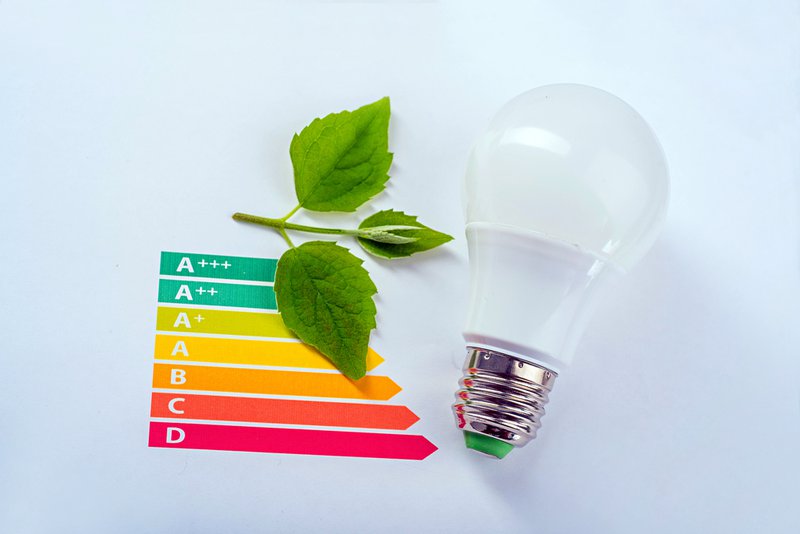
The Importance of Energy Efficiency for Data Centers
Energy efficiency refers to how well resources are used. But however basic this idea may sound, it has a huge impact on all aspects of a data center. From technical performance and the amount of carbon emissions to costs and revenues, a data center’s outcomes depend on precise resource use.
Think of a Ford Model T next to a modern car. The same gallon of gas goes less distance and at a slower speed in the Model T. That’s because newer cars benefit from decades of engineering advancements to boost their energy efficiency. Now think of a Tesla Model 3, which uses an even more innovative design to improve the energy efficiency by an order of magnitude. Each component contributes to its energy efficiency.
In a data center, the energy use and cost of the servers, storage and networking devices, cooling systems, lighting, and the building itself all add up. So, managers should select efficient components to make the entire facility perform well.
Energy efficiency is a crucial aspect of data center management and operations. If a facility wastes electricity, the most immediate problem is cost. You’re spending money on power that goes nowhere. Poor efficiency also poses a range of environmental hazards. The futile power generation still burns through scarce natural resources, emitting carbon and toxins.
Customer satisfaction is negatively impacted as well. This stems in part from the higher prices users will pay for inefficient data center services. Additionally, because many customers pay attention to environmental records, they’ll look unfavorably on a facility that throws away valuable resources. Given all the damage done by low efficiency, it’s important to determine how effectively a data center uses energy.
What Is Power Usage Effectiveness? How To Calculate PUE
Power usage effectiveness is the standard metric used to assess data center energy efficiency. The PUE is a relatively straightforward ratio that compares the total data center power to the amount of power used for IT equipment only. We can write this out as a simple formula for calculation:
PUE = Total Data Center Power / IT Equipment Power
Say a data center uses 100 kilowatts of power. Out of this total, only 50 kilowatts go into servers and other IT hardware. The rest goes into other systems like cooling and lighting. We would write:
100 kW / 50 kW = 2 PUE
The power usage effectiveness of this hypothetical facility is 2. It uses literally half of its energy for applications other than the intended goal of serving customers. That’s a very poor efficiency level, but it’s not that unusual. Some data centers have PUEs even higher than 2, indicating they waste more electricity than they use.
A more efficient data center has a lower PUE. In fact, an ideal facility that wastes no electricity should have a power usage effectiveness of 1. This means that the total amount of energy it uses goes to power its IT equipment. If it uses 100 kW of power:
100 kW / 100 kW = 1 PUE
Of course, in practice, every data center exhibits at least some waste. So, a more reasonable PUE goal is 1.02 or 1.03. This is far more efficient than a PUE of 1.5 or 1.75, and only the best-run data centers manage to reach such a power usage effectiveness. They do so by understanding and modifying the main factors affecting energy use.
Top Factors Affecting Data Center Energy Consumption
While the gist of power usage effectiveness and its calculation are fairly simple, the practical situation can become somewhat more complex. Each data center has an array of equipment and processes that interact to determine its energy efficiency. The exact PUE can change over time and be a challenge to measure precisely, but the major factors are known.
The two biggest energy drains in a data center are the servers and the cooling systems. The IT hardware makes sense because that’s what we’re trying to keep running. But why should cooling take such a toll on the electric grid?
The truth is that most data center cooling systems are frustratingly inefficient. Conventional air cooling has been around for decades. And while it has undergone some improvements, it simply can’t handle modern IT loads. Chips have grown more and more powerful. Yet the fundamental characteristics of air just make it a poor coolant. Basically, large fans blow cool air through the data center aisles.
Going back to our vehicle analogy, progressive improvements to air cooling are like the gradual development of gas cars. Each iteration slightly improves efficiency. But liquid immersion is the Tesla speeding ahead of old gas models. It performs better, is easier to maintain, and has less impact on the environment all thanks to a more energy-efficient design.
Additional Factors Influencing Power Usage Effectiveness
Other draws on data center electricity include the lighting system and backup power system, although these factors aren’t entirely independent. For instance, the backup power system will vary considerably depending on which processors and cooling systems you have. Optimizing the efficiency of one system can also contribute to the performance of other systems.
In general, data centers should optimize the top factors affecting power usage effectiveness by using new technology and maintaining equipment regularly. LED lighting uses less electricity and lasts longer; recent chips aim to reduce waste. The same pattern applies to most systems in a data center: new products use less energy.
Several factors affecting data center energy use become more efficient with cloud computing. The cloud combines multiple operating systems onto a common infrastructure, yielding economies of scale. What’s more, cloud data centers deploy large and powerful servers with the appropriate cooling systems. They often employ renewable energy sources, which minimize the waste of electricity generation and transmission.
Because cloud customers don’t have to use their own smaller infrastructure or buy hardware they won’t use, fewer resources are wasted. Businesses and government agencies are migrating en masse to the cloud for its greater efficiency. Recent regulations even require federal agencies to consider cloud options for reducing energy waste, along with other best practices.
Best Practices to Improve Data Center Energy Consumption
Since data centers have started focusing their efforts on power usage effectiveness, certain industry best practices have emerged. These methods will help you lower unnecessary electricity use. Implementing them will, therefore, bring you closer to your financial and environmental goals.
- Conduct an energy audit. Account for all sizable inputs and outputs to understand the current situation. This forms the basis for making improvements to efficiency. Commercial devices are available to measure power use at various points. You can see from the audit results where savings may be found and in what amount.
- Set energy efficiency goals. These should be goals that you can measure and make progress on to improve your energy efficiency. For example, aim to reduce electrical costs by 10% in a given time frame. You can transition to energy-efficient processors, storage devices, and cooling solutions to hit these targets.
- Monitor your ongoing energy consumption. This will show you how fast or slow the project is going. Additionally, putting the results in reports for stakeholders adds accountability.
- Consider energy-saving practices. These could include on-site power generation and heat reuse. For instance, solar cells produce affordable electricity, and liquid immersion cooling tanks can recycle heat for the building’s needs.
As the data pours in, you’ll be better able to evaluate performance toward your energy efficiency goals. Data center administrators can then steer decisions to improve power usage effectiveness even further. For example, if you’ve seen that some immersion-cooled racks have drastically reduced your cooling costs, you could decide to add more immersion modules.
How Immersion Cooling Improves Your Power Usage Effectiveness
Liquid immersion cooling is one of the smartest ways to cut operational costs in data centers. The fluid pulls heat out of servers at 1,200 times the rate of traditional air cooling. As a result, facilities can cut inefficient cooling fans and save 10–20% on electricity by simply letting the servers soak in efficient liquid. It’s like cooling yourself down in a bath instead of spending a lot of money to run the air conditioner on high.
Immersion racks also cut your need for backup generators, air handlers, chillers, and other resource drains. And as if that weren’t enough, you’ll save on operational expenses by reducing maintenance costs. The liquid coolant protects servers against damage like rust. And with the fans gone, there are fewer vibrations. Liquid immersion cooling is also significantly quieter, which improves the work environment for data center operators.
To see the total cost savings, try this Total Cost of Ownership (TCO) Calculator from Green Revolution Cooling (GRC). It reveals how the power usage effectiveness impacts cost depending on your cooling solution. And there’s more good news: the streamlined infrastructure for immersion cooling leads to lower capital expenses, which complement the lower operational expenses. This can cut your total data center costs by as much as half.
The cost-effectiveness of immersion cooling also applies to regular servers running in any facility. Data centers that really want to minimize their operational costs can use servers customized to work even more efficiently in liquid immersion.
Finally, the simple design of GRC’s immersion cooling systems keeps servers running reliably for years. For one thing, data centers spend less on maintenance after making the upgrade. There’s also less electrical equipment to buy and maintain, such as the computer room air conditioners (CRACs) and computer room air handlers (CRAHs) of air-cooled setups.
Optimize Your Power Usage Effectiveness With GRC
The power usage effectiveness measures a data center’s energy efficiency. A lower PUE indicates the facility uses fewer resources to power its processing. This efficient resource use has great importance because it affects profitability, computational performance, and the environment.
The big influences on PUE include IT devices and cooling technology. Other relevant considerations are lighting and electrical infrastructure. Managing these areas can minimize waste and lower your costs. GRC’s liquid immersion cooling ranks among the changes that offer the most leverage on energy efficiency.
There are also big-picture best practices you can follow to reduce your data center’s electricity use. These practices extend from energy audits and efficiency goals to ongoing monitoring and reporting. As you make improvements to the facility, such as upgrading the cooling system, you’ll see the results and gain insights on which steps to take next.
Among the most rewarding ways to boost your power usage effectiveness is by installing a liquid immersion cooling system. Contact GRC today to learn how this practical solution for all data center cooling needs can streamline your facility’s energy efficiency.
The heat is on for data centers to boost their efficiency and sustainability. Never before have we seen such demand for green, low-cost, high-density facilities. In fact, a perfect storm of growing digital activity, climate awareness, and budget pressures will force organizations to adopt data center optimization strategies.
These strategies apply energy-saving tactics and technology to minimize an IT facility’s footprint. For instance, newer IT equipment and cooling systems like liquid immersion solutions increase the efficiency and sustainability of data centers.
The data center optimization strategies that we’ll discuss can help overcome the problems of outdated technology. Older platforms may have sufficed for previous generations, but we’ve reached a tipping point where higher energy efficiency is necessary. Traditional data centers simply place too much of a drain on resources to sustain their performance.
The Problem with Outdated Data Centers
As data centers age, they gradually fall behind the times. The same happens in other industries. Equipment goes stale, and new solutions come online that put the outdated facilities at a disadvantage.
Let’s explore some of the problems of outdated data centers:
Energy Waste
Many of the problems with older data centers involve energy waste. When it comes to cooling solutions in particular, previous air cooling technologies are nowhere near as efficient as new liquid immersion cooling systems. As a result, older data centers using traditional cooling methods, such as air cooling, struggle to perform efficiently enough for today’s needs.
Server Density
The poor energy efficiency of air cooling puts a cap on server density. Those old systems can only cool racks up to around 30 kilowatts (kW), but new chips reach much more than that.
Performance-limited traditional data centers can’t compete with new liquid-cooled facilities for popular services like artificial intelligence (AI) and machine learning, blockchain and cryptocurrency, or the Internet of Things (IoT).
Scalability
Another restriction on conventional air-cooled data centers is scalability. To add capacity, you have to install more servers and air cooling units, which are already slow and expensive. But then, you also need backup generators and uninterruptible power supplies (UPSs), floor space, and so forth. Rigid older data centers aren’t adaptable enough to respond quickly to changing market conditions. And all that infrastructure costs money.
Data Center Optimization Best Practices and Strategies
Every part of an IT facility contributes to its performance, so data center optimization strategies encompass different areas. You can focus on improving hardware and software, cooling and lighting, power and networking, and management systems. Let’s review a few strategies that will help.
Hardware and Software Improvements
Obviously, low-power processors will reduce your energy consumption. But there are two processor trends working at cross-purposes. Chips are growing more power-hungry even as they strive for efficiency. So, owners and operators have to balance the need for more computation against energy-saving measures.
By contrast, storage devices have a more direct incentive to use low-power solid-state drives (SSDs). In addition to conserving electricity, the SSDs run faster, quieter, and with more durability than hard disks. Some tension remains, since conventional disk drives cost less and store more data. But, companies intent on data center optimization will often prefer the power efficiency of SSDs.
Liquid Immersion Cooling
The principal system in any data center, aside from the IT equipment, is the cooling system. In some cases, an outdated air cooling system uses more energy than the computing hardware itself. So, data center optimization strategies should center themselves on more efficient cooling.
Of the various cooling technologies on the market, liquid immersion cooling boasts the highest performance. For both sustainability and profitability, it makes sense to deploy immersion cooling like GRC’s micro-modular racks. This practice reduces electrical requirements, infrastructure, IT maintenance, and IT replacement costs. It also cuts water and electronic waste and emissions.
Complementary to efficient cooling, renewable resources aid in data center optimization. Companies can install green energy systems on-site or contract with a utility to provide clean energy. You can even sell on-site solar back to the grid to generate additional revenue.
Data Center Management
Data center management systems help monitor and organize the various components of a facility. A common approach is to use data center infrastructure management (DCIM) software. This gives admins oversight of building and IT assets with sensor data. The tool helps control floor space, equipment, and energy use—all critical areas for data center optimization.
DCIM also improves uptime and capacity management. The same benefits arise from liquid immersion cooling, which simplifies planning and keeps servers running on little electricity input.
For instance, to give data center managers consolidated access to all their immersion-cooled racks, the GRC Systems Manager reports on operations. Email or text message alerts keep you on top of conditions to ensure an efficient and resilient performance. This information helps prevent downtime through proactive repairs.
Data Center Optimization for the Future
Future-proofing your data center protects it against the coming risks. It’s about saving money and the environment while also keeping server availability high. Fortunately, the same data center optimization techniques that contribute to efficiency and sustainability also support reliability.
For example, liquid immersion cooling offers practically unlimited cooling. It absorbs server heat effortlessly, unlike older systems that struggle to stay cool. Regardless of whether new high-power processors come along or your organization adds high-density racks, liquid immersion cooling will just keep working.
Given the inevitable challenges that data centers confront over time, the owners and operators who take smart steps now will prevent decline later. Each hour of downtime can tally millions of lost dollars plus intangible costs. It’s worth the effort to sidestep these common sources of failure:
- Servers overheating.
- Problems with the power or water supply bringing down a data center.
- Ambient conditions such as humidity extremes or dust particles threatening stability.
During the data center optimization process, be sure to take precautionary measures against these risks.
Optimize Your Data Center With GRC
Data center optimization opens doors to higher performance, cost savings, environmental protection, security, and scalability. Energy-efficient facilities simply do more for less.
An upgraded infrastructure provides a range of benefits. For one thing, you’ll see bigger financial returns on faster computation. The systems also become easier to scale and are more secure. Plus, the advantages accrue not only to you as the operator but also to the environment. Optimized data centers use fewer resources.
Businesses and government institutions alike use GRC’s immersion cooling systems for data center optimization, striding toward their objectives more efficiently than any other technique allows. This industry-leading cooling technology improves your bottom line and minimizes carbon emissions. It also strikingly increases the amount of kilowatts you can run per rack.
Learn more about how we can help you get the most out of your data center. Contact us today!
The data center industry undergoes frequent adjustments to keep pace with customer needs and regulatory requirements. Important recent regulations include those in the Data Center Optimization Initiative (DCOI). This policy requires federal government agencies to start and report on efforts to streamline their data centers.
Boosting data center efficiency is now a key focus. It includes steps such as consolidating older infrastructure into new environments and using energy-efficient chips. Installing high-capacity cooling systems like liquid immersion complements these practices.
DCOI compliance also calls for agencies to improve security and reduce costs. Because energy efficiency drives cost efficiency, the same solutions often target both goals at once. For instance, a liquid immersion cooling system from Green Revolution Cooling (GRC) cuts costs while increasing energy efficiency.
The regulations and incentives in the DCOI push data centers to operate more responsibly. By wasting less energy and money, facilities protect the environment and their own resources. Constituents receive greater value, and society as a whole benefits. So, it’s incumbent on data center operators to deploy DCOI-compliant technology that is more energy efficient.
What Is the Data Center Optimization Initiative, and Why Is It Important?
The Data Center Optimization Initiative is a U.S. Government policy set in August 2016. It stems from an Office of Management and Budget (OMB) memorandum addressing data center requirements. Specifically, data centers must comply with the Federal Information Technology Acquisition Reform Act (FITARA), an effort to improve IT management in federal agencies.
As such, the DCOI makes an important contribution to optimize and consolidate data centers. This legislation minimizes costs and wasted energy while strengthening performance and resilience. It does so by encouraging data centers to adopt more efficient technology, such as cloud hosting and liquid cooling.
The DCOI presents both benefits and challenges for the government and data centers. For example, the law brings heightened management practices that deliver more computation while conserving resources. But it also pressures data center operators to implement the tools and techniques necessary to achieve these goals.
Fortunately, some techniques like liquid immersion cooling are actually easier to use than other data center cooling methods. As a result, data centers can comply with regulations and increase their server capacity while saving on operational and capital expenses.
New DCOI Regulations and Incentives: Industry Impact
The data center industry must rise to meet the new expectations set in the DCOI. These changes affect the size and location of data centers, as well as how they’re run internally. What’s more, federal agencies now need to monitor and report on their progress against the DCOI goals.
Development Freezes, Consolidations, and Closures
Under the DCOI, agencies must make their data centers more resource-efficient and close non-performing facilities. The government has also instituted a development freeze to prevent agencies from allocating budget increases to new and existing data centers. An agency can now only create or expand IT infrastructure with OMB approval.
To get approved, the agencies must justify the additional IT resources against alternatives. For example, admins would write an analysis of building a data center versus renting cloud services or colocation facilities. The new or expanded data center would have to result in an overall decrease in data center inventory, such as by expanding one data center to close down three others.
In terms of consolidation and closure, federal agencies must minimize their roster of systems, applications, and databases. To cut IT assets, the agencies should use virtualization technology. This approach lets organizations combine multiple assets into one right-sized infrastructure. An agency could host five or six operating systems on a single physical device. The virtualized solutions can be scaled up or down based on demand, unlike agency-owned hardwired data centers.
After reducing systems and applications to a minimum, federal agencies should apply risk analysis to choose optimal consolidation strategies. The three main options are:
- Migrate as much to the cloud or other provisioned services as possible.
- Combine multiple systems on shared services within the agency, among other agencies, or in colocation facilities.
- Move data to the agency’s optimized data centers.
Closures and Cost Savings
The main motivation for data center closures is to cut costs. As the federal government has faced growing needs for data processing, agencies have built numerous IT services. But over the years, this infrastructure has become unwieldy. Now, it’s time to retract unnecessary facilities to focus on efficiency.
Cloud services aren’t necessarily cheaper or more efficient than the agency’s own infrastructure. So, it’s unfair for the government to assume that closures will automatically bring big savings. Instead, agencies should invest in energy-efficient hardware like certified environmentally friendly processors and liquid immersion cooling systems.
A useful approach to funding energy enhancements is called performance contracting. For instance, an “Energy Savings Performance Contract” is a congressionally approved way for federal agencies to develop more efficient infrastructure without upfront costs to contractors. The contractor instead receives payment from the energy cost savings.
Note that the targets for cost recuperation and data center closures are dynamic, not fixed. The OMB will continue to collaborate with federal agencies to refine these goals. As agencies make headway, the OMB will assess how to further optimize their performance under the DCOI.
Advanced Energy Metering
Tracking performance is essential. In fact, the OMB provides various metrics that objectively evaluate how each agency optimizes its processes. One such metric is the amount of virtualization, server utilization, and smart energy metering.
When we focus on metering and energy management tools, data center infrastructure management (DCIM) systems is an important category. Federal agencies can use DCIM to automatically track metrics, which in turn boosts performance. It’s an easy way to adhere to DCOI standards.
The tool reveals both stranded capacity and environmental conditions. Managers can then adjust the temperature and humidity or eliminate redundant servers to slash waste. And because DCIM monitors heat, cooling, power, and so forth, it also makes the facility more reliable.
While the legal requirement for smart energy meters has varied over time, they’re generally a good idea from a technical perspective. Effective data center management rests on the quality of information you receive. So, federal agencies aiming to cut their electrical and financial losses should keep tabs on the infrastructure through digital monitoring.
Larger data centers use more energy and are more important to monitor. The OMB actually forces agencies that keep facilities with more than 100 kW to employ intelligent metering and submetering. The information must support correct calculations of the power usage effectiveness (PUE), a common measure of data center energy efficiency.
Exceptions can be made for data centers slated for closure and for those where it would be too costly to implement advanced energy metering. For these facilities, the OMB will update its process for assessing agencies in their metering. At any rate, data centers should measure and reduce their energy waste.
Resource Waste in Data Centers
There’s a lot about data center waste that isn’t openly talked about. On top of energy waste, it’s also common for facilities to run through excess water, electronics, and other resources. But trimming waste aligns your data center with DCOI goals and furthers your own mission.
For instance, GRC’s liquid immersion cooling dramatically reduces data center cooling energy. You only use what you need.
We know that wasting resources negatively impacts the environment. Think of all the electricity going into the data centers set for closure under the DCOI. Each kilowatt-hour generates carbon emissions and other unwanted byproducts. This is one reason for the regulatory backlash against data center sprawl.
Inefficient Cooling
A substantial amount of waste electricity goes into “overcooling.” Data center managers worry about damaging the IT equipment due to high heat or uneven cooling, so they turn the air cooling way up. But this blows through energy, which runs contrary to the DCOI and the data center’s financial interests.
By contrast, liquid immersion cooling automatically keeps the servers at low, even temperatures without the waste. And the liquid coolant protects servers against threats like oxidation and corrosion, so there’s also less e-waste. Completing the trifecta, immersion cooling virtually eliminates wastewater, a critical natural resource.
Wasted Space and Heat
Looking beyond energy, electronics, and water, there are many other preventable wastes in federal data centers. Consider real estate. The Data Center Optimization Initiative has agencies shutting down facilities to consolidate into fewer structures, using less real estate. Data centers should also have a large percentage of floor space actively used for IT equipment, which often doesn’t happen.
Another way data centers waste real estate is with bulky air cooling. Because of air cooling’s poor abilities, it only supports low-density racks. The air coolers also rely on a supporting infrastructure that wastes floor space. These areas would be better used to house servers.
Even waste heat, which works against DCOI goals, can be turned into a positive with immersion cooling. The liquid coolant captures server heat more efficiently than air, so liquid immersion systems can transfer the “waste” heat into a heating system.
Best Practices for DCOI Regulations Compliance
Meeting all the new DCOI regulations may seem intimidating. But innovative technology and time-tested best practices can help data centers exceed the requirements and increase their efficiency.
- Inventory and assess each data center. This should cover all the hardware, software, and infrastructure running the facility. Knowing where you are is essential to getting where you want to be.
- Develop a long-term strategy. This plan should cover data center operations over multiple years. Which infrastructure investments will you make? Which closures are necessary? A roadmap guides choices in more desirable directions.
- Set performance metrics with numerical targets. These are the specific measurements each facility should achieve to comply with the DCOI. For example, if your PUE is now 1.75, you could set a goal of reaching 1.03, which is far more energy-efficient.
- Monitor your progress. Agencies should track and report on their results in terms of targets and cost savings. While accurate reporting is necessary under the DCOI, this practice also lets you apply for funding opportunities. And, it ensures that you’re on the path toward improved energy efficiency and financial outcomes.
In addition, future-proof your data center with liquid immersion cooling. This technology can handle the rapidly increasing server heat to meet upcoming demands. By contrast, conventional air cooling can’t keep up with agencies’ growing IT loads. What’s more, air cooling’s limited performance is guilty for much of the resource waste being targeted by the DCOI.
Another way liquid immersion cooling systems help data centers plan for the future is through modular expansion. The Data Center Optimization Initiative urges techniques like cloud migration to avoid massive capital outlays for unnecessary hardware. By the same token, a facility shouldn’t install excessive cooling capacity that it won’t fully use, as often occurs with older air cooling.
Stay Ahead of DCOI Regulations With GRC
The Data Center Optimization Initiative requires federal agencies to comply with set standards of operation to improve their efficiency. While this is good for the taxpayer and the environment, it imposes challenges on data center operators. Namely, the facilities must find ways to save both money and energy.
Agencies should use technology to turn those challenges into opportunities. For instance, industry-leading liquid immersion cooling from GRC is more cost- and energy-efficient than traditional air cooling. It’s an ideal way for data centers to become more compliant with DCOI.
Immersion cooling also protects the environment through its sparse use of energy. The tanks are easy to install and maintain, and they’ll keep your servers running faster and longer. Federal government bodies have already started upgrading to GRC’s liquid immersion cooling systems and are enjoying the many advantages. Agencies should incorporate these systems into their overarching compliance and efficiency programs.
Contact GRC today to enjoy the benefits of liquid immersion. It’s the practical solution for all data center cooling needs.
A cooling system is one of your data center’s most critical components. And for the most part, that cooling system has long depended on air. Until now, that is. Recent innovations have resulted in newer and better data center cooling methods, such as liquid immersion cooling. So, is air cooling disappearing from the scene?
Not entirely. While air cooling is starting to take a back seat to liquid immersion cooling, there’s actually room for both. In fact, a hybrid solution may be just what data center owners and operators need.
Air Cooling: The Advantages and Disadvantages
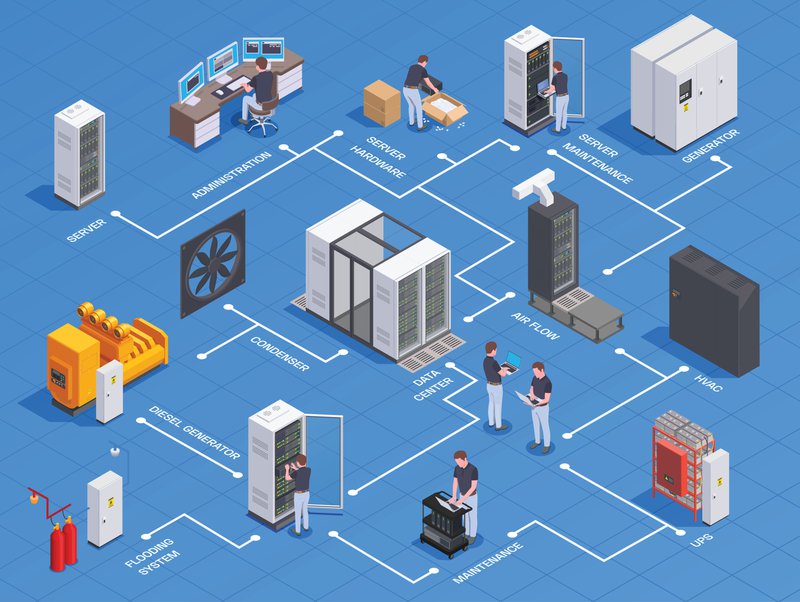
The traditional way to cool data centers is by using air conditioners to push fresh air through the facility. The air passes over servers, and heat is slowly transported off. As you can guess, it takes a lot of air to cool a data center. It’s basically like blowing on the servers to cool them down.
As a result, air cooling requires much more electricity than immersion cooling, making it an inefficient approach. This excessive use of electricity adds substantially to the costs of running a data center. Other negative effects include increased carbon emissions and water waste due to the electricity generation process.
On the plus side, air cooling is a long-established practice. Many data centers have used this technology for years. They’ve built the knowledge and infrastructure to support an air system. In such cases, it can make sense to eke out the remaining value of an air cooling system and wait until there’s a specific motivation to upgrade, like adding high-density racks or expanding or building a facility.
Liquid Immersion Cooling Revolutionizes the Process
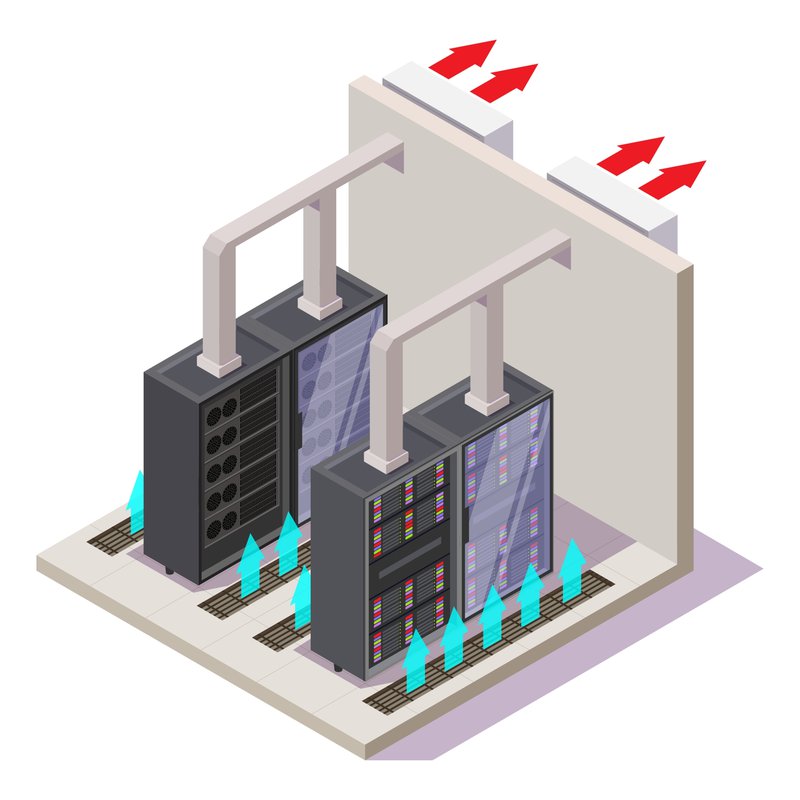
A liquid immersion cooling system uses a liquid coolant instead of air. In general, liquid has far better heat removal characteristics than air, which makes it an optimal cooling solution. For example, Green Revolution Cooling’s (GRC) ElectroSafe can remove well over a thousand times more heat than air.
Liquid’s much-improved cooling performance has several related benefits, cutting as much as 95% of a data center’s energy use for cooling. That also implies a massive reduction of emissions, water waste, and the other environmental problems associated with air cooling.
What’s more, the improved performance means immersion cooling can handle high-performance computing (HPC), artificial intelligence, blockchain, and other high-density loads that often overwhelm cooling fans. And you can deploy GRC’s liquid immersion cooling tanks anywhere: even without raised floors, air handlers, or other infrastructure.
Immersion cooling can also extend the life of your expensive data center hardware. For instance, GRC’s ElectroSafe coolant protects hardware against threats like dust, corrosion, and oxidation. And because servers immersed in the liquid don’t need fans, you can remove the vibrations that lead to early system failure and electronic waste. Finally, the system is extremely quiet, so technicians can safely and comfortably work in the area.
The many advantages of liquid immersion cooling make it an ideal choice for data centers adding high-density IT capacity. This cooling system costs less and delivers much more effective cooling in fewer square feet.
Why Hybrid Cooling Could Be the Best Choice
While liquid immersion cooling generally works better than air, there are also situations in which it makes sense to retain some air-cooled hardware. For example, installing a liquid immersion cooling system requires some retooling of your space. Some data centers may want to hold onto their existing air cooling infrastructure for a few more years while they make the necessary adjustments.
Data centers can use liquid immersion cooling for their highest-density servers, such as when installing powerful new processors. At the same time, a facility already operating with air cooling for low-power systems can keep those fans running. If data centers can extract three or five more years of service from their air-cooled units, it may be more profitable to run a hybrid cooling system.
How GRC Approaches Liquid Immersion Cooling Solutions
As an innovator of liquid immersion cooling for data centers, GRC delivers high-density rack-based cooling solutions. These systems can handle the most challenging demands the industry faces now and in the foreseeable future. Liquid immersion cooling can tame the power-hungry, heat-spewing processors that exceed the limits of air cooling systems alone.
As an example, GRC’s ICEraQ supports densities of up to 368 kW, far above and beyond what you could accomplish with air cooling. This solution virtually eliminates waste electricity, bringing down the power usage effectiveness ratio to 1.03. Even better, you can scale up flexibly in any liquid or hybrid facility without the need for complicated capacity planning.
GRC’s engineers are constantly working to improve liquid immersion cooling capabilities. Their analysis and testing of coolants, heat sinks, thermal interface materials, and other innovations keep pace with internationally recognized industry partners.
Processors will only continue to increase in performance and heat accumulation. Meanwhile, data centers of all configurations keep boosting their rack wattages. Recognizing that each data center has its unique requirements, GRC makes liquid immersion cooling solutions that operate reliably for your particular facility.
Streamline Your Upgrade From Air Cooling to Liquid Immersion Cooling With GRC
While air cooling isn’t about to disappear entirely, it can no longer keep up with today’s high-density computing needs. Newer and more capable liquid immersion cooling offers a far more compelling performance and cost profile.
A hybrid cooling approach can smooth the transition from older air cooling to a more modern liquid immersion cooling system. By combining both cooling technologies in one facility, you have access to your legacy resources while also future-proofing your data center.
GRC’s cutting-edge liquid immersion cooling systems perform well both on their own and in hybrid deployments. The tanks are quick and affordable to install and they massively elevate your IT density. What’s more, by eliminating most electricity and water waste, these sustainable systems deliver greener cooling.
Contact GRC today to find out what cooling solution might best serve your data center’s needs.
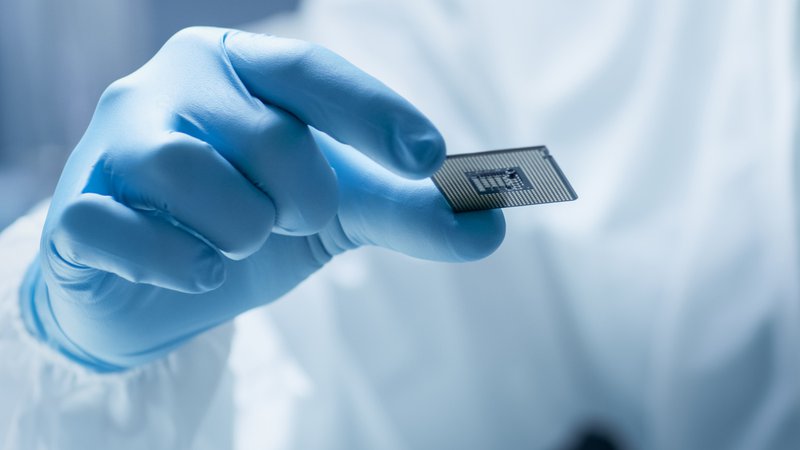
A semiconductor chip processes data, rapidly calculating billions of results to power modern business. It can analyze customer data or conduct transactions. Chip technology also enables data center servers and other electronic devices like laptops and smartphones to function.
The power of the chip has undergone remarkable expansion over the decades, and there are both positive and negative impacts from this massive acceleration. Data centers now have access to significant processing speed and have become pillars of the global economy. However, these powerful processors also emit more heat as a byproduct.
Removing server heat safely and efficiently is one of the big data center challenges of this century. Fortunately, liquid immersion cooling has emerged as an innovative solution.
How Chip Technology Will Evolve
While the future path of chip technology remains elusive, we can already see the broad outlines by looking at how data centers have changed along with processors. For instance, power use has increased, driving up operational costs.
Chips are only going to continue growing in both importance and performance. Servers, laptops, phones, vehicles, appliances, and many other devices employ ever-faster hardware to meet the public’s increasing expectations.
Each year, information technology (IT) becomes more central to the global economy. There are more users and more processor-intensive applications. And each year, the chips that run IT undergo improvements to keep pace with demand.
Billions of dollars are invested into developing faster chips with more cores. In fact, the data center chip market is expected to grow from $11.7 billion to $45.3 billion by 2032.
How To Speed Up Data Center Processors
There are several approaches to speeding up processors. One way is to make the features smaller. But while this approach provides a speed boost, it becomes harder to control electronic currents through ever smaller channels. We’re also approaching physical limits that may impede this route, such as the size of atoms or the amount of energy necessary to modify a bit.
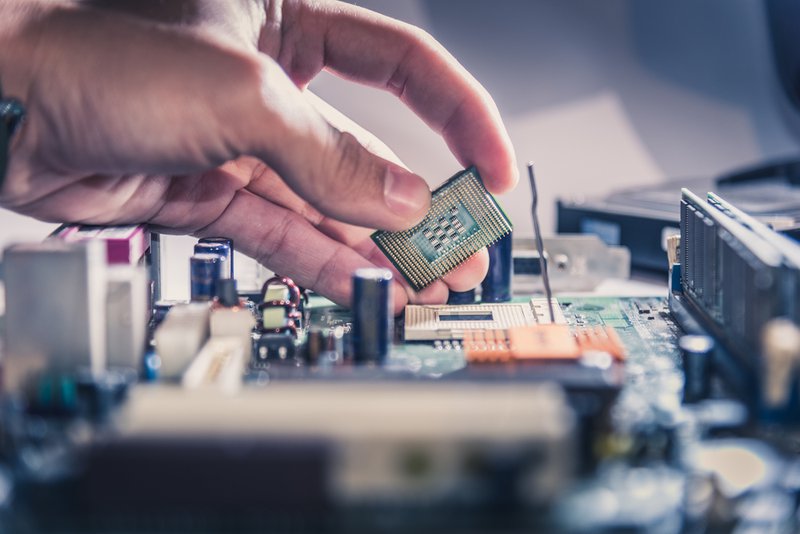
Other approaches include adding more circuitry to bigger chips and experimenting with different materials and architectures. For instance, future chips may use light, DNA, carbon nanotubes, or 3D structures instead of typical electronics. One way or another, processors will only get more powerful, requiring more electricity and producing more heat.
The increasing heat of processors has already been something of an issue, but we’re now hitting an inflection point. Chips coming to market for mainstream uses have record-high thermal design power. This pushes the limits of what conventional air cooling can handle. In fact, industry leaders are already moving toward higher-capacity cooling, such as Green Revolution Cooling’s (GRC) single-phase liquid immersion cooling.
The Impact of Chip Evolution on Data Centers
Concentrating high densities of powerful chips in data centers puts these facilities squarely in the crosshairs of growing demands. The effects of the chip evolution are multiplied, requiring even more adjustment in the data center than in other parts of the economy.
Faster, hotter chips will force data centers to manage their electricity inputs and heat outputs. These are already two of the most pressing concerns for data center operators, but the difficulty will increase along with chip power.
Data centers can hardly cool the heat now with air-based systems. Moreover, energy costs are burdensome to supply the processors and the power-hungry air coolers. And the environmental impacts only increase the financial tolls, since all this electricity produces toxic emissions.
There’s also a growing risk of thermal issues within the data center. Processors perform worse at high temperatures and become subject to failure. For tomorrow’s chips to work well and stay operational, we’ll need cooling solutions with greater capacity than air. More effective cooling solutions like liquid immersion raise the potential for higher computational performance and broader functionality.
Immersion Cooling is the Key
To resolve the challenges arising from more advanced chip technology, data centers need liquid immersion cooling. With a liquid immersion cooling system, servers are deposited (or immersed) in a liquid that can safely and efficiently cool electronics.
GRC develops industry-leading immersion cooling tanks, and they’re strong enough for the hotter and faster chips of today as well as tomorrow. Consider the ICEraQ, which can cool 368 kW; an order of magnitude more than air cooling. It’s the improvement necessary to respond to future chips that will draw more power and emit more heat. Racks full of chips that use 1 kW of energy each will need immersion to keep them cool.
While cooling high-density servers, the liquid immersion rack itself uses almost no electricity. Unlike air cooling, which can use as much power as the processors, liquid immersion cooling is energy efficient. That means this green cooling technology costs you less to operate and is good for the environment. It also simultaneously protects servers against corrosion and a range of other problems.
How are all these advantages possible? GRC has engineered liquid immersion cooling systems to deliver optimal heat removal. Liquid packs its heat dispersal capabilities more densely. And the servers have direct contact with the liquid, without any piping or plates to inhibit efficiency. Immersion cooling is the ideal tech to meet the growing demands of chip technology head-on.
Building the Future of Data Center Cooling With GRC
The fast pace of processor development will only continue in coming years. Data centers and other businesses have plenty of motivation to add chip capacity to stay on top of demand. But it will take innovative cooling solutions to manage the growing heat of this increased power.
GRC and its partners are continuously developing improved liquid immersion tanks, higher-performance coolant fluids, and optimized heatsink designs. These technologies enable heat removal for the hottest data centers and will future-proof your processing needs. Contact GRC now to prepare for tomorrow’s high-power chips.
The right cooling technology does more for data centers than just remove server heat efficiently. Liquid immersion cooling is a multifaceted innovation that brings benefits across the board. As such, it’s gaining ground in cloud, edge, and enterprise data centers.
Immersion cooling involves lowering server systems into a tank full of liquid. The liquid then carries off the heat that’s produced by the electronics. The main draws of this cooling system are its higher cooling capacity and lower cost. However, this versatile technology also has a range of unconventional advantages. Let’s explore five ways your data center will benefit from liquid immersion cooling.
1. Liquid Immersion Cooling Reduces Your Carbon Footprint and Environmental Impact
Data centers are increasingly receiving unwanted publicity over their environmental impacts. With each year pushing significant economic activity into the digital world, data centers now account for a measurable share of carbon emissions and resource waste.
Immersion cooling addresses this problem. It’s a sustainable solution that’s also known as “green cooling.” Simply put, data centers using liquid immersion cooling accomplish more computation with less pollution.
The noteworthy efficiency of this cooling system shrinks your carbon footprint and environmental impact by using less energy and water than traditional air cooling. More specifically, immersion cooling eliminates the need for fans, chillers, and additional cooling equipment that wastes electricity while generating noise and heat. As a result, with immersion cooling tanks, the resources used and emissions produced are minimal.
What Makes Immersion Cooling Sustainable?
Immersion cooling uses dielectric fluids that flow easily and can effectively absorb and transfer heat. As a result, the system transfers heat much more efficiently than air and without the unwanted byproducts. As such, you can deploy a higher server density at safer operating temperatures.
In short, the data center draws less electricity and emits less waste heat. It’s the confluence of business benefits and environmental conservation.
Additional ecological advantages include a longer hardware lifespan that reduces e-waste. The liquid coolant also enables you to recover the excess heat and use it for other purposes, like to heat your data center. This reduces your environmental impact even more.

2. Immersion Cooling Enhances the Performance and Reliability of Electronic Components
Liquid immersion cooling also improves the functionality of electronic components in servers. The liquid coolant basically acts as a defensive layer, protecting your expensive hardware against a range of environmental threats. This is particularly relevant for edge data centers exposed to the elements, but it can apply to any facility.
For instance, servers coated in Green Revolution Cooling’s (GRC) ElectroSafe coolants have a liquid shield against dust and oxidation. As a result, the sensitive electronic components will survive longer without corrosion. And because you no longer need server fans, you cut out the vibrations that can otherwise cause untimely failures.
Immersion cooling also offers protection against thermal variability. In this situation, devices undergo fluctuations in temperature, affecting performance and reliability. With conventional air cooling, the servers are subject to wildly varying heat loads and hot spots. But a liquid immersion cooling system offers a consistent, protective environment.
3. A Liquid Immersion Cooling System Saves Space and Costs of Infrastructure and Maintenance
The benefits of immersion cooling extend to a data center’s infrastructure and maintenance. An immersion cooling system takes up less space and allows for a denser rack structure. So, you save on expensive real estate.
In general, immersion cooling improves energy efficiency. This has positive effects for both data centers and the environment. For one thing, you have more efficient buildings, equipment, and operations. And because servers are protected against vibrations and corrosion, you’ll spend less time and money on unnecessary maintenance.
Immersion cooling also does away with many of the large and complex cooling systems and related costs of air cooling. Instead, you get streamlined functionality that’s quiet but powerful.
4. Immersion Cooling Supports Emerging Technologies and Applications
Another indirect advantage of immersion cooling is that it supports innovations that depend on high-density server installations. These demanding compute applications aren’t feasible with plain old air cooling. Only liquid immersion cooling can handle the heat generated by these high density deployments.
High-performance computing (HPC) was one of the earliest use cases for liquid immersi cooling and continues to lead the way. Supercomputers use GRC’s immersion cooling to enable unprecedented calculations for scientific and engineering purposes. The density in these systems reaches 15 times higher than conventional cooling would support.
Artificial intelligence and machine learning are rapidly becoming more widespread, too. These useful technologies demand far greater processing than most other applications. Blockchain and graphics processing are additional areas where low-power systems simply can’t keep up. But liquid cooling keeps these emerging technologies running.
5. Immersion Cooling Enables Future Innovation and Growth
Finally, immersion cooling is a scalable and flexible solution that adapts to changing needs. With industry partners, GRC is pushing toward 1,000-watt chip support—that’s five times higher wattage than many enterprise servers have now.
Data center operators and owners can rely on liquid immersion cooling as a future-proof way to power tomorrow’s creative endeavors. Unlike air cooling, which is already hitting many of its limits, liquid immersion cooling is undergoing fast-paced developments and has capacity to spare.
New technologies such as the 5G telecom standard and high-frequency trading call for immersion cooling. For public clouds and private enterprise data centers, the range of processor- and heat-intensive applications is growing fast.
Whether you’re deploying a crypto rig in a shipping container, assembling a next-gen supercomputer, optimizing an existing facility for high-density computing, or simply adding more servers, you can have total confidence in immersion cooling.
Prepare for the Future With Immersion Cooling From GRC
With so many exciting reasons to use liquid immersion cooling, this solution is spreading to more and more data centers. The adaptability of immersion cooling makes it the data center technology of the future, but it’s available now.
GRC’s liquid immersion cooling system offers better cooling capacity at a lower cost. But it also boasts many unconventional benefits, such as sustainability, a streamlined infrastructure, and support for emerging technologies and future growth.
Take advantage of these big pluses for your facility. Contact GRC today to move forward with a game-changing cooling solution.
Data centers need to cool their servers for safety and performance. A key factor determining the proficiency of your cooling system—and, therefore, your data center’s IT capacity—is thermal density. This is a measure of the amount of heat within a given unit of volume.
Consider systems like high-performance computing (HPC) facilities. Each cubic foot or meter contains a lot of hot equipment. The same goes for other systems with high thermal density, such as large data centers or racks full of the latest graphics processing units.
The thermal density of IT equipment influences which cooling solution you can use. As data center temperatures rise globally, the increase in thermal density is forcing the industry to adopt better cooling technology. More specifically, liquid immersion cooling technology. The amount of heat produced by a system is proportional to the amount of cooling it needs, and liquid immersion cooling gives you far more bang for your buck.
Liquid immersion cooling has an extremely high capacity to transfer heat relative to air cooling, making it the right tool for the job when it comes to handling newer and more powerful chips. Air cooling infrastructure simply can’t manage the heat produced by the latest servers which run processor-intensive AI and similar tasks.
As chip technology evolves, along with higher thermal density and the ensuing power demands, data center and rack density are increasingly under pressure. Even newer approaches like rear-door heat exchangers (RDHx) don’t accomplish enough. The only practical solution is true liquid immersion cooling.
Why Thermal Density Matters for Data Center Cooling
Thermal density is one of the main limiting factors in terms of data center productivity. As such, it’s critical to have enough cooling capacity for the processors, and enough processors for the end-user applications.
To illustrate, thermal density controls the cooling load and the cooling capacity of a system. And that cooling load represents the quantity of heat you have to take out of a system to keep the temperature in balance. This load is also influenced by other variables. For instance, the server room temperature, heat transfer rate, and physical surface area of components.
In essence, your IT equipment produces a certain amount of heat, and the cooling system’s job is to remove that heat quickly and affordably. For today’s hot processors with their extremely high thermal density, liquid immersion provides a practical and cost-effective solution.
The Science of Thermal Density for Data Centers
If you want to calculate the cooling load, the relevant formula is:
Q = U A (T1– T2)
In this equation, “Q” stands for the cooling load, measured in watts. “U” is for the total heat transfer coefficient, measured in watts per square meter degree Kelvin. “A” represents the surface area in square meters, and “T” is temperature in degrees Kelvin. “T1” is the system temperature, while “T2” is the server room temperature.
There are many related properties one can calculate. For example, “sensible heat” is a measure that applies to perceptible changes in temperature. In contrast, “latent heat” describes heat exchange, which, instead of changing the temperature, alters traits like the phase of matter. The sum of these two measures is known as the “total heat.”
Although these are general concepts that apply to heating and cooling, they also outline the constraints under which data centers operate.
Driven by a demand for machine learning and other functions dependent on processor capability, each generation of data center hardware features more chips per server at a higher power per chip. As chip technology advances and thermal density continues to grow, innovative cooling solutions like liquid immersion will become ever more crucial.
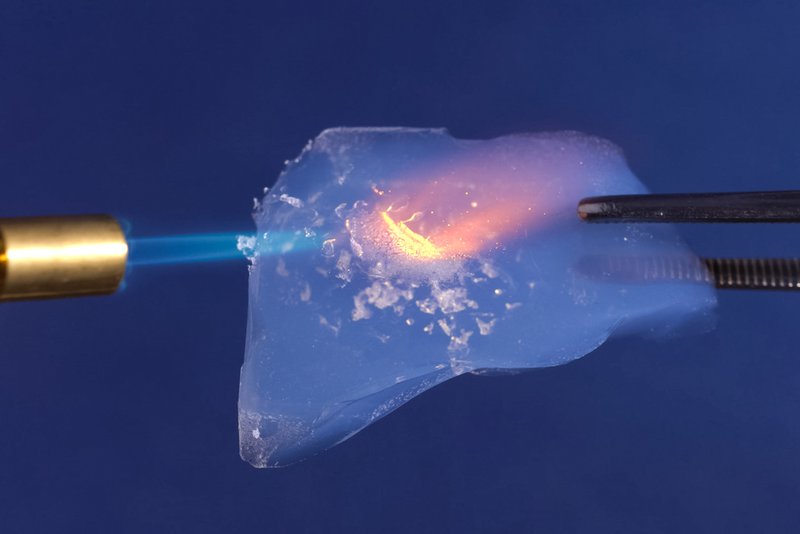
How Liquid Immersion Cooling Can Help Manage Thermal Density
Liquid immersion cooling responds to the challenge of high thermal density by offering a more efficient method of removing heat. High-density systems require the faster cooling that liquid immersion provides over conventional air cooling. This explains why supercomputers and other high-density systems have been early adopters of immersion cooling.
Now that mainstream chips are becoming more powerful and emitting more heat, the transition to efficient and affordable immersion cooling is in full swing. Data centers of all sizes can benefit from liquid immersion cooling systems, like Green Revolution Cooling’s (GRC’s) market-leading solutions. In addition, the technology is environmentally friendly, so the switch to green cooling comes at just the right time.
Liquid immersion cooling helps data centers reduce their power and water use, carbon footprint, capital expenses, and operational costs. It’s a substantial improvement over air cooling, mainly because liquid transfers heat over a thousand times more effectively than air. Liquid is simply more efficient; and in critical situations, you can’t afford to waste time.
How to Optimize Data Center Liquid Immersion Cooling for Thermal Density
In addition to choosing efficient liquid immersion cooling over inadequate air cooling, there are several other approaches to managing high thermal density. To start with, look at the various liquid coolants on the market. Examine their properties, such as thermal conductivity, viscosity, and specific heat. Each of these elements influences performance. There are currently several coolants available for data center needs. A liquid immersion cooling expert like GRC can guide you through the options.
The design and configuration of the cooling system also affect its cooling capacity. Relevant factors include flow rate, pressure, and temperature. Then, you have the location and orientation of the heat sources and heat sinks such as chips, piping, tanks, and more. Again, the professionals can steer you toward the best choices. Many of these optimization gains result from the configuration of the immersion cooling systems themselves.
Finally, one can monitor and control the cooling system for performance. GRC System Manager brings reporting data, including operating temperatures and pressures, to a single interface. It issues alerts if any anomalies are found, which you can customize and receive by email or text message. It’s also possible to examine detailed logs and connect securely to the vendor for immediate support.
Manage High Thermal Density with GRC’s Immersion Cooling
The heat’s rising fast in data centers, along with the continued growth of processor- and heat-intensive applications. Greater thermal density is becoming too hot to handle with traditional air cooling. That’s why data centers are turning to GRC’s high-capacity liquid immersion cooling systems.
Liquid’s unparalleled ability to remove server heat (up to three orders of magnitude better than your last air-cooling system) solves the thermal density problem. Now, and for the long term, liquid immersion cooling overcomes the physical limits that prevent air cooling from advancing any further.
Make your next data center cooling solution resilient to the demands of high thermal density. Contact GRC, the innovator of powerful liquid immersion cooling for next-gen systems.
Cooling is one of the most critical aspects of a data center to get right. And as cooling systems try to keep pace with growing heat emissions, the fundamental technology behind cooling has progressed. Each innovation brings greater performance and lower costs. Liquid immersion cooling marks a significant improvement over previous systems and liquid immersion cooling, in particular, is the best choice to maximize the benefits of such improvement.
Conventional air cooling runs constantly and uses a lot of power. But in liquid immersion cooling, IT hardware is submerged in a fluid to keep it cool. As a result, this system has far-reaching impacts on cost, performance, and environmental friendliness. In fact, data centers are already seeing huge improvements to business operations and finances.
Liquid immersion cooling also has the potential to handle the heat-intensive processes driving our economy. For instance, the system can handle the heat from high-performance computing (HPC), electric vehicles, manufacturing equipment, and 5G infrastructure.
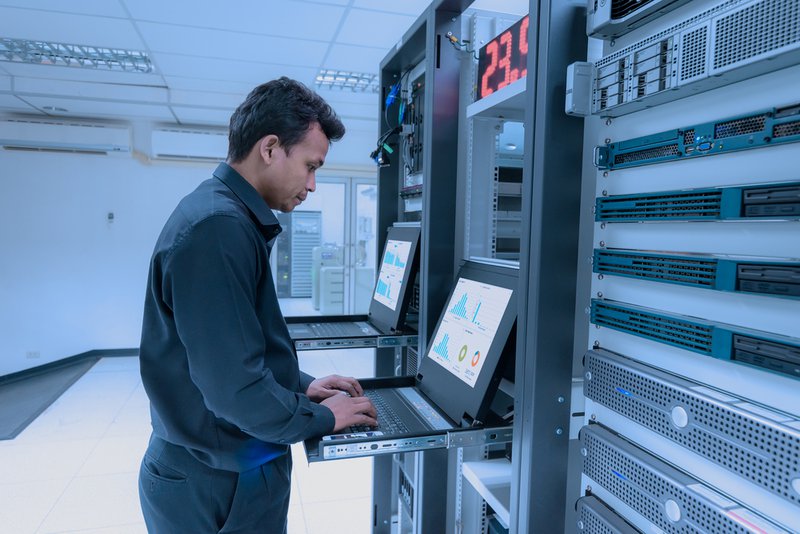
The Place of Liquid Cooling in IT
Liquid immersion cooling shows a 1,000-fold improvement in heat-removing capacity over air. For data centers, this massive advantage translates into more server capacity, quieter operations, and much lower total cost of ownership (TCO). Simply put, facilities use less electricity and infrastructure when they upgrade.
The architecture you choose for deploying this cooling system can maximize the productivity of your data center. The most demanding workloads in IT are those that will gain the most from liquid immersion cooling. So, as you consider the power output of your data center—both at present and in the future—it’s important to also ensure you have a cooling system in place to meet your needs.
Data Center Cooling: What It Is and What It Really Means
Data center cooling is the process of removing harmful heat from servers and other IT components. Cooling uses significant financial and environmental resources, so efficiency matters. There are several different categories of cooling techniques, and each implementation within a category will have its unique pros and cons.
The differences in broad category and specific implementation mean that data center cooling varies considerably in terms of performance and other metrics. Each server in each rack adds to the facility’s total heat load. A higher density of processing requires more cooling ability.
That density is affected by how many devices are in each rack and by the power each device uses. As servers with more chips become the norm, it’s imperative to choose a more capable cooling architecture.
What’s more, server density has been on a dramatic uptick over recent years, with new generations of processors drawing far more power and emitting far more heat. Data centers also increase power density to run new applications such as artificial intelligence (AI). The industry has now reached a level where traditional air cooling is literally unable to keep up with rising heat emissions.
Liquid immersion cooling is the best solution. This system can manage much higher heat output, so it raises the ceiling on rack density. The technical capacity of a data center cooling system is, therefore, essential in selecting the right kind of cooling architecture for your facility’s needs.
The 3 Categories of Data Center Cooling
There are three main types of data center cooling:
- Air cooling
- Direct liquid-to-chip (DLC) cooling
- Liquid immersion cooling
Air cooling is the kind found in most older data centers. It involves blowing large volumes of air over the IT equipment. As heat is produced, it’s transferred into the air, then blown out of the building.
DLC augmented air cooling is a compromise between air cooling and true liquid immersion cooling. This system pipes a cooling liquid to specific processors to enhance the effects of air cooling. It’s more complex, riskier, and less efficient than genuine liquid immersion cooling.
Rack-based single-phase immersion cooling submerges the server racks in a tank of dielectric fluid designed to be safe for IT equipment. As the hardware produces heat, it’s sent into the fluid for removal.
Unlike other cooling technologies, liquid immersion removes heat from every hardware component. What’s more, liquid immersion moves heat away far more effectively than air, making it the more desirable solution.
The Importance of Choosing the Right Cooling Architecture for Your Data Center
Selecting the most appropriate cooling architecture for a data center has a profound effect on business outcomes. Each type of cooling has different upfront and ongoing costs, as well as its own maximum cooling ability. Cooling systems can also affect the data center’s safety and noise levels, its use of resources, and its emission of toxins.
The high efficiency of liquid immersion cooling makes it ideal for both new data centers and retrofits. For instance, liquid-cooled data centers with Green Revolution Cooling (GRC) racks cost half as much in terms of capital and operational expenditures. This technology also raises the cooling capacity enough to accommodate today’s and tomorrow’s power-hungry processors, such as multi-core graphics accelerators. You can even combine it with alternative architectures to add high-density racks.
By contrast, air cooling makes sense only for legacy and lower-power deployments, since it costs more and cools far less efficiently. The compromise of DLC cooling has a few niche applications, but generally its complexity, cost, and loss of performance relative to liquid immersion cooling limit its applicability.
Use the Optimal Liquid Immersion Cooling Solution for Your Data Center
Each data center needs a cooling solution to prevent overheating and damage. The cooling system represents one of the biggest investments in a facility, and your choice of cooling architecture has major long-term implications.
Single-phase liquid immersion cooling is the simplest and most powerful design for data center cooling. It effortlessly removes far more heat than less capable architectures such as air cooling. With GRC’s liquid immersion tanks, your data center can save around half of the cooling system’s total cost of ownership while supporting higher rack densities. Liquid immersion cooling is also a greener technology that’s ideal for your sustainability initiatives.
Contact GRC today to deploy next-generation data center cooling architecture.