
Cloud computing involves worldwide users sharing internet services. This technique makes smarter use of the planet’s resources to limit environmental damage while also saving money. For businesses, cloud computing provides the advantage of a secure digital platform that is available from anywhere in the world.
As more and more devices connect to the web, all are able to connect to the cloud simultaneously. This allows businesses to easily share data across devices: giving employees, company partners, and customers the latest information.
Given its greater resource efficiency, cloud computing drastically cuts energy use. This complements other green data center initiatives, including liquid immersion cooling, which uses far less energy than conventional air cooling. Cloud computing hosts are turning to immersion cooling—like GRC’s—to combine these two promising, environmentally friendly technologies.
What is “Cloud Computing?”
Cloud computing is the delivery of different services via the internet. Rather than buying and installing systems on your own premises, you only rent what you need from an internet company. They also host resources for other clients, so you’re pooling your resources to achieve greater efficiency. When all is said and done, you spend less, you can seamlessly increase or decrease your systems, and you reduce your carbon footprint.
Practically any IT functionality can be delivered through the cloud. Some common uses include storing data, crunching numbers, uploading and downloading data, and hosting applications. It’s basically like having all of your technology available for use without ever having to handle the underlying equipment yourself.
Cloud computing can look like a team collaborating on a document or spreadsheet on an online office program. The software and data reside on a system in a remote data center that the team never has to touch themselves. All they have to do is their normal work, from anywhere in the world, without worrying about IT.
Is Cloud Technology “Green” Tech?
Cloud technology is a “green” tech, also known as “environmental technology.” While cloud computing does add some overhead data transfer to and from the remote servers, it more than compensates for this by its superior efficiency. This efficiency drastically reduces the need to burn fuel. Furthermore, the cloud enables many people to work remotely. This, in turn, reduces the number of employees commuting to and from work each day!
Green technology includes any innovation that protects the environment. This extends beyond information technology to sectors like electric vehicles and renewable energy sources. It’s worth noting that multiple green technologies can work together. Solar power can further alleviate the ecological impact of cloud data centers.
When it comes to IT, green technologies include inventions that reduce environmental impacts. Think low-power processors or liquid immersion cooling. Cloud technology is also a green tech since it reduces the use of resources compared to on-premise computing.
Environmental Benefits of Cloud Computing
Cloud computing moves data processing into large, efficient data centers. This accomplishes more processing with fewer emissions. It’s somewhat like people carpooling or using public transit, which is far more environmentally friendly than everyone driving a separate car. However, the loss of individual control that you have with carpooling or public transit doesn’t exist with the cloud. Since each cloud user has their own private resources, the cloud offers individuals the best of both worlds.
In addition to scaling economies and saving resources, data centers that host cloud resources are designed for energy efficiency. They often utilize renewable energy sources. They use high-performance processors and advanced cooling technology. The most efficient cloud computing services use liquid immersion cooling, which contributes to sustainability.
Sustainability in business has become more critical than ever. Customers gauge companies based on how sustainable their practices are, and many countries even legally require sustainable practices. Cloud computing services use less energy, emit less carbon, and leave more resources where they belong—in the earth.
Cloud computing data centers that transition from air to immersion cooling have much better power usage efficiency. Older air cooling systems require an array of power-hungry equipment to process the air. They also blow through excessive amounts of energy attempting to cool server hot spots. Additionally, the servers themselves need fans on top of the data center’s cooling fans, draining resources even further.
Luckily, none of this is necessary with liquid immersion cooling. Instead, the data center minimizes its infrastructure and real estate, wipes out hot spots, and decreases the need to replace worn-out and overheated parts. What’s the result of this? We’re glad you asked: 90-95% less cooling energy, just about the best environmental improvement a cloud data center can make.
Are There Drawbacks to Using the Cloud?
Despite the massive environmental benefits of using the cloud, there are some drawbacks. While it’s more efficient than on-premise computing, the cloud does produce some carbon emissions. Believe it or not, a single data center can chew through as much electricity as 50,000 homes!
Needless to say, energy consumption has become a notable issue in the data center industry. As these businesses strive to become more energy-efficient, they are looking for any channels to cut their resource use without cutting their service level.
Air cooling can’t keep up with the growing demand for cloud computing, but liquid cooling can. Since liquid immersion cooling uses much less energy and performs better, data centers are increasingly upgrading to immersion cooling. Governments are even offering subsidies and tax rebates for this exciting green technology! In all likelihood, liquid immersion will eventually become the only viable option.
Immersion cooling drastically downsizes your energy use, your electrical infrastructure, and your real estate. It also lets you recycle the excess server heat into other revenue-generating applications, another thing air cooling can’t do!
Achieving Sustainability Through Cloud Computing
Cloud computing—the use of remotely hosted rather than on-premise IT resources—is rapidly growing in popularity and demand. This green technology offers countless benefits including lower costs, higher adaptability, and a drastically reduced carbon footprint and more.
With liquid immersion cooling and other hyper-efficient technologies, cloud data centers are making the entire IT sector greener. Upgrade to GRC’s liquid immersion cooling systems and your business (and the planet) will thank you. Go green with GRC today!
Each data center hosts thousands of computers to dish out the music, videos, social media, and work content around which we have built our lives. These facilities often use huge fans to keep the IT hardware cool. Without sufficient cooling, the servers would fail. The problem is, all of this air cooling comes at a huge cost both to your bottom line and the environment.
How can big data centers become sustainable? Short answer: liquid immersion cooling! This fascinating new technology cools the data centers with liquid rather than air. You may think that it’s unsafe to cool computer hardware with liquid, but engineers at GRC have achieved a liquid immersion cooling system that’s both safe and high-functioning. Moreover, immersion cooling makes data centers more energy-efficient and profitable.
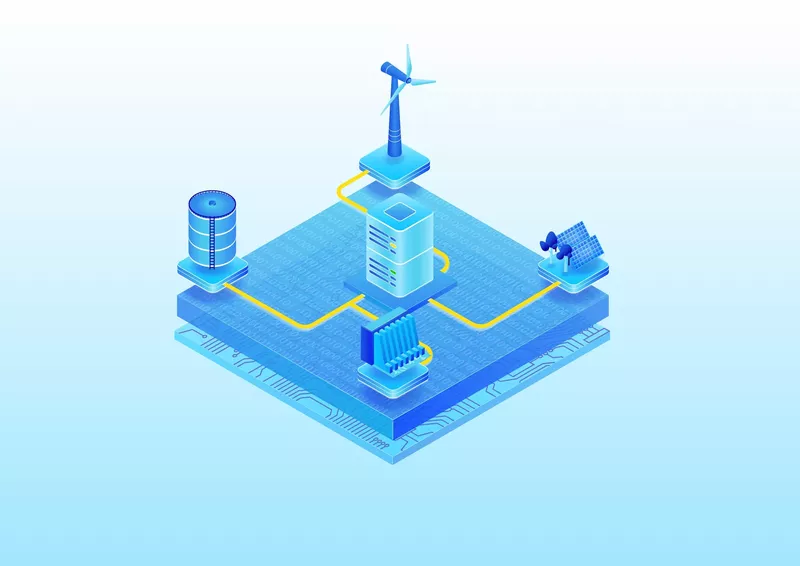
Why Are Data Centers Called ‘Energy Hogs”?
Data centers conduct an immense amount of processing. They calculate and distribute billions of pieces of information each day. Whether you’re streaming a silly cat video, sending an email, or collaborating with colleagues, you’re relying on data centers to perform the behind-the-scenes work.
Of course, all of that work requires energy. So, it’s not surprising that data centers end up being among the heavier energy users. That’s why data centers are considered “energy hogs.” They burn through unfathomable amounts of coal and other fossil fuels traditionally used to generate power.
The two main draws on electricity in data centers are the servers and cooling systems. That’s right! Believe it or not, cooling a data center can eat up as much electricity as running the servers themselves. Cooling systems can even chew through more power than storage drives, network devices, and other actual IT equipment.
Since data centers are among the worst offenders—using around 3% of global electricity and rising—it’s now necessary to look beyond inefficient air cooling. This outdated cooling approach just doesn’t cut it anymore. What’s required is a modern, energy-efficient technology like liquid immersion cooling.
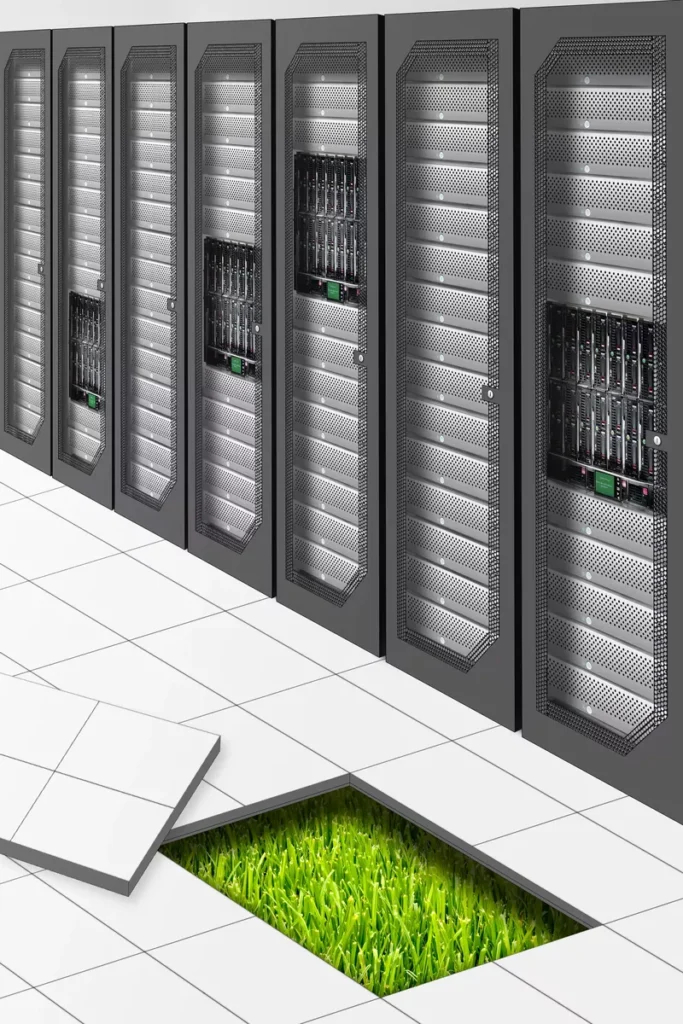
Is Air Cooling Really Not Enough?
While air cooling has cooled data centers for years, it’s now facing challenges beyond its capabilities. Society is placing far more demand on servers than ever; requiring more and more energy. Air cooling literally cannot handle the heat as more powerful processors reach the market.
Air cooling starts to lose steam at around 15 kilowatts per rack and tops out at around 30 to 35 kilowatts. A modern server rack can reach around that level with the central processing units (CPUs) alone. With even more power-hungry accelerators becoming increasingly popular, a data center simply can’t rely on air cooling. Not to mention, computational density is also on the rise.
The fact is, air cooling isn’t enough. Instead, we need smarter cooling technology that can handle larger amounts of heat in the same rack volume. Here’s the good news: that technology exists in the form of liquid immersion cooling. Moreover, immersion cooling offers multiple other benefits including low total cost of ownership, high safety, and consistent performance—all while protecting the server equipment against corrosion and other risks.
Immersion Cooling is Great–But What About Sustainability?
Liquid immersion cooling is an amazing technology but is it sustainable? The answer is yes. In fact, not only is it sustainable, but immersion cooling also enhances sustainability! Immersion cooling draws less energy than traditional air cooling systems, so you get more cooling with fewer carbon emissions. In other words, you get more bang for your ecological buck!
In addition to reducing carbon emissions, immersion cooling also enables the reuse of waste server heat to further increase sustainability. During operations, the servers recycle the heat that traditional air cooling systems just blow out into the atmosphere. Blowing the heat out into the atmosphere worsens climate problems, whereas immersion cooling repurposes said heat to be used for invaluable processes like growing agricultural products or heating entire cities.
Environmentally sustainable liquid immersion cooling is also economically sustainable. You spend less on both electricity for the cooling and on replacement parts for overheated, corroded, and worn-out parts. As such, immersion decreases capital expenditures and operating expenditures.
As the innovator of liquid immersion cooling, GRC has written a report on data center sustainability. As sustainability becomes a key demand of customers and regulators, most data centers are working to clean up their act and immersion provides the perfect solution. Liquid immersion cooling cuts the use of power from dirty sources while allowing data centers to handle more output.
This white paper describes how dire the situation has become and how sustainability pressures now require liquid cooling. Immersion uses a much smaller percentage of electricity for cooling infrastructure compared to traditional techniques; leaving more resources for computation and the environment.
How Immersion Cooling Saves Energy
Intel, Google, Microsoft, and other heavy energy users and producers of servers see immersion as the future of cooling. It cuts carbon footprints by as much as 40% and uses a third less real estate thus, saving money while saving the environment. Immersion cooling uses a liquid that transports heat away over a thousand times better than air can, using less energy to achieve stronger cooling.
Technology companies are switching to liquid immersion cooling for their own data centers, and improving designs to make immersion even easier for more data centers to implement. Immersion cuts cooling energy costs by an unbelievable 95%! Immersion cooling uses far less energy than conventional cooling methods to eliminate heat from IT equipment. Plus, by eliminating the complex and power-hungry air cooling infrastructure, overall data center power usage is dramatically reduced as well. Less energy means better sustainability and more profits in your pockets.
The total energy and maintenance costs will decrease by half when you upgrade a data center from air cooling to immersion cooling. It’s the right call to make for your budget and to help maintain the planet we call home.
Looking for Immersion Cooling Solutions? Talk to GRC
GRC offers environmentally friendly immersion cooling for any application, even the most demanding high-performance computing. Now you can compute any amount of output with immersion cooling.
This cooling technology also works extraordinarily well for enterprise, cloud, and hyperscale data centers. Artificial intelligence, blockchain, and other loads are increasing power use; but you can still maintain minimal power use with the reliable aid of immersion cooling.
When you’re ready to experience the undeniable advantages of liquid immersion cooling, reach out to the experts at GRC. We innovated single-phase liquid immersion cooling, the most efficient solution on the market, and we can make it work for you and your business. Contact GRC today!
It’s no surprise the Metaverse has become the talk of the town. Its promise to bridge the gap between the digital and physical world is alluring, to say the least. But, believe it or not, this promise also carries potential implications for global warming. This is because Facebook and other social media giants are now leading the charge—and the mass-market exposure spells trouble for the environment. It doesn’t help that Metaverse companies collectively surpassed the market cap of $14 trillion last year.
The main problem is that the Metaverse draws far more electricity than previous online technologies, and it does so from dirty sources, like coal and diesel. The data centers feeding customers graphics and other information for the Metaverse also need to cool their servers, which is the second major draw on power after operating the servers themselves. This is how our media consumption is contributing to global warming. However, not all cooling systems work the same, and immersion cooling—like GRC’s—can significantly reduce the environmental impact.

What is The Metaverse?
The Metaverse is the combination of the physical and virtual worlds using immersive technologies like augmented reality (AR), virtual reality (VR), and mixed reality (MR). Each of these immersive technologies helps blur the lines between real and digital.
The parent company of Facebook, Instagram, and WhatsApp has even gone so far as to rebrand itself as “Meta”, in reference to the Metaverse. Yet, a third of Americans haven’t even heard of the Metaverse, while only 14% are very familiar with it. The remainder have an intermediate understanding of it. Among those familiar with the Metaverse, reactions to it vary. A third of Americans are curious about it and a quarter are suspicious of it. The rest range from optimistic to concerned or confused.
Examples of participating in the Metaverse could be wearing a 3D headset to feel like you’re in the same office as a colleague in another country, or exploring an exoplanet with friends in an online game. Businesses expect the Metaverse to become the next version of the web, so it’s abundant with investment opportunities.

Opportunities in the Metaverse
The Metaverse has the potential to revolutionize how people work and play. We’ll learn more interactively, produce and sell more efficiently, and use the Metaverse to meet, work, and game.
As the technology develops, businesses will increasingly exploit the Metaverse to make their products and services more accessible. Marketing will feel more alluring to customers who can engage through hyperrealistic graphics and audio.
Large technology businesses such as Meta, Tesla, and IBM, have already committed billions of dollars to the Metaverse. Non-technological companies, like Walmart and Gap, are also investing. Smaller companies will also have their hands in the ring. Decentralized social media and online services are possible Metaverse businesses. Even the military is looking to boost national security with it!
The Metaverse enables realistic training for dangerous jobs and remote work for others. These advantages are spurring the development of products. Some will succeed and become tomorrow’s household names. Don’t miss out on the next life-changing technological leap!
The Potential Environmental Impacts of The Metaverse
While the Metaverse is chock full of opportunities, it also brings some downside risks. As discussed, at the forefront of these is the environmental risk. The widespread use of the Metaverse will require much more computational power than the regular web. For instance, it may incorporate virtual reality, artificial intelligence, blockchain, and cloud computing. This will drive up data center activity and its corresponding carbon emissions.
But it’s not all bad news! The Metaverse can actually mitigate other environmental woes, like reducing the need for unnecessary travel. Technology giants are even investing in renewable resources and waste reduction for their data centers. However, it isn’t enough to offset the emissions of the Metaverse entirely.
In addition to the electricity for the servers in the data center, there’s also a lot of electricity needed to cool the servers as they operate. GRC’s liquid immersion cooling system drastically reduces this need.
…and The Potential Solutions
Technology companies are not oblivious to the threats of the Metaverse, and they’re working to prevent these problems.
On the one hand, software companies are making their products more efficient. For example, a virtual reality alternative world that shows more details in the center of a scene than in the periphery cuts electricity use and carbon emissions without noticeably impacting the experience.
Data centers and hardware companies are also working towards greater efficiency. For instance, they can use energy-efficient processors and design their facilities to require fewer resources to achieve the same performance level.
A prime example of data centers’ innovation to solve the Metaverse’s environmental problems is the deployment of liquid cooling immersion. This green cooling technology is more efficient, enabling data centers to keep pace with growing processor demand.
How Greener Cooling Solutions Come into Play
The unprecedented energy demands to support the Metaverse are weighing heavily on us all; especially data centers. These ‘energy hogs’ are already in the spotlight as a result of their growing percentage of global power consumption. Immersive technology will shift even more of the burden onto data centers.
Green solutions come into play by letting data centers feed society’s burgeoning desire for the Metaverse while suppressing its carbon footprints. Replacing traditional air cooling with liquid immersion cooling can single-handedly erase many of the industry’s carbon emissions while increasing rack capacity.
Immersion cooling is greener than air cooling in that single-phase liquid immersion cooling draws only a tiny fraction of the electricity. Air doesn’t carry much heat away from servers, so you need to blow over a thousand times as much air to cool servers. All that hot air, and the fuel to power it, gets dumped into our environment.
The growing demand for processing in data centers is ramping up energy use. This increases the financial cost and climate toll. GRC’s liquid immersion cooling is the green solution that takes just mere weeks to set up at half the cost of the competition. You can easily add more racks and cooling as you please with an astonishing 95% decrease in energy costs!
When you’re ready to upgrade to green cooling—whether that be in preparation for the Metaverse or something else—contact GRC, the immersion cooling authority!
Data centers have long faced the challenge of implementing a more economical, yet higher-performing cooling system. As consumer demand for companies to reduce their carbon footprint is at an all-time high, that system must now also be environmentally conscious. Water consumption, e-waste, greenhouse gases, carbon footprints, and sustainability have all become central concerns of the data center industry. Promisingly enough, a concept known as immersion cooling offers the most efficient way to reduce water waste and other environmental tolls – while enhancing performance and reducing costs!

In the US alone, data centers use well over a billion liters of water per day. Not the American people, not huge corporations, data centers. Even more jarringly, over half of that water is potable despite it only being used for things like cooling. Older cooling technologies waste huge amounts of this water, while immersion cooling minimizes waste and more.
Data centers need to remove the excess heat produced by increasingly powerful processors. Cooling equipment can singlehandedly account for a substantial portion of the facility’s water, as well as nearly half its electricity. With these resources at risk, it’s imperative for data centers to utilize forward-thinking solutions immediately.
Immersion Cooling vs “Water Cooling”: Are They the Same?
Though both immersion and water cooling are types of liquid cooling systems (as opposed to the traditional air approach), they fundamentally differ in their mechanisms and resource use. Above all else, immersion cooling reigns far supreme in water waste reduction efforts.
With immersion cooling, as the name implies, you surround the entire computer system in a liquid (not water! Dunking a server in water would fry it; immersion cooling uses a safe dielectric fluid). Contrastingly, water cooling involves piping water through additional tubing to cool the servers. This technique endangers the technology and requires substantial volumes of water.
Liquid immersion cooling systems – like GRC’s – enable high-performance computing operations without wasting water, overheating servers, or losing profit to electricity bills. Immersion cooling also takes less real estate and produces less noise, making this a win-win solution. GRC’s immersion tanks take all of these benefits a step further, effectively slashing cooling energy use by 95%! Their smart design allows technicians to install and service their hardware easily. A healthier planet and bottom line sounds like a no-brainer to us.
Immersion Cooling: The Answer to the Question of Sustainability
As a massive user of water and electricity and a producer of toxic emissions, data centers must work to become greener. Several different avenues have already begun merging to steer data centers towards a solution. Sustainable energy sources, like hydro and solar, join sustainable on-premise equipment to do more for less. Immersion cooling lies at the intersection of these strategies to drastically decrease energy and water use, emissions, and e-waste.
How does immersion cooling accomplish all of this? It uses a liquid that’s more than a thousand times more effective than traditional data center air cooling. This eliminates much of the resource demand. Additionally, data centers draw far less power from the grid and require less of their electrical infrastructure for cooling. The servers no longer need fans, further decreasing electricity use.
By minimizing the loss of heat, electricity, real estate, money, and water, immersion effectively poses a near-perfect answer to the question of data center sustainability.
The Challenges of Immersion Cooling
While immersion cooling is an incredible technology already revolutionizing the data center landscape, it has encountered challenges. Certain environmental, technical, and even legal considerations affect where it can be deployed.
While immersion cooling offers substantial TCO savings, it does require a financial investment from the data center. As a new technology, many people remain apprehensive about its capabilities.
Additionally, data centers that have relatively modest needs may not reap as many benefits from taking the plunge. Immersion cooling offers more bang for the buck in data centers that require excessive power, space, water, and other resources. Thus it may pose a challenge for smaller data centers to justify the switch. It is, however, worth noting that, regardless of size, all data centers can save resources with this technology.
Additional challenges facing immersion cooling include ensuring the compatibility and safety of materials in the tanks. The designers at GRC have directly addressed these challenges and produced a system that is safe for humans and the environment.
Among the design challenges, the central issue is engineering the system to transfer heat from the servers to the liquid. There are single-phase and two-phase systems, and GRC’s single-phase system decreases the complexity and costs while increasing reliability and limiting the risks of global warming. Fortunately, the difficulties in implementing liquid immersion cooling have now become manageable.
The Future of Immersion Cooling
The undeniable upsides of immersion cooling pose the question: how will this technology evolve in the coming years?
We should expect to see immersion cooling become far more widespread. Environmental sustainability efforts are pressuring hyperscalers to go green, and liquid immersion helps data centers fulfill these commitments.
Computer processors, including specialized devices for high-performance computing, are becoming dramatically more power-hungry. Immersion cooling feeds these processors to keep our world spinning.
Through the work of GRC, immersion cooling has become a commercially viable technology. Now data centers are rapidly upgrading to reap the financial, technical, and environmental benefits. The growing awareness of water as a sensitive resource will push even more organizations to take the plunge to reap these benefits, too.
Final Thoughts
Liquid immersion cooling has fast become a key data center upgrade, as more businesses learn about this remarkable new technology. It’s come along just as customers and governments are pressuring the industry to clean up its act (and the earth!).
Wasting immense quantities of water that could better serve humanity elsewhere – as well as burning excessive fossil fuels – is no longer acceptable. Thankfully, immersion cooling rectifies the water waste crisis in data centers. It even incidentally saves money and space while reducing noise and simplifying maintenance!
If all of these advantages entice you to transition your data center to a liquid immersion cooling system, separate yourself from your competitors with GRC. You’ll see lower TCO, and your servers will run faster and last longer. Save, well, everything by going with the smartest cooling system on the market. Go green with GRC today!
Did you know that data centers are already finding clever ways to reuse their excess heat? They are transforming this waste into a valuable resource with a little creativity and a big push for sustainability. You can make data center heat work for you—rather than against all of us—too!
Granted, the ways to go about this may sound a bit far-fetched. Using discarded data center heat to turn wood pellets into heated homes and feeding millions with farmed fish and produce may sound too good to be true. But, every day people are driving electric cars and recyclable rockets are being shot into space. Repurposing heat waste is far from impossible. And these are just some of the applications already earning revenue.
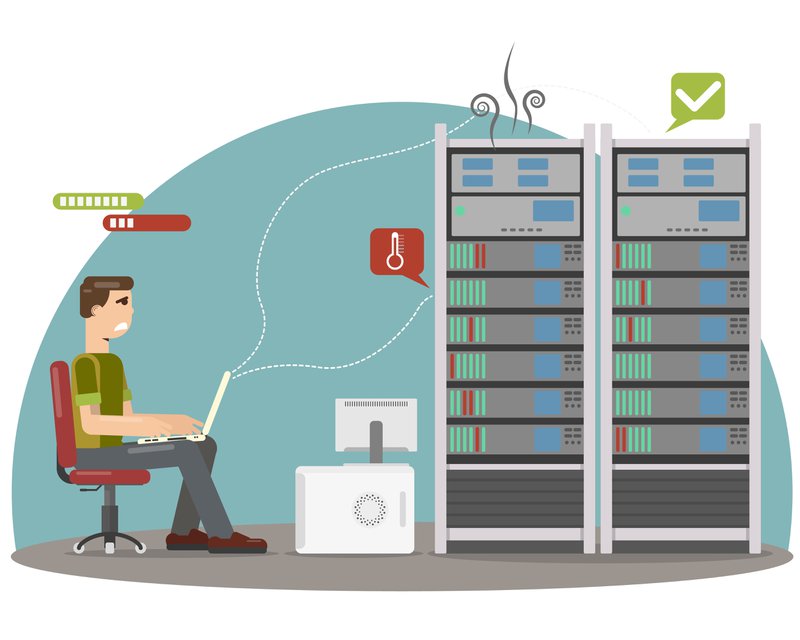
Data centers invariably reject heat from the servers. In traditional data centers, this heat is blown off into the air. These facilities blow large volumes of air over the servers to cool them, which then dissipates into the atmosphere as waste. Air is simply not a practical coolant for recycling heat (or for performance, for that matter).
New immersion cooling technology, like GRC’s, captures the rejected heat in a liquid coolant. This enables businesses to utilize that rejected heat for other purposes. Instead of piling onto the global warming problem, the heat now serves economical uses.
Liquid works far better than air—around three times better, actually—for reusing data center heat. Recycling heat with immersion cooling is therefore becoming a notable trend in advanced data centers, especially in colder climates where people have more uses for heat. This technique offers numerous benefits for the data center, for their partners who receive heat, and for the environment.
How does this work? Liquid-enabled data centers are finding original methods to reuse the rejected heat for their own organizations, or in partnership with others in the community. In some cases, the recycled heat goes to work directly within the data facility, while in other cases the heat feeds into a separate organization—or even aids an entire city.
Experts see liquid immersion cooling as a game-changer that makes heat recovery feasible for data centers. The sustainable technology not only captures more of the heat but also at higher temperatures and in a controllable format that has multiple industrial applications. This makes liquid the coolant of the future. The good news? It’s available now.
Manufacture Wood Pellets
EcoDataCenter in Sweden is building a huge facility that pumps its rejected heat into a wood pellet factory. The product can later be burned by customers to heat their buildings. You take the heat that you don’t need now from the data center, and you convert it into wood pellets that can be used later where people do need heat.
Some of the heat will also go to district heating for the city the data center is located in. In district heating systems, heat is sent throughout a municipality to buildings that use it for air and water. The greater efficiency makes this a key method to decrease carbon emissions and waste. In northern climates, the recycling of waste heat allows coal burning and other polluting processes to be taken offline.
The new wooden EcoDataCenter facility will cost over a hundred million dollars and add 15 megawatts (MW) to the 80 MW on the campus. The innovative approach to cooling—using excess heat to produce wood pellets—will enable clients to host their data in a modern facility while cutting greenhouse emissions and contributing to the local economy.
This green cooling solution represents a partnership between a leading Nordic data center operator and the local power company. This and other creative uses of rejected heat take advantage of liquid immersion cooling to capture 100% of data center heat. This ability makes it efficient to recycle heat throughout the economy.
Farm Fish

An American business is using a large underground data center’s rejected heat to maintain a sea bass farm. This is no small operation; it has the potential to produce half a million pounds per year—around one-twentieth of the nation’s consumption of sea bass.
The business also aims to expand into related activities to build a comprehensive local economy around its data center. They want to develop a sheep farm, as well as a farmer’s market and other nature-centered things.
Sea bass like warm water. Growing them in cold climates requires a lot of heat. Using rejected heat from data centers is a win-win solution, eliminating the heat that would bog down IT infrastructure while funding the seafood operation.
There are several other fish farming projects around the globe reusing waste data center heat. For instance, a colocation business in Norway is reusing data center heat for the largest land-based trout farm in the world. This data center already generates all of its power from renewable hydroelectric energy. In collaboration with a seafood business, they will produce 9,000 tons of trout each year, enough for 22 million meals!
This sustainable effort will not only keep the heat in the economy but will also cut carbon emissions and other toxic waste from the atmosphere. Instead of pumping hot air into the environment, the data center will pump its heat to the fish farm, less than a kilometer away.
The transferred heat will ensure that the fish are consistently in warm enough water. On top of this, the water from the fish farm eventually recirculates back to the data center! After dissipating its heat in the fish farm, the water is now cool enough to protect the data center servers again, restarting the journey.
Grow Tomatoes
Going back to the benefits of immersion cooling, this technique makes it feasible to reuse heat for whatever purpose you can imagine. In the case of a Dutch cloud host, they came up with a truly green idea for the recycled heat: growing tomatoes!
Each data center works out of a container next to a greenhouse. These containers function somewhat like GRC’s ICEtank modular liquid immersion system. You get your computing power installed with liquid cooling that you can use anywhere.
The recycled heat from the Dutch containers makes its way into water at 65 degrees Celsius (149 degrees Fahrenheit). This warm water is then sent to the greenhouses. Incidentally, the IT hardware in the containers is recycled from hyperscale data centers, such as Facebook, making the project even more sustainable.
Each container produces enough data center heat for two hectares of tomatoes during the Dutch summer, or a quarter of this amount during the winter. The recycled heat is considerably more affordable than the natural gas alternative that these greenhouses would otherwise use—making the green project financially sound. It also cuts gas combustion emissions out of the equation, keeping the Earth cleaner.
These creative methods of reusing data center heat were not practical when data centers relied exclusively on air cooling. Now that liquid immersion cooling is on the scene in a big way, more data centers are finding interesting uses for their rejected heat. Rather than being a source of trouble as data center heat used to be, it’s become an economically and environmentally beneficial resource.
Heat Buildings
Perhaps the best-known use for recycled heat is to heat buildings. You can reuse data center heat for the building’s water and air. This is made more practical with liquid immersion cooling from GRC, since the servers dump their heat directly into a liquid that can be efficiently recirculated through the building’s systems.
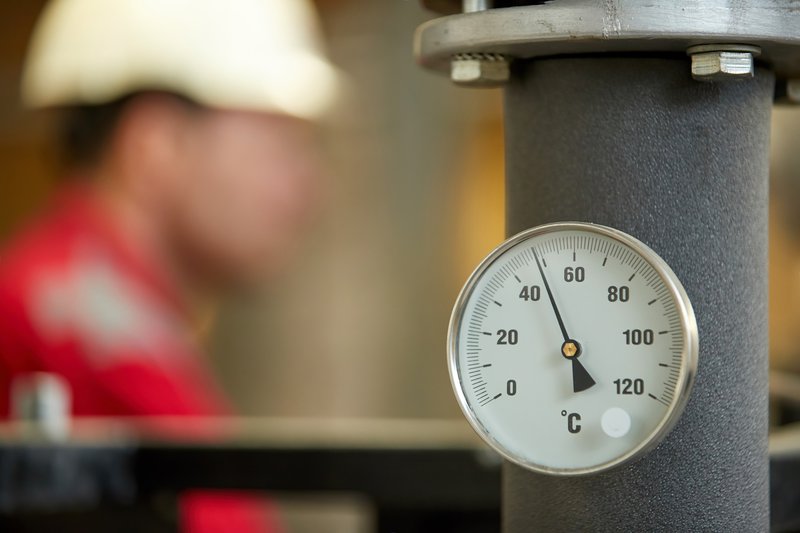
While the temperature of the heated coolant on its own typically isn’t hot enough to heat water much in colder environments, with maximum readings in the 40-42 degrees Celsius range, it’s suitable for radiant heating. If hotter temperatures are needed, high-efficiency heat pumps can be used for a fraction of the energy that heating it through traditional water heaters would take.
The options for heat reuse are extremely location-dependent. If your data center is in a cold northern climate, then it’s much easier to find a use for rejected heat.
Rejected heat can be used not only for the data center itself but also for district heating systems that can warm tens of thousands of buildings. This saves money for the people receiving the heat, and some of that money goes back to the data center stakeholders. It also prevents the data center heat from escaping into the air and reduces the need to generate heat for the other buildings through polluting processes.
Investments in systems to send data center heat throughout municipalities are expected to add up to over a billion dollars and create hundreds of jobs. Now some governments even mandate that data centers recycle their heat. However, not all technologies enable this recycling equally.
Liquid immersion technology works far better for this purpose than traditional air cooling, as it keeps the heat stored within a reusable liquid. Its advantage can be measured in terms of superior energy reuse effectiveness (ERE). This complements liquid immersion cooling’s improvements to other metrics, like water usage effectiveness (WUE), carbon usage effectiveness (CUE), and power usage effectiveness (PUE).
As you can see, there are tons of advantages to recycling waste heat. And hyperscalers like Google, Amazon, and Facebook aren’t oblivious to these advantages. They are also reusing data center heat for buildings. Large data centers across the globe are going green.
For example, Stockholm, the capital of Sweden, has a district heating system that buys waste heat from data centers and uses it to heat water throughout the city. This arrangement pays heat producers $200,000 per megawatt each year. Heat isn’t just some costly waste, it’s a valuable commodity!
All You Can Heat
The above use cases—wood pellet manufacturing, fish farming, tomato greenhouses, and building heat—are just a few examples of the creative ways that data centers are reusing their heat. Depending on your location and the needs of your community, the possibilities are endless.
For instance, desalination of water has typically struggled with lack of heat. As such, this is an exciting destination for data center heat. You send the heat through a immersion cooling system into the desalination plant. This makes clean drinking water.
In an ironic application, if the rejected heat is hot enough it can be used to power cooling systems! You can even take this one step farther in what’s called “trigeneration”. This produces electricity, cooling, and heating simultaneously! You’re covering a lot of your resource needs out of a waste byproduct.
Several other ideas for reutilizing waste data center heat include insect farming, biomass drying, and wastewater treatment for irrigation. Each of these uses generates financial returns while cleaning the environment—all as desirable side effects of removing unwanted heat from IT equipment.
Again, you can think of your own uses, too! It’s a fun exercise in creativity but also one that can have positive ramifications for your bottom line and the planet. The pressure is on for data centers to go green and implement sustainability plans. Liquid immersion cooling makes this not only possible but dually rewarding.
Reuse Data Center Heat With GRC
When you want to find profitable ways to put your data center heat to use, get in touch with GRC, the liquid immersion cooling authority. We have years of experience as the innovators of this green technology. It boasts a lower total cost than the competition and makes heat reuse efficient.
Data centers around the world are piping their rejected heat into the manufacturing of wood pellets, the large-scale production of fish and tomatoes, and heating the air and water in their own buildings and those of their communities.
Heat is a basic resource with countless uses, just like electricity or water. Let’s discuss how to best transform your data center’s rejected heat into greener cash flow. There’s an indisputable return on investment to be made from the smart use of resources, all while making the Earth a better place. What’s your green data center idea? Tell us today!
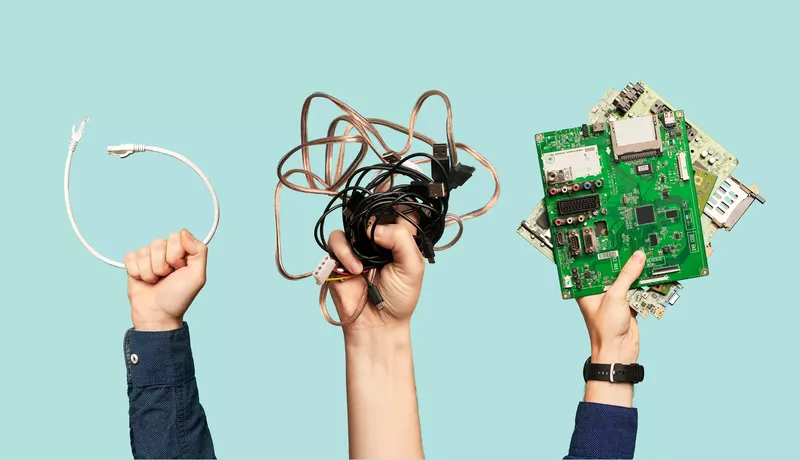
To keep the world spinning and its inhabitants connected, data centers deliver tremendous value … but also produce copious amounts of electronic waste. Every year, they collectively produce upwards of two million tons – about 4% of all of humanity’s e-waste. This digital detritus has become a massive environmental problem.
The problem stems from the concentrated use of electronics and electrical equipment in data centers – including computers, networking equipment, and extensive cooling hardware. The choice of which cooling technology to deploy greatly affects the amount of e-waste produced.
Liquid immersion cooling, like GRC’s, drastically reduces e-waste compared to traditional cooling methods. Its promise of more sustainable operations is steadily popularizing it as an essential element of smart management.
At the end of the day, data centers have a moral and social duty to manage their e-waste. Of course, that’s easier said than done. As always, GRC has your back.
Here are three ways to reduce your data center’s carbon footprint while raising the bottom line: use liquid immersion cooling, establish an IT Asset Disposal Program, and/or design and build data centers with sustainability in mind.
1: Use Liquid Immersion Cooling
Conventional air cooling can account for half of a data center’s electricity. Needless to say, this method exerts extraordinary pressure on the electrical infrastructure. Liquid immersion cooling (LIC) requires significantly less electricity, therefore decreasing the need to purchase and discard electrical equipment – therefore decreasing e-waste!
LIC expels less e-waste than even alternative immersion cooling approaches, like rear door heat exchangers (RDHx) or cold plates that go directly on the chip.
So, why does liquid immersion win? LIC efficiently submerges the servers in a system with few moving parts. By contrast, air cooling needs large electrical units, while alternative liquid cooling systems require substantial plastic plumbing to circulate the fluids, All of this eventually becomes e-waste.
The immersion cooling technology also submerges electronics in a protective bath, eliminating the need for fans while blocking airborne contaminants. Therefore, parts aren’t subjected to corrosion or other causes of failure (further decreasing e-waste!).
With high-performance computing, cryptocurrencies, and growing demands in workloads, data centers need liquid immersion cooling to reduce the amount of IT equipment they burn through – now more than ever. Bitcoin alone produces as much e-waste as the Netherlands!
Advanced cooling of data centers also has indirect benefits in managing electronic and electric junk. Simply put, it’s more cost-effective. This frees up your budget to invest in longer-lasting parts, maintenance, and other sustainable initiatives to prevent e-waste.
2: Establish an IT Asset Disposal Program
Managing e-waste can and should also be done through organizational policies, in addition to upgraded cooling systems. A data center should have policies to repurpose older hardware when feasible and recycle it when it’s not. These mechanisms fit into the larger sustainability goals of an IT Asset Disposal program.
A program like this aids both the data center and its clients! For example, data centers can offer information and assistance to customers with expiring hosted equipment. A business that hosts thousands of servers will inherently prevent massive amounts of e-waste if done so with sustainability in mind.
When it comes to the proper disposal of electronic equipment, there are relevant standards, such as ISO 14001 and Responsible Recycling Practices. A data center should strive to surpass these standards. When disposing of hardware, the data center should partner with a certified recycling organization. Over a third of global data center operators rely on a certified recycling partner.
Another great way to manage e-waste is to reuse and recycle as much equipment as possible. This includes IT gear, like servers, and non-IT infrastructure, such as electrical equipment. In conjunction with the selection of efficient systems – including liquid immersion cooling that requires less infrastructure – the IT Asset Disposal Program will minimize e-waste.
3: Design and Build with Sustainability in Mind
Managing e-waste begins with a sustainability-oriented mentality. From individual parts to servers and rack levels to the entire data center, consider how to make each element less wasteful. You can decrease waste by selecting components that have long lifespans and are easy to process at their natural end-of-life cycle.
Using recycled materials and making equipment easy to repair can also decrease the environmental toll. These actions reduce the frequency a data center needs to discard hazardous electrical or electronic goods.
For example, Facebook makes components easy to disassemble, which simplifies the extraction of parts or resources. Facebook also replaced lead-acid batteries with lithium-ion batteries, which have higher energy density and last longer, to prevent e-waste. Precise monitoring further enables less need for maintenance and waste.
Design and build the data center with sustainability at the forefront, rather than having to drastically course-correct down the line. This foresight will keep more resources circulating within the digital sphere rather than going to waste. Building with sustainability in mind and the IT Asset Disposal Program are deeply connected, as they are both plans to yield the least possible waste. They also complement liquid immersion cooling, a sustainable technology that reduces wear on parts and electrical infrastructure as a preventative measure, rather than a reactionary one.

Cut Out E-Waste With GRC
GRC’s unique liquid immersion cooling systems keep electronics functional without destroying the planet. This energy-efficient cooling places less strain on IT and electrical infrastructure. When you switch, you’ll see longer-lasting, faster servers at a lower cost!
In conjunction with an IT Asset Disposal Program and a sustainable design, this revolutionary cooling technology makes it easy to manage e-waste. You place your servers in a safe liquid coolant, which protects your hardware while eliminating a sizable part of your electricity use. Hardware then does what it should: work for you, rather than go to waste.
Data centers cutting out e-waste isn’t the right thing to do, it’s the only thing to do. These institutions are responsible for a huge e-waste stream and have a moral obligation to protect the people that keep them in business. Think globally, act locally. Go green today with tomorrow’s technology. Contact GRC now!
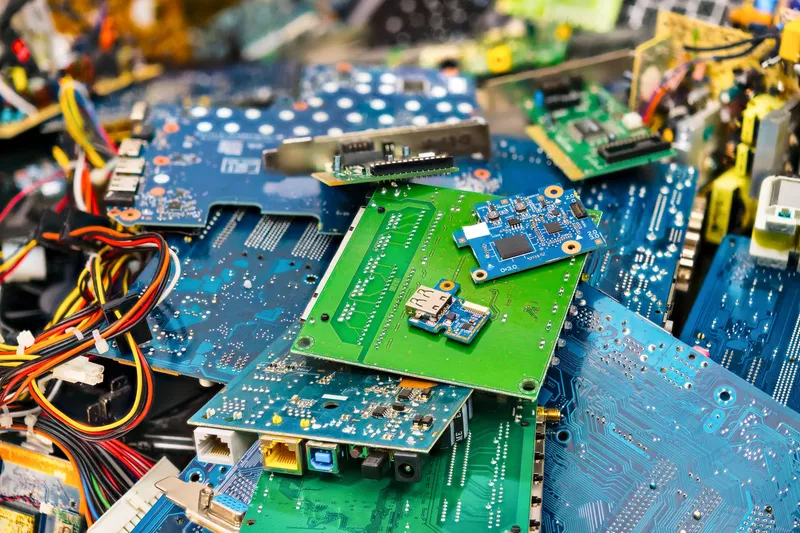
E-waste refers to discarded electronic and electrical material – and data centers have a serious problem with it on their hands. While everyday people tend to use their devices until they break, data centers tend to run through theirs unnecessarily faster.
The ecological impacts aren’t only due to material waste; the very infrastructure of data centers contributes to the e-waste problem. Electrical, HVAC, and other systems rely on hardware that eventually gets discarded. Cooling the IT equipment with air or cold plate methods requires significantly more parts – that will later become e-waste – compared to GRC’s environmentally friendly liquid immersion cooling solution.
We’ve developed more data centers to handle surging technological usage. Believe it or not, we’re on track to produce 1.5 times more electrical waste by 2030 – a staggering 74 megatons! Needless to say, e-waste is an upward trend with potentially devastating consequences.
The burden to address this problem is on those who created it: businesses, particularly data centers. Fortunately, there are several complementary approaches to respond to the e-waste problem. These include recycling and reuse, operating computer equipment in eco-conscious data centers making use of immersion cooling, and designing components for sustainability from the ground up.
The E-Waste Problem
A data center may have a depreciation/refresh cycle of three to five years, resulting in a consistent stream of electrical waste. Functional systems are thrown away as scheduled, rather than as needed. Globally, we produce over 50 million metric tons of e-waste per year, and this is growing faster than any other category of solid waste. This reckless industry dumping poses a whole host of negative ramifications for the planet.
For example, e-waste is often discarded in landfills or incinerators. The toxins inside them pollute the environment and harm the people handling them.
Additionally, the substances in e-waste aren’t biodegradable. They accumulate in our water, our air, the ground – and will continue to do so until we can’t escape them. Even though e-waste only accounts for 2% of solid waste, it produces a staggering 70% of discarded hazardous materials.
Recycle, Reduce, Reuse – and Repair
Finding responsible methods to handle old hardware is a practical, necessary way for data centers to respond to the e-waste problem. This approach involves using more sustainable cooling technology – like GRC’s – to reduce equipment waste.
E-waste includes expensive materials – as much as 7% of the earth’s gold may be in it! It’s also estimated to be worth over $62.5 billion per year. Needless to say, recycling these materials can release the floodgates for a healthier, more sustainable economy.
Recycling electrical parts not only keeps these materials out of landfills and prevents them from harming humans, but it also reduces the need to mine more of these materials in the future. Less mining equals less pollution!
“Urban mining” of e-waste resources keeps them out of the ground (and therefore our food and water supply), and also poses a greater economical advantage than traditional resource mining. There is 100x more gold in e-waste than in ore. Yeah, read that twice.
Data centers can go beyond recycling by repairing equipment themselves. Old computers, for example, are highly receptive to repairs.
Data centers have a moral and societal obligation to use repairable parts in their business operations. Incidentally, liquid immersion cooling protects servers and extends their mean time between failures (MTBF). It does this by bathing the devices in a fluid that acts as a barrier against corrosion and other threats.
Move Computation to Efficient Data Centers
Much of the e-waste problem derives from inefficient use of computer resources. For instance, placing a server in a data center that burns half of its electricity budget on air cooling will greatly diminish its lifetime.
Liquid immersion works far more efficiently than air or even alternative immersion cooling technologies. Data centers should upgrade to liquid immersion cooling – not only because it’s the right thing to do in terms of sustainability/morality – but also because it’s incredibly promising in terms of profitability.
Data centers that use immersion cooling technology drastically decrease the waste of electricity, money, and other resources. They can operate in smaller buildings, reducing their carbon footprint and cash expenditures.
As a whole, the tech sector has an incredible opportunity to make a positive, lasting impact. More data centers are going online, allowing society to store computational services and infrastructure in the cloud. Therefore, the electronics industry can “dematerialize”; users can rent equipment on an as-needed basis, rather than buying outright only to discard them down the line.
Use Electronics Sustainably from Start to Finish
Instead of thinking of e-waste as an unpreventable end, we should design products with sustainability in mind. The entire lifecycle should support recycling, reuse, and the resale of electronics and electrical goods. By making products last longer through smarter designs and operations, we as a society can decrease e-waste.
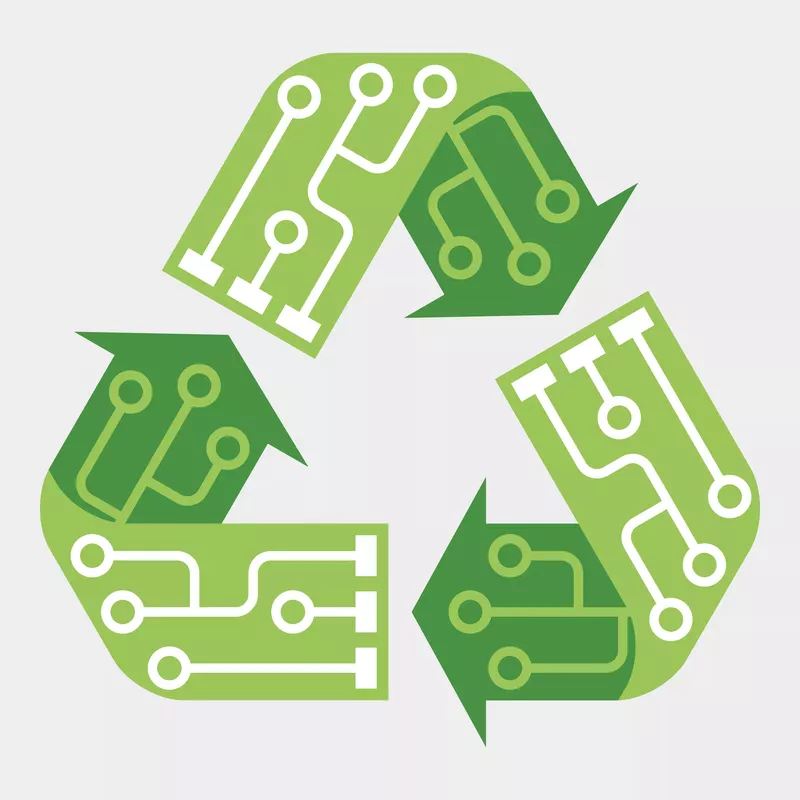
Data centers should incorporate e-waste management into every level of operation, starting from the top-down. By using servers in liquid cooling, data centers can cut e-waste and carbon emissions.
Legislative bodies across the globe have instituted laws surrounding e-waste, including the European Union’s Waste Electrical and Electronic Equipment Directive. These laws encourage recycling and reusing products such as servers, as well as minimizing toxic substances. Dozens of countries now have e-waste legislation.
Through design choices, business operations, corporate policies, and legislation, society is taking steps to respond to the global e-waste crisis. Industry-leading data centers are contributing to the fix. Eventually, we may even nearly eliminate e-waste, by having primary resources remain in the economy rather than in landfills. With coordinated, long-term efforts, we can transform e-waste from a global issue into an invaluable resource.
Become Part of the Solution With GRC
E-waste has spiraled into such a massive problem, that it is quite literally worth its weight in gold. As society has realized that we only get one earth, the race to clean up the e-waste problem has yielded several solutions. Methods to solve this problem include recycling, reducing, reusing, and repairing servers and other electrical equipment.
A key selling point is that more efficient data centers prevent environmental issues while expanding profitability. The liquid immersion cooling solution greatly reduces resource waste while increasing the bottom line. This remarkable technology protects electronic equipment to extend its life, keeping more hardware out of the landfill and in the data center earning revenue.
Become part of the solution with GRC’s unparalleled liquid immersion cooling system. Contact us to learn how your business can become a pioneer in the sustainability movement, today!
Waste heat has become a glaring problem for data centers, prompting engineers to seek opportunities to transform it from a liability to an asset. The severity of the waste heat situation has implications stretching far beyond data centers themselves, but also for the environment and life as we know it.
Each data center runs thousands of servers, featuring increasingly powerful processors. These processors run the calculations to power social media, news sites, and the entirety of the World Wide Web. As essential as they are to keeping us connected, they also produce waste heat – or the heat released from operating hardware.
The processors are only designed to withstand certain temperatures. When data centers fail to dissipate the excess heat, the servers will fail. Air cooling systems are a valiant attempt, but they struggle to remove enough heat to be considered eco-friendly. Traditional air cooling systems mitigate the server damage by redirecting the heat into the atmosphere, which contributes to global warming.
This lose-lose situation poses a challenge for the industry. Innovative data centers are asking themselves how they can actively recycle waste heat. Immersion cooling is a promising technological solution that may just save our digital lifestyles and the planet we depend on.
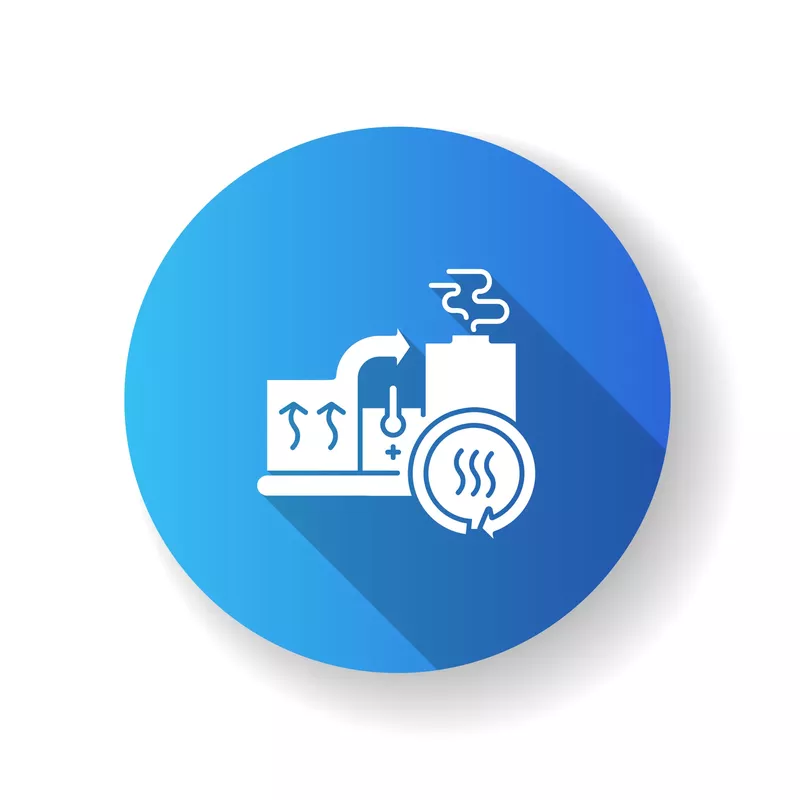
Data Centers Produce Waste Heat: The Science of the Problem
Inside a data center, electricity feeds the servers and other IT equipment. The processors convert that electricity into computations for internet applications. As a byproduct, the processors also emit some waste heat.
The waste heat can have a serious negative effect on processor performance, slowing down the calculations and even damaging or destroying parts. Temperature is one of the main limiting factors of processor performance.
The waste heat also impacts the environment, adding to the climate crisis. On one hand, burning fossil fuels to produce electricity heats the planet as a byproduct of combustion. On the other hand, waste heat seeping out of data centers adds fuel to the fire, making the earth even hotter.
Data Centers CAN Benefit from Recycling Waste Heat with Liquid Immersion Cooling: The Technology of the Solution
In traditional air-cooled data centers, waste heat is irrevocably lost to the environment. But immersion cooling technology allows data facility operators to efficiently capture and reuse that waste heat. This answers the problem of waste heat by turning it from an ecological nightmare to a valuable resource.
Believe it or not, this concept is already being put to work. For example, the EcoDataCenter in Sweden reuses waste heat to make wood pellets. You can recycle heat for any process that requires it as an input. This offers a win-win-win for data centers. Immersion cooling systems prevent heat-damaged servers, the businesses profit from recycling the heat, all while saving the environment!
With liquid immersion cooling, like GRC’s ICEraQ, you transfer the heat from the servers through the rack’s liquid into the data center’s coolant. Then you can use the heat for whatever you like. The heat given off by the servers remains in liquid form the whole time, making it feasible to repurpose that heat with minimal loss – unlike air that’s difficult to control.
Liquid immersion cooling recycles virtually all of the server heat, versus air cooling’s 30%. Moreover, liquid recycling works at 45 degrees Celsius, nearly double the temperature of air cooling.
New computer processors have comparable power use density to a nuclear generator. Experts see the reuse of waste heat in urban data centers as a growing trend in response to this challenge. For example, you can reuse the “waste heat” to warm the water for tens of thousands of buildings. Again, redesigning waste to become an invaluable service to us in real, everyday life.
Recycling Waste Heat Contributes to Sustainability
As with other forms of recycling, the recycling of waste heat ameliorates an organization’s sustainability. Many large European cities now even require server heat reuse to receive a permit. In Sweden, data center users can resell waste heat for hundreds of thousands of dollars to heat water for the capital city. They can use this sustainability initiative to then generate a tenth of the city’s heating needs from data centers!
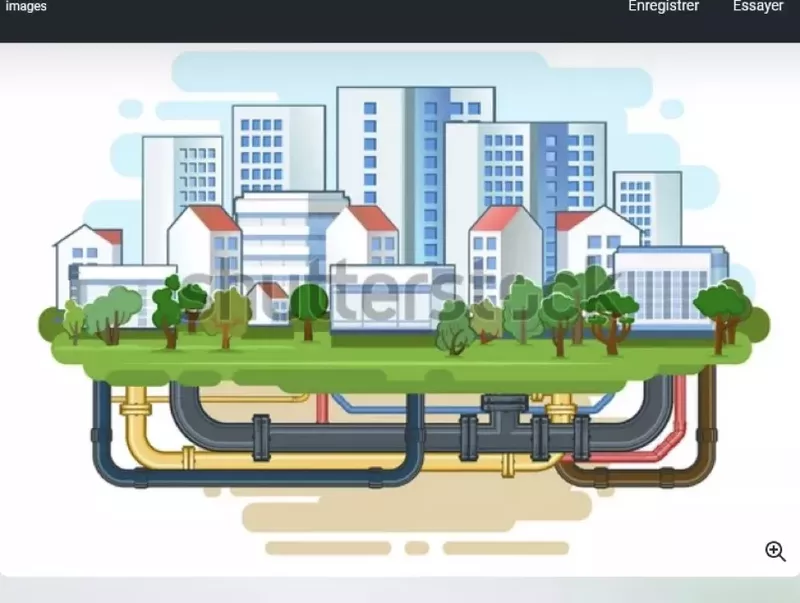
There are ample creative and environmentally friendly applications of recycled heat. Think of all the processes that rely on heat – nearly everything! Plants and animals need heat for their metabolism; factories, warehouses, offices, and houses need heat to sustain their processes. Heat is a basic resource essential to society.
Recycling waste heat through liquid immersion cooling essentially prevents uncontrolled resource loss, by mobilizing the heat into a sustainable tool for civilization.
Liquid cooling also offers numerous other advantages over air cooling. It has a lower total cost of ownership, can handle far denser server capacity, protects hardware against debris and corrosion, and operates more quietly. Furthermore, liquid immersion is a more reliable system that you can install anywhere, from hyperscale data centers to shipping containers.
Recycle Data Center Heat With GRC
While data centers inevitably produce heat, that doesn’t have to be waste heat. Instead of seeing it as a problem, innovative organizations are approaching heat as a resource we didn’t even realize we had. To take advantage of this resource, they’re upgrading from air cooling to liquid immersion cooling.
Liquid immersion cooling dissipates the heat from the servers more effectively than air cooling systems. This saves the servers from damage while transmitting the heat into a reusable liquid – rather than irresponsibly polluting the atmosphere. There are countless creative uses of recycled heat, from cultivating fish to heating the water and air for human use. Our future is as bright as you can imagine it.
As with all worthwhile things, the best time to start was yesterday. The next best time to deploy GRC’s liquid immersion cooling solution is now! Achieve the best of both worlds; recycle data center heat with our forward-thinking technology today. Do us all a favor by contributing to the green data revolution. Ready to take your data center to the next level? Get in touch with us!
There are several million data centers globally. Each power-hungry facility can pack in tens of thousands of servers, guzzling environmental resources more than entire countries. The combined environmental effect of all of these data centers has become a growing concern to governments and the broader public. Data center operators must respond.
In recent years we have seen the rapid emergence of massive “hyperscale” data centers. Over just a few years, these giant data centers—with the biggest being the size of multiple football fields—have literally doubled the amount of energy they use, racing towards 100 terawatt-hours per year of energy consumption. They have thousands of servers running 24 hours a day, 365 days a year. New “edge” data centers are also sprouting up and adding to the already-high power consumption rates.
Data centers serve as the giant “brains” of our Internet age, constantly processing to enable society’s growing dependence on social networks, online banking, cloud computing, and an ever-expanding list of devices. There is a dark side to this data center dependence, however: the detrimental and, until recently, mostly overlooked toll on the environment.
What Are Data Centers and How Do They Work?
Data centers are concentrated locations hosting banks and banks of servers and networking gear. They process mountains of information and on any given day, tens of millions of servers in the over 7.2 million data centers around the world are running applications for a range of customers around the globe.
Data centers drive nearly all of the information flowing through laptops, tablets, smartphones, and other digital devices. Whether posting a cat video on Twitter or working on a spreadsheet in the cloud, both cause a chain reaction and use energy. This energy use includes not just the personal devices themselves, but all that’s consumed by the centers to feed the devices.
Data center energy continues to accelerate as billions of devices continue to join the Internet of Things (IoT), artificial intelligence (AI) becomes ubiquitous, and other applications like blockchain-powered cryptocurrency evolve. In addition to the ITE infrastructure to support all this digital activity, data centers also need cooling equipment to manage the heat generated by all this computing.
The Environmental Toll from Data Centers
While the development of mega data centers has proven hugely beneficial for businesses and the global economy and helps billions of people work and play each day, it is extracting a huge toll on the environment. It takes electricity, and vast amounts of it, to power the millions of servers, and to run the cooling systems the remove the immense amount of heat generated by power-hungry processors.
With approximately 62% of the world’s electricity supply coming from burning fossil fuels, mostly coal and natural gas, electricity production generates the second-largest share of greenhouse gas emissions, according to the U. S. Environmental Protection Agency (EPA).
In some cases, as much as half of the electricity guzzled in data centers goes into archaic air-cooling systems rather than powering the servers themselves. Moving from air-cooled systems to immersion cooling solutions can eliminate much of this waste and significantly reduce the harmful effects on the environment.
How Bad Is It So Far?
In 2016, it was reported that the world’s data centers used more than Britain’s total electricity consumption – 416.2 terawatt-hours, significantly higher than the UK’s 300 terawatt-hours. At 3% of the global electricity supply (2019 figures), data centers have the same carbon footprint as the aviation industry.
Recognizing this trend, the European Union (EU) has threatened to enact green data center laws aimed at getting data centers on the continent to be climate neutral by 2030. Reports suggest that a group of European data center operators—in an attempt to preempt any legislation—have signed a pact to self-regulate themselves. While the push to reduce the climate impact of data centers is playing out in Europe, it has the potential of a ripple effect across the Atlantic as some companies that signed the pact in Europe are US-based multinationals, including Amazon Web Services, Google, Equinix, and CyrusOne.
Several other aspects of the data center industry harm the environment. These facilities are big users of batteries that require mining heavy metals like lead. Other common sources of data center pollution include diesel generators and electronic waste. As with the more central concerns of powering servers and cooling systems, the severity of these environmental problems depends on how efficiently the data center runs. For example, there are some cooling systems that use toxic coolants with global warming potential (GWP). This is in sharp contrast to liquid cooling systems like GRC’s that use environmental-friendly materials.
Developments like this have drawn widespread media attention and have pushed Amazon, Microsoft, and Google (accounting for half of all major hyperscale data centers– 659 in 2021) to move towards greener data centers that use renewable energy and more efficient cooling technology.
How Does the Future Look?
The broader economy is predicted to use 4% more power in 2022 as it recovers from COVID, while experts expect data centers to use hundreds more terawatt-hours in the coming years, adding to the environmental strain. The exact numbers depend on user behavior and how efficient future processors will be. It will take some technological innovations and responsible ownership for data centers to contribute to tomorrow’s low-carbon economy.
With that said, all eyes will be on data centers to operate in a more environmentally accountable manner. With crypto and 5G and high-performance computing on the rise, we will see data centers using more resources, especially at the edge. Processors including those for graphics and AI and crypto multi-core chips will burn through far more power. The pressure on data centers to be environmentally responsible is ever-increasing.
Is There a Way to Lessen the Impact?
But it’s not all doom and gloom. There are ways that data centers can immediately begin to reduce their carbon footprints and lessen their environmental impact. For one, facilities can commit to transitioning from fossil fuels to renewables. Renewable energy sources including processed vegetable oil and geothermal, in particular, will become more popular as data centers look to go carbon-neutral.
Another option for reducing the environmental impact is to employ data center infrastructure management (DCIM) tools to measure the lifecycle environment conditions of a facility. This approach can track the performance of individual servers or other assets to enable smarter risk management and maintenance.
One of the largest impacts on data center sustainability is to tackle the number one source of unnecessary power consumption by upgrading from air cooling to liquid immersion cooling. Liquid immersion cooling systems are far more energy-efficient and can siphon off over a thousand times more heat from servers than archaic air-cooled systems do. This makes cooling much less of an electricity drain, considerably lessening the environmental strain.
Discover Data Center Cooling With GRC
Single-phase, liquid immersion cooling offers by far the most efficient method to cool data centers and shrink their carbon footprint. This remarkable technology is making waves throughout the industry from hyperscalers to the edge and everywhere between.
With liquid immersion cooling, data centers can cut 90% of their cooling energy needs. Not only does that prevent tons of carbon emissions from polluting the environment, but it also cuts costs drastically. Furthermore, the immersed servers are protected against corrosion, dust, and a range of other risks, lowering the cost of maintenance and replacement.
Data centers have rapidly become integral drivers of all aspects of modern society, and with that role comes the burden of accountability to manage their harmful emissions responsibly. The opportunity to run more environmentally friendly and lower cost operations exists with advanced cooling solutions from GRC. Explore this responsible approach.
With the rise of AI and machine learning, energy demands are greater than ever. These and other technologies now hitting the market draw vast amounts of power, generating immense amounts of heat. Hence the need for more advanced cooling technology.
In response to increased and more intense workloads, data centers have packed more computational power in each of their racks. While high-performance, processor-heavy computational loads have already maxed out traditional cooling capacity, even average data centers now have to start making adjustments. The key takeaway here: Old, dated cooling technology just cannot handle modern cooling demands.
However, if you’re looking to transition to a solution that’s better, simpler, quieter, plus a lot more cost-effective than other cooling methods, saving on both CAPEX and OPEX costs, there are cooling technology basics that every chief technology officer (CTO) should know.
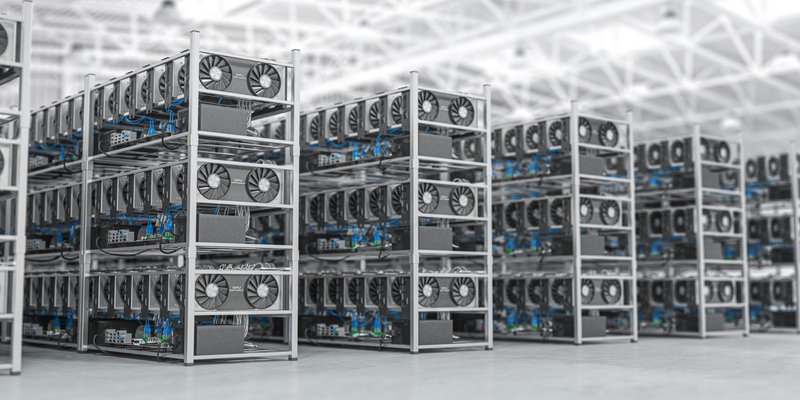
Single-Phase Immersion Cooling to Meet Increasing Demands
Single-phase immersion cooling technology represents the leading technique to address the challenge of rising data center temperatures. High-performance computing trends will only increase in the coming years, requiring innovative techniques to handle the heat. Liquid immersion cooling technology is battle-tested and head and shoulders above the alternatives on several fronts – greater upfront affordability, easier operations, less maintenance.
With single-phase immersion cooling, servers are installed vertically in a coolant bath of a hydrocarbon-based dielectric fluid that’s similar to mineral oil. Like its two-phase counterpart, heat is transferred to the coolant through direct contact with server components. But, unlike two-phase immersion cooling, the coolant does not boil off. Instead, it remains in the liquid phase (hence the name) and is cooled via a heat exchanger in a cooling distribution unit (CDU).
Single-phase immersion has proven to be cost-effective and highly reliable leveraged by GRC for a decade now. Our ICEraQ and ICEtank solutions are now helping some of the world’s largest cloud, enterprise, government, education, and telecom organizations grow while future-proofing their data centers.
A GRC Cooling Solution That Slashed an Energy Bill in Half
Geosciences firm CGG had a 10,000 square foot, legacy data center that had been mothballed because of things such as limitations of the available power envelope and an extremely inefficient Power Usage Effectiveness (PUE).
By partnering with GRC and leveraging our patented liquid immersion cooling technology, ICEraQ, CGG was able to re-energize its aging data center with immersion cooling that literally doubled its capacity for hundreds of servers and slashed its energy bill in half! The transition took place in only a few weeks without any downtime, no expensive air processing equipment, no building modifications.
Liquid-Based Cooling Beats Air Cooling
The underlying principle underpinning both single – and two-phase immersion cooling technology is that liquid is a much better heat conductor than air. What makes both these immersion-based systems superior is the proximity of the liquid to the heat source. Furthermore, both options require no chillers, CRACs, CRAHs, or raised floors. Bear in mind though, that there are significant differences between the two technologies.
Air cooling requires several extremely large, complex, and expensive pieces of machinery necessitating the need for more power, driving up costs further. And then there are maintenance costs. Liquid cooling systems, like GRC’s, perform better than traditional air cooling systems. And not just slightly better… by a wide margin.
Liquid immersion cooling is a simple, yet extremely effective technique that costs less and works in nearly any location. That same simplicity also makes liquid immersion cooling fundamentally more efficient. Capital expenditure goes down, as is the case with operational expenses when compared with air cooling systems.
Liquid can pull heat away from servers over a thousand times better than air. Dated air cooling systems eat away much of a data center’s budget pushing air through the servers. Immersion cooling hums away at a small fraction of the cost, cutting out 90% of your electricity bill.
These immersion cooling tanks also protect expensive IT equipment against dust and other air particles with the liquid acting as a buffer. Air cooling systems, on the other hand, bring with them more contaminants.
The biggest advantage of immersion cooling over air cooling, however, is in raw performance. Air cooling starts to lose its grip above around 15 kW per rack. Modern hardware for artificial intelligence and other applications can easily exceed that. Super-efficient immersion cooling can manage 100-200 kW per rack. It’s thus not hard to see why more and more computationally intensive data centers are moving to liquid immersion cooling.
More Powerful GPUs Heats Things Up
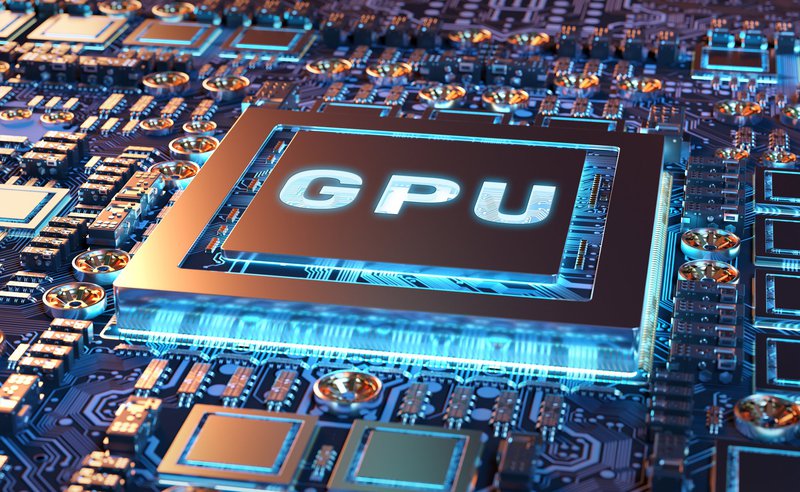
In addition to central processing units (CPUs) becoming more and more powerful, there’s a trend towards massive graphics processing units (GPUs) that devour energy and generate intense heat. In fact, manufacturers like Intel, NVIDIA, and AMD are producing chips that chew through half a kilowatt each! That’s several times more than what chips consumed just a few years ago.
People are increasingly using GPUs and other powerful processors for new uses like artificial intelligence (AI). Throw several GPUs onto a server, then several servers onto a rack, and you have tens or hundreds of thousands of cores to cool. High-performance computing is forcing data centers to pivot to new and more effective cooling technologies, simply because old air cooling methods just cannot handle the volumes of heat generated heat.
Put plainly, more powerful GPUs spell the end of air-cooled data centers. Now is the time to prepare for the future and liquid immersion cooling is that future.
Liquid Immersion Cooling is Future-Proofing
Financial, medical, scientific, and other applications will only put greater demands on data centers and their cooling systems. Immersion cooling offers the solution, effortlessly dissipating heat of over a hundred kilowatts per rack, more than enough even for modern GPU workloads.
Outdated air cooling technology can hardly keep up with today’s needs, let alone tomorrow’s. And given the direction in which the IT industry is rapidly heading, liquid immersion cooling (with the power and flexibility to handle present and future computational demands) is becoming a critical piece of the infrastructure puzzle.
Switch to Liquid Immersion Cooling With GRC
High-density server rooms are increasingly common as businesses increasingly rely on cloud-based solutions, requiring greater computing power and storage capacity. Data center challenges are mounting fast, fueled both by the rise of next-gen applications, super-hot, largely GPU-driven applications like AI. It’s thus critically important to leverage cost-effective cooling technology that not only affects performance, but generates savings, environmental benefits, and far larger capacity.
With processor-heavy computational loads, there’s an urgent need for a viable alternative. That solution is liquid immersion cooling. The tremendous efficiency of liquid immersion cooling in comparison to previous approaches to cooling makes it an easy call and you’ll immediately see much larger cooling and computing capacity, easier maintenance, lower CAPEX, and OPEX.
As temperatures rise inside data centers, operators too need to rise to the challenge and find workable, more power-efficient alternatives to traditional air-cooling. Tech giants, including Intel, Facebook, and Google, have already thrown their weight behind liquid immersion cooling technology, while industry and government are working to make this standard. If all of this has you thinking: this sounds like the future of data centers, then you are on the right track. The next step is to get in touch with GRC, we are, after all, the immersion cooling authority!