
Rapidly evolving digital technology is central to society, bringing with it several opportunities, challenges, and criticisms. Sustainability ranks high because of the tech industry’s impact on climate change, electronic waste (e-waste), water waste, and other notable problems. For instance, digital technology consumes great amounts of electricity, and many tech products end up as e-waste.
However, there are steps data centers and tech companies can take to improve sustainability, including the use of immersion cooling. The sooner you invest in sustainable technologies, the more you’ll do for the planet—and for your bottom line. Let’s explore how digital technology impacts the environment and how you can make a difference while saving time and money.
Digital Technology Uses Polluting Electricity
The digital economy is on an unsustainable track to use excessive amounts of electricity. The power sources are often dirty and emit vast amounts of carbon. Data centers alone account for a sizable chunk of total electricity use, although the numerous digital devices used throughout our economy are adding to this disaster.
It takes more electricity to manufacture devices than to use them, and tech manufacturing places a denser demand on the grid than other industries. For example, producing a regular phone emits 55 kilograms of carbon, and the processors behind data centers are far more resource-intensive. In fact, digital technology may account for a fifth of total electricity production in 2025.
While much of this power goes to obvious uses like servers and storage devices, a substantial amount supports tasks like cooling. Air-cooling systems are inefficient and can use a larger share of a data center’s electricity than the IT equipment itself. Therefore, upgrading your data center’s cooling method to liquid immersion is a practical way to improve tech sustainability.
As technology advances, new challenges will arise. For instance, blockchain and the metaverse require more computational and electrical power than predecessor technologies—the cryptocurrency Bitcoin uses as much power as entire countries. Tech companies must start adopting more sustainable practices that use renewable sources of energy.
Technology Produces E-Waste
Digital technology also produces unsustainable amounts of e-waste. While digital products represent only 2% of the products we buy, they are densely packed with toxins and produce 70% of toxic waste. Outdated devices get thrown into landfills and other waste sites, often releasing toxic materials into the environment. Data centers also produce a particularly large amount of e-waste because many of these facilities lack a recycling program.
To minimize e-waste, get the maximum amount of use out of each part. With newer and faster digital devices coming out often, it’s common to replace old parts rather than repair them. However, repairing parts can extend their life and use. You should also take steps during device installation to protect parts. For example, the environmentally friendly cooling oil in liquid immersion systems protects IT infrastructure against corrosion and wear.
Measure the amount of digital products going into your facility against the amount going out for disposal, recycling, and repair. Also, aim to minimize the use of products containing environmentally sensitive materials. Equipment designed from the start to be readily recycled prevents e-waste.
Digital Technology Wastes Water, Minerals, and Land
Using digital tools also wastes scarce natural resources including water, minerals, and land. Water is of utmost concern, with much of its consumption coming from electricity generation. Companies in many industries are starting to pay attention to their water use, and data centers should too—they already use more than half a billion cubic meters of water each year. Finding a system that saves both water and energy is essential.
Liquid immersion removes server heat more efficiently than previous cooling systems and runs servers with fewer resources. Liquid-cooled data centers also use half the electricity of air-cooled ones, eliminating much of the water waste while improving performance. Green Revolution Cooling’s (GRC) liquid immersion can cool even high-density installations without a water chiller, which results in massive water and energy savings.
Land and minerals are also endangered by digital technology. Land is initially mined for minerals used to build digital equipment, but it too is ultimately consumed—data centers need more land as they grow. The e-waste produced often goes back into the land rather than being recycled. Both the mining and disposal of uncommon substances for digital technology can occur under hazardous conditions. Poor countries usually suffer the most.
Instead of degrading the world’s water, land, and minerals, use sustainable technologies like liquid cooling that preserve resources. GRC’s immersion cooling uses less real estate than conventional data centers and contains long-lasting hardware. By upgrading, you’ll be protecting the earth’s scarce assets.
Invest in Environmentally Sustainable Practices Early

Companies should modify their digital behaviors to reduce their unwanted effects on the environment. The sooner you start, the better results you’ll see over the long term. An easy first step is to put environmental responsibility policies in place. These will clearly define your standards and aims and help you track key performance metrics to ensure your policies are working.
Next, show your green credentials by using eco-friendly resources and building to environmental construction standards. For instance, some data centers source their electricity from renewable resources like fuel cells and solar energy, which reduces emissions. Or, you can use energy-efficient products that require fewer resources, such as GRC’s liquid immersion cooling solutions.
Don’t build a data center facility that’s bigger than your needs. Instead, use technologies that meet your current demand and can scale with you as you grow. In addition, recycle the heat produced by servers by redirecting the heat to where it’s needed, such as to warm the building’s air and water.
Finally, you can invest in the newest innovations in battery technology, which are more efficient than older models. This move complements liquid immersion cooling, which has far lighter electrical requirements and therefore cuts back on batteries and emission-producing generators.
Liquid Immersion Cooling Makes Data Centers Sustainable
With digital technology now taking the spotlight for emissions and climate change, it’s time for the data center industry to do its part. Liquid immersion cooling is next-gen cooling technology that submerges servers in an electrically safe fluid.
Immersion uses only 5% of cooling electricity compared to traditional data centers, which instantly eliminates unnecessary resource use and toxic byproducts. It also eliminates half the total electricity used by the data center and cuts out vast amounts of water waste.
GRC’s game-changing solutions improve data centers’ sustainability while reducing costs. For instance, liquid immersion keeps hardware running longer by protecting your electronics. This, in turn, minimizes e-waste, mineral extraction, and disposal into incinerators and other polluting outputs.
Liquid immersion cooling systems also cut electricity and water use tied to global warming, making the cooling solution a favorite among eco-friendly tech companies.
Use Digital Technology Sustainably With GRC
Digital technology isn’t going away, and neither is environmental concern about its effects. Each year data centers take on a more prominent role in the economy, which puts the industry on course for a reckoning with sustainable practices.
There are several ways data centers can become more sustainable, but immersion cooling stands out as the best way to reduce the use of electricity, carbon, water, and other resources. With GRC’s liquid immersion cooling, you can finally use servers, storage, networking, and other digital technologies in a responsible manner. This efficient system cools data centers without the destructive waste of previous cooling methods.
Use this green solution to increase the sustainability and performance of your data center. , to get started.
Data centers accounted for 1.8% of the United States’ total electricity consumption in 2014, according to the U.S. Department of Energy. That translates to some 70 billion kilowatt-hours! Smaller data centers are major contributors to this consumption. In addition to housing around 50% of all servers, their energy management is generally quite poor.
Energy efficiency must rank as a key priority for data centers, as it affects everything from the wider environment to an enterprise’s bottom line. This wide ripple shows just how important it is for data centers to be constantly innovating and improving their systems.
GRC’s liquid immersion cooling offers a revolutionary way to cut operational expenses, while also delivering greater efficiency gains than the alternatives. Immersion cooling uses a safe-for-electronics liquid coolant instead of air; removing heat at a fraction of the cost to your budget.
This cooling method is literally over a thousand times more effective at conducting heat away from servers than conventional air cooling; which translates to substantial direct and indirect cost savings.

Why Data Center Efficiency Matters
Quite simply, inefficiency wastes money and natural resources. The physical efficiency of operational processes dictates how well data centers can convert electricity into computational capacity—and thus into profit.
As customers demand more powerful processing, the only viable way to keep energy use in check is to increase efficiency. Data centers have begun to improve this metric in the past few decades; however, they have faced challenges in developing it further. We’re reaching the crucible, where conventional data centers can no longer meet the computational needs of the economy.
At the same time, as data centers struggle to perform better, energy efficiency matters even more. Facilities are growing in number and size. They’re using more electricity and producing more emissions just as these sustainability issues have captured the public’s attention.
Efficiency directly correlates to variables that matter to both data centers and the public: financial and environmental health. Data centers need to find ways to raise efficiency. Enter GRC’s liquid immersion cooling solutions.
Upgrade to Liquid Immersion Cooling
Data center cooling represents one of the main energy uses and operational costs dragging down efficiency. As such, it also represents a key area for implementing massive upgrades to operational efficiency.
The reason cooling takes such a large percentage of data center electricity and finances is that conventional air cooling is extremely inefficient. It’s a legacy solution that still works, yes—but not well enough to meet modern demands. Newer and more effective methods like liquid immersion cooling are here to bridge the gap.
Improvements to cooling technology account for much of data center efficiency upturns in recent decades; for instance, the development of cold-plate and rear-door heat exchanger technologies. This process continues with GRC’s liquid immersion cooling, which brings unprecedented efficiency to the data center industry.
Immersion cooling only consumes around 2-3% of the energy a data center needs to function. By contrast, a legacy cooling system may double or even triple the energy that data centers use.
There’s no better way to see the effects of energy efficiency than to look at an extreme case. A scientific supercomputer project systematically measured the different available cooling options and found GRC immersion cooling to be much more efficient than all the alternatives.
Using liquid immersion, the Vienna Scientific Cluster cut costs while increasing computational ability. They reduced their infrastructural requirements and resource consumption and built the strongest supercomputer in Austria!
Improve Cost-Effectiveness
When you upgrade to a more energy-efficient cooling solution, your data center runs on less electricity, which cuts the costs of operation. For example, switching to GRC’s immersion cooling can reduce your operating expenses by as much as 50%!
Your entire data center becomes more lightweight, enabling your business to save on the total capital budget too. You don’t need to buy wasteful generators and batteries for an overbuilt air cooler. The liquid immersion tanks fit into a compact space, minimizing floor use.
There are other financial benefits to liquid immersion cooling. It reduces wear on parts, so you spend less on maintenance and replacement. However, the main advantage of its extreme efficiency is in the smaller electricity bill: immersion cooling uses a mere 5% of the electricity that air cooling requires.
The cost advantages of liquid cooling combine with savings from other efficiency improvements that can be implemented throughout the data center. For instance, if you use more energy-efficient processors to save on electricity, you’ll see synergistic cost savings from these processors and immersion cooling.
Safeguard the Environment
Energy efficiency is measured by the sum of environmental resources needed to achieve the desired end, such as powering data centers. Using unnecessary resources isn’t only about financial costs. It also drives damaging extractive activities, such as strip mining, and increases the burden of fossil fuel emissions on the environment.
While some forward-thinking data center operators have already taken it upon themselves to make their facilities environmentally sustainable, this trend is quickly becoming the norm. Public opinion and government regulations are increasingly pressuring the industry to minimize their resource utilization.
The use of innovative technologies that simultaneously serve the financial interests of businesses has emerged as the best way to safeguard the environment. This lets you improve the energy efficiency of your data center and go green while simultaneously cutting back on expenses. Incidentally, your servers will run faster, quieter, and more reliably too!
GRC’s liquid immersion cooling glides by with half as much electricity as other cooling options. This is because liquids transport heat far more effectively than air. It also allows you to productively reuse server heat for various environmentally friendly (and profitable) functions. Moreover, immersion-cooled data centers require less water from the environment—in some cases, none at all.
These same synergies have ecological benefits equal to their economic ones. For example, energy-efficient processors running in liquid immersion cooling tanks will slash carbon waste, water waste, pollution, and other negative environmental impacts that data centers must consider.
Boost Data Center Efficiency With GRC
With enhanced efficiency, it’s possible to boost profits while also doing your bit for the environment. Every step you take to make your data center more energy-efficient will result in a substantial return on investment. And one of the biggest steps you can take right now is to upgrade to liquid immersion cooling.
Immersion cooling uses less electricity to deliver immensely more computational power. GRC has the history, global presence, and expertise you need to increase performance, while saving your data center half its total operational costs. Enjoy these results now—get started with GRC today.
We’re all familiar with the saying “waste not, want not.” Well, we believe it applies to the data center as much as it does anywhere else. Data center management requires careful oversight of resources. Yet, sadly, these resources are often squandered. So, what can you do to minimize waste? You can improve your operational efficiency to trim waste and get the most out of your resources. This goes for natural resources like water and energy, as well as human-made resources like electronics. Additional resources to care for include real estate space and even server heat.
Unfortunately, all of these types of waste harm the environment. It is becoming increasingly apparent that the planet’s resources are limited so data centers have a real responsibility to use only what they need. Lest we forget the two other resources that data centers can’t afford to waste: time and money.
Several complementary approaches can trim the fat in data centers. These methods include the accountable administration of resources and the use of innovative technologies like liquid immersion cooling. These efficiency boosts will decrease waste while improving performance and profitability.
What is Data Center Management?
Data center management is the oversight of server operations and resources including data and hardware as well as the facility itself. This activity includes the use of tools like data center infrastructure management (DCIM) software.
The facility has to keep serving customers without interruption. Personnel must plan for normal capacity and unforeseen events. This field encompasses the management of IT equipment as well as electrical and cooling systems. The good news is that GRC’s efficient immersion cooling systems improve reliability and affordability while protecting the environment!
Most Data Centers Waste Massive Amounts of Electricity
One of the biggest sources of waste in data centers today is their electricity. Believe it or not, around half of a facility’s electricity is wasted on traditional air cooling! Thankfully, there are now far more efficient liquid immersion cooling solutions that will certainly benefit data center management.

A data center’s power usage effectiveness (PUE) indicates how efficiently it uses electricity. Cooling and servers are the two main consumers of a center’s electricity. Each generation of servers is more powerful than the last and requires more resources to handle more devices. Using sustainable immersion cooling is an effective way to keep up with customer demand for computational power without blowing your energy budget.
This wasted electricity not only costs money, but it also requires power generation from often unclean energy sources like coal. These inefficient cooling systems pollute the environment upsetting customers, partners, regulators, and the public.
GRC’s liquid immersion cooling solutions literally cut electricity use in half. And it’s not magic, it’s science. Even better, this green technology is already keeping millions of tons of carbon emissions out of the environment while saving data centers money.
In essence, electricity’s financial costs and ecological tolls are two sides of the same coin. By cutting the amount of fuel you burn in half, you save both money and the environment. That’s what we call a win-win. Forward-thinking data center managers understand that modern liquid cooling technology is the best weapon to combat electricity waste.
Data centers often cool more than necessary to prevent overheating. This adds 2% to the electricity bill for each degree (Fahrenheit) of waste cooling. Liquid immersion cooling automatically protects servers, eliminating this energy and financial drain.
Data Centers Burn Through Electronic Waste
Protecting servers extends their lifetime and keeps electronics out of landfills. All too often, data centers replace servers and other hardware before it’s even necessary. This contributes to electronic waste (e-waste).
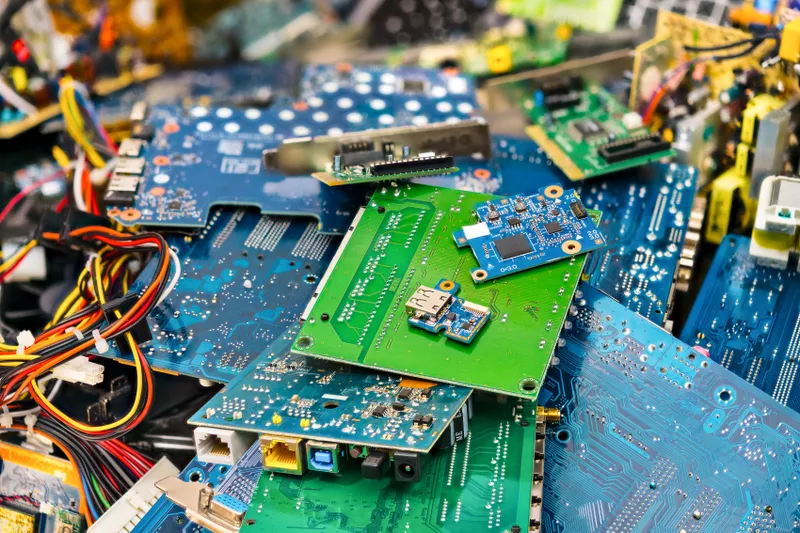
Remote management and preventive maintenance can aid in extending the life of hardware. The more information you have, the better equipped you are to prevent electronics from turning into waste. DCIM software supports this functionality, as do cooling tanks from GRC.
Another way that data centers can reduce e-waste is to recycle and resell old hardware. Rather than just discarding it, repurpose hardware in a different form. Even when a server is no longer usable by a data center, that device can still work for other purposes or have its valuable components extracted and reused.
Still, an ounce of prevention is worth a pound of cure. Liquid immersion cooling protects your servers from the elements and reduces the number of moving parts, further extending equipment life. Single-phase immersion uses an extremely simple design, ensuring that your hardware survives longer.
At a time when cloud providers and other data centers are under increasing scrutiny for their environmental effects, immersion offers a much more sustainable cooling solution. It uses 95% less energy than traditional air cooling, resulting in a much smaller carbon footprint. Not to mention, the eco-friendly liquid coolant has zero global warming potential.
There are also many less obvious consequences of choosing less efficient cooling technology. For example, air cooling requires bigger buildings with more electrical infrastructure which adds to the environmental toll. Contrastly, liquid immersion is a lightweight solution that results in minimal environmental impact. In fact, it helps by reducing e-waste.
Hyperscalers and cloud services of different sizes are touting immersion as the cooling system of the future. Governments will increasingly support—and even legally require—the cloud data center industry’s move towards carbon neutrality via incentives and regulations.
Water is a Resource Wasted by Data Centers
Environmental sustainability demands that data centers manage the natural resources they use. Water is one of the main natural resources that we must manage responsibly, as we literally cannot live without it. Data centers have recently come under scrutiny for their immense water consumption.
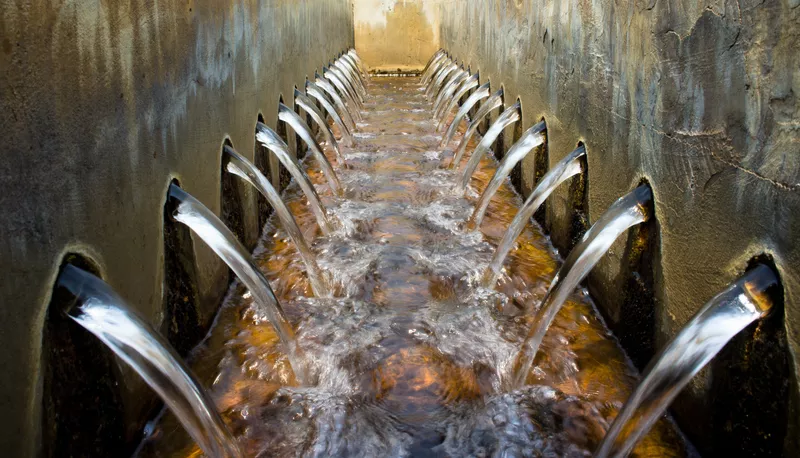
American data centers use 1.7 billion liters of water per day, with data centers in other countries not far behind. Less than 1/3 of data centers even bother to measure water use. Measuring the amount of this resource going through a data center is the first step to reducing waste.
Furthermore, water is needed to generate the electricity data centers use, so they cause substantial indirect water waste as well. Cutting their electrical bill reduces water waste, carbon emissions, and costs.
The smart way to cut electricity and water waste, carbon emissions, and cost is to use liquid immersion cooling. This technology uses resources more efficiently. In fact, GRC’s liquid immersion can cut water use by 89%!
Water usage efficiency (WUE) measures how well data centers use water. It’s comparable to power usage efficiency (PUE). Having information on the data center’s resource consumption enables smarter management and less waste.
Data Centers Waste Space
Data center real estate is a scarce commodity. It costs money regardless of whether it’s bringing any in or not. How can a data center make each square foot more profitable? By using denser installations of servers and other hardware and minimizing unnecessary equipment.
Liquid immersion cooling uses much less space than air cooling, and it allows for denser server installations because of its larger cooling capacity. Immersion cooling doesn’t require the same space that air cooling needs for additional generators, battery backups, and air processing equipment.
Data centers can also identify inactive servers and repurpose or sell them, consolidating applications on active servers. This move can save millions of dollars while reducing wasted space, e-waste, electricity waste, and maintenance costs.
Older machines take up two to three times the space of newer machines while using more electricity. This is why data centers should focus removal efforts on older hardware. Streamline operations with the latest servers and cooling systems to maximize the utility of floor space.
Waste Heat Can Now Be Reused!
Servers produce waste heat that, in turn, causes other problems. Companies often spend a lot to remove the heat from the building which can negatively impact the environment. Here’s the kicker: that waste heat can actually do a lot of good.
Unlike conventional air cooling that misdirects waste heat into the environment, GRC’s immersion systems capture that heat for your data center to recycle and redirect it to be used more productively.
Data centers are already employing waste heat for exciting and profitable applications. One of the more popular uses is district heating, where data center heat is redirected to heat buildings throughout the city! Data center heat is also used for various agricultural enterprises from growing tomatoes to raising fish. The heat output from servers can be used to generate electricity, which can even be used to power the cooling systems themselves!
Of course, for these inventive ways to recycle heat to work, your data center must use liquid immersion cooling to efficiently transport heat from IT equipment.
Downsize Data Center Waste With GRC
Data centers waste massive amounts of resources, including electricity, hardware, water, floor space, and heat. Fortunately, smart data center operators, including many hyperscalers, are already going green with environmentally friendly solutions like GRC’s liquid immersion cooling.
Eliminate unnecessary resource use for the good of us all. Waste costs everyone. Every kilowatt-hour, every liter, every square foot that is not serving you detracts from your bottom line and the only home we have.
Switch to ultra-efficient liquid immersion cooling from GRC and you’ll instantly cut waste. Liquid immersion uses half the electricity, costs half as much, and drastically reduces carbon emissions and water waste. It also frees up valuable data center space, enabling you to earn more. Ready to take the plunge? Talk to GRC today!
As part of GRC’s 2022 Liquid Immersion Cooling Awareness Month, we are proud to share this guest blog from Mohsen Al-Aqeil, Managing Director with GRC partner Al Marjeia Trading Group. Thank you, Mohsen, for sharing your perspectives with our LICAM audience!
It’s difficult for the deadly wildfires to go undetected now that climate change is no longer a laughing matter; we’ve all seen the devastation caused by global warming all over the world. In 2019, the entire world witnessed the wildfire that struck Siberia, which was considered the third largest wildfire in the twenty-first century covering an area of more than 7,000,000 acres. Roughly the size of Belgium, the wildfire affected air quality and disrupted air travel in nearby cities, with smoke reaching as far as Alaska and the western coast of Canada. That is in addition to the Arctic fires or the so-called “zombie fires,” all of which are directly related to the significant influence on the climate brought on by the rise in greenhouse gas emissions globally.
Energy, despite the critical role it plays in the global economy, has the highest percentage of green-house gas emissions, according to the EU Environment Agency. Yet, with today’s lifestyle, it’s unavoidable to accidentally harm mother nature while going about one’s daily business. Demand is on the rise and all businesses are trying to satisfy this demand by applying more technology and constant modernization of the whole supply chain to ensure seamless operations. However, without a strong ICT foundation, advancements in the ICT sector’s technical facets like artificial intelligence, machine learning, blockchain, virtual reality, 5G, etc. will only be possible in theory. According to an Enerdata analysis done in 2018, ICT, as an industry, accounts for between 5% and 9% of total world power consumption, while Lancaster University showed in a study completed in 2021 that it is responsible for between 2% and 3.9% of total global greenhouse emissions.

The Data Center is the essential physical component of the burgeoning and ongoing Industrial Revolution 4.0. According to a Supermicro research study done in 2018, data centers account for around 3% of worldwide power consumption, and 2% of total global greenhouse emissions. Cooling is not only an energy-intensive component of data center life, it is also a critical aspect in managing the excessive heat created by IT equipment and providing flawless operation, since hot spots are regarded as the primary “electronics killer”. With the increased demand for digital services, it has become more difficult for traditional cooling systems to accommodate the exponential growth in server density to cope with the aforementioned applications from AI/ML, Big Data, IoT, VR/AR, and so on, complicating how data centers are designed and run.
But thankfully, there is a solution: liquid immersion cooling, which drastically simplifies how a data center is now conceived and built by eliminating the need for energy-intensive air conditioners, huge generators, and raised floors.
There are two techniques to liquid immersion cooling: single-phase and two-phase. In a system that uses the two-phase immersion cooling system, servers are enclosed inside a bath of specially manufactured fluorocarbon-based liquid. Heat from the servers readily boils the surrounding fluid since the fluid has a low boiling point of roughly 49°C. The boiling of the liquid induces a phase transition from liquid to gas. The vapor is then condensed back to liquid by water-cooled condenser coils fitted into the top of the sealed racks. The condensed liquid drips back into the bath of fluid to be recycled through the system.
In contrast, servers in a single-phase immersion cooling system are mounted vertically in a coolant bath of a hydrocarbon-based dielectric fluid akin to mineral oil. Heat is transmitted to the coolant by direct contact with server components, as with its two-phase cousin. However, unlike two-phase immersion cooling, the coolant does not evaporate. Instead, it remains liquid and is cooled by a heat exchanger in a cooling distribution unit (CDU). When we speak single-phase immersion cooling, who else but GRC “THE IMMERSION COOLING AUTHORITY” comes to mind?
GRC has made dependability one of the ICEraQ® and ICEtank® systems’ defining characteristics since pioneering single-phase immersion cooling in 2009. Both of these systems require very little maintenance and can reliably cool 200 kW/rack using the patented dielectric coolant, ElectroSafe®, which is completely inert, non-conductive, non-flammable, non-corrosive, and does not need to be replaced during the life of a normal data center.
Data on hardware reliability for ICEraQ and ICEtank systems demonstrate a considerable improvement in Mean Time Between Failures (MTBF) as compared to standard air-cooled data centers. This growth is due in part to strong collaboration with important OEM partners like Dell, Hewlett Packard Enterprise, 2CRSI, iXSystems, AMAX, and Supermicro.
THE COMPETITIVE ADVANTAGE OF SINGLE-PHASE OVER TWO-PHASE
When it comes to running expenditures, hardware dependability, complexity, and up-front costs, single phase immersion cooling has an advantage over two phase immersion cooling, in addition to the environmental element, which is the purpose of this article Single phase immersion cooling, notably GRC’s ElectroSafe the proprietary coolant, is Hydrocarbon-based, giving it an advantage over Fluorocarbon-based two-phase coolants such as 3M Novec in terms of Global Warming Potential (GWP). For those who are unfamiliar with the prior phrase, the United States Environmental Protection Agency (EPA) introduced Global Warming Potential to facilitate comparisons of the global warming consequences of different gases. In more detail, it is a measurement of the amount of energy that 1 ton of a gas will absorb over a certain amount of time in comparison to 1 ton of carbon dioxide (CO2). The greater the GWP, the more a particular gas heats the Earth in comparison to CO2 during that time period. For GWPs, a 100-year time frame is typically chosen. GWPs provide a uniform unit of measurement, allowing analysts to add up emissions estimates for various gases (for example, to construct a national GHG inventory) and policymakers to evaluate emissions reduction prospects across sectors and gases.
Last but not least, it is understood from a logical standpoint that mankind will continue to run in the race of technology since connectivity is highly vital nowadays just to meet the needs of modern everyday living. But we can do it sensibly with little or no impact on the environment since we still have to live on Earth and bear the consequences until we are able to conquer other planets, at which point we should seriously consider whether we want to start afresh.
People around the world use cloud services to collaborate, share photos and videos, and handle myriad other tasks in their daily lives. Most know what a cloud service is these days—but not nearly enough people know how the cloud servers we rely on can benefit from liquid immersion cooling.
Immersion cooling is a simple yet extremely effective system for removing heat from servers. It functions exactly as the name implies: by immersing data center servers into cool liquid to decrease temperature and prevent overheating. This technique allows for more processing power and modular growth—while at the same time lowering the economic and ecological costs of data centers.
Cloud data centers stand to gain as much as edge data centers and other server hosts from this groundbreaking advance in cooling technology. Sustainable cooling innovator GRC offers liquid immersion cooling tanks ideal for cloud hosts. The system saves money and increases server density for public cloud, private cloud, and hybrid cloud deployments of all sizes.
More Processing
The price cloud data centers pay for their electricity is rising as demand skyrockets. Already one of the largest energy consumers in the world, the data center industry markedly increases consumption each year to keep up with society’s growing digital habits. Remarkably, data centers use billions of kilowatt-hours per year—and hyperscalers have literally doubled their energy use in recent years.
As the demand for compute load by cloud data center clients continues to increase, conventional air cooling systems are unable to keep up. Air does not cool efficiently enough—and we are nearing its limits. While processor power and heat emissions increase with no end in sight, the only option is to turn to liquid immersion cooling instead.
Immersion is the result of decades of improvements to cooling efficiency. In fact, modern immersion cooling can handle 368 kilowatts per rack—over ten times what a traditional air-cooled rack can take! The entire liquid cooling setup delivers more cooling while using less electricity than a normal server fan alone.
Processing power has become a limiting factor for many cloud hosts. But immersion cooling actually increases the processing power available to cloud data centers by decreasing electrical power consumption. This enables the processor-intensive services customers have come to expect.
New data centers can future-proof their cloud servers with immersion cooling, which removes constraints on processing power. Even cloud data centers that have already been built with air cooling can take advantage of immersion cooling by transforming themselves into mixed-density sites.
Modular Growth
Immersion cooling works in self-sufficient tanks that let you expand operations at your own pace. This contrasts with legacy air cooling, which forces you to make extensive plans and capital expenditures upfront. The modular approach allows you to add as many or as few racks as you need, whenever you need. It’s capacity planning made easy.
GRC cooling tanks are engineered and manufactured to use right away. No complicated, expensive, time-consuming builds—just deployment on an as-needed basis. You can have immersion racks up and running months before a conventional cooling system would be available.
Cloud data centers can use GRC’s ICEraQ to fit as many racks in a small space as necessary to serve their customers. The high power density of each rack lets you build just the right amount of capacity without wasting floor space or other resources.
These ICEraQ modules work in any environment. From a self-contained 24U rack to 4x42U Quads, immersion cooling adapts to different-sized data centers with ease. For example, a cloud host may deploy several ICEraQ Quads before later expanding to meet rising customer demand.
Lower Cost
One of the biggest issues in any cloud data center decision is cost. It’s a competitive market, so hosts must consider every penny when making business decisions. Between upfront and maintenance costs, cooling is one of the largest investments a data center can make.
Immersion cooling from GRC offers cloud data centers lower upfront and ongoing costs. By eliminating the extensive air-conditioning equipment and building criteria of conventional cooling, liquid immersion cuts capital expenditures in half. In the same manner, operational costs are cut in half thanks to immersion’s cooling efficiency and easier maintenance.
As a result of lower capital and operating expenses, the total cost of ownership for liquid-cooled cloud data centers is approximately half that of conventionally air-cooled centers.
Hyperscalers—the largest cloud operators—are intently focused on reducing costs. When you’re running thousands and thousands of servers, it’s critical not to overpay for electricity. The wrong cooling system can quite literally cost you millions of dollars. It’s no coincidence that hyperscalers are investing in liquid immersion cooling.
Better for the Environment
Using single-phase immersion cooling, your data center can cut out 95% of its cooling energy use and 50% of total maintenance and energy costs. This also translates into fewer carbon emissions. Making the single-phase immersion upgrade is therefore the most compelling choice you can make for sustainability.
With a liquid immersion cooling approach, cloud data centers can also recycle server heat for other applications. Some cloud operators already reuse their waste heat to grow and sell fresh produce, further offsetting their operational costs. Data centers can also pump the heat from their servers into district heating systems to warm the populations they serve.
GRC considers the environmental implications of its technologies from start to finish. GRC’s immersion cooling methods use an eco-friendly coolant with zero global warming potential. The non-toxic coolant stays within the tank and doesn’t react with other materials. In sum, immersion cooling vastly outperforms conventional cooling in terms of conserving natural resources.
Convenient
In addition to outperforming air cooling in terms of processing power and eco-friendliness, GRC’s liquid immersion cooling is also engineered with convenience in mind. It offers several features specifically crafted to make operating cloud facilities easier.
With quick installations via rack-mounted service rails and simplified maintenance, this technology improves the lives of technicians. The tanks are designed for quiet operation, and cable management is included within the elegant systems.
Servers fit in the rack to stand waist-high, unlike conventional air-cooled racks. This makes the immersion racks more readily accessible for maintenance staff. Another convenient feature is the cloud-based and local automatic monitoring, which issues remote alerts before problems get out of hand.
Furthermore, GRC’s immersion tanks work with data center infrastructure management (DCIM) and building management system (BMS) software. As such, cloud operators can remotely maintain the tanks alongside other equipment.
The entire immersion rack includes redundant pumps and control systems, and a coolant with enough thermal capacity to prevent downtime—even during a power outage. Operators can further rely on included on-call support from GRC’s immersion cooling experts.
Improve the Cloud With GRC
The cloud is growing at an unprecedented rate, and innovations continue to elevate its capacity for both user experience and profit margin. Cloud servers now stand to gain more processing capacity at a lower cost through liquid immersion cooling.
This game-changing technology alleviates many of the challenges facing cloud companies. Gone are the days of high upfront costs and budget constraints, as you can grow incrementally with the help of modular tanks at half the total cost. As a result, liquid immersion is much faster and more affordable to install than conventional air cooling.
Even more promising is that we now have the solution to building truly green data centers. Liquid immersion uses a mere fraction of the electricity, water, carbon, and other resources that legacy cloud server cooling demands.
Immersion cooling has become downright necessary for the cloud. Bring your operations to the forefront with GRC’s unprecedented immersion cooling technology. Discover silent, environmentally friendly, virtually boundless cooling to serve your customers better than ever. Tell us about your cooling needs, and we’ll happily curate a winning solution for you and your data center!
Managers of data centers around the world are scratching their heads to figure out how to make their facilities more sustainable. This is because a staggering 75% of data centers see sustainability as a competitive advantage. Such a notable change in perspective comes in response to the growing environmental problems caused by data centers and the IT industry. To achieve this lofty yet necessary goal, industry leaders must learn to reduce waste while increasing efficiency to keep businesses running without negatively impacting the environment.
Meanwhile, data centers will soon consume one-tenth of all the electricity we produce! In the process, they eject millions of tons of carbon emissions per year. The IT sector is overtaking the economy in both size and resulting environmental problems.
The biggest contributor to data centers’ environmental impacts is their inefficient cooling systems. That’s right, the energy wasted when blowing cold air over servers has a devastating effect on the planet. That’s why a growing number in the industry are excited about a new technology: single-phase liquid immersion cooling.
This green innovation by GRC makes sustainability a snap. It provides superior data center cooling at a lower cost while protecting the environment. Sustainability shouldn’t feel like a punishment. Now you can increase your profits while making operations safe for everyone.
What is Single-Phase Immersion Cooling?
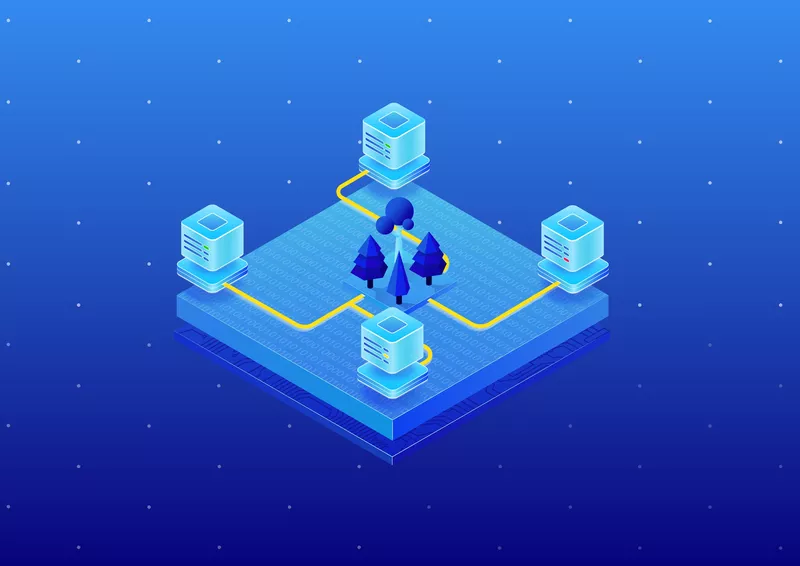
Immersion cooling refers to the act of immersing servers in a bath of coolant, taking traditional air cooling out of the mix entirely. Currently, it comes in two varieties; single-phase and two-phase. Single-phase immersion cooling is the more economically viable of these options. As its name implies, this technique involves a single phase of matter for the coolant—liquid.
Conversely, with two-phase cooling, the coolant alternates between liquid and gas. While this is an interesting concept, it hasn’t panned out well in practice due to its cost, complexity, and environmental impact.
The advantages of single-phase immersion cooling include its extremely simple design, which results in lower CapEx and OpEx and higher reliability. The liquid pulls heat out of the servers efficiently while also serving as a protective barrier against corrosion and other hazards. This efficiency is measured by the “power usage effectiveness” (PUE), where a score of 1 is ideal and a score of 2 indicates that the data center wastes half its electricity on cooling. Single-phase liquid immersion scores a near-perfect 1.02 to 1.03. Older cooling technologies fare far worse, scoring in the range of 1.6 to 2.0.
In essence, single-phase immersion cooling is today’s leading technology to cool data center hardware.
Single-Phase Immersion Cooling CAN Enable Sustainability
In addition to its other advantages, such as larger cooling capacity and lower cost, single-phase immersion cooling offers a useful solution to improving sustainability. GRC’s single-phase cooling efficiently removes 100% of server heat. Even better, it emits only a fraction of the energy and byproducts of older cooling technologies, making single-phase the clear choice for sustainability-minded organizations.
With single-phase immersion cooling, your data center can cut out 95% of its cooling energy use, and 50% of its total maintenance and energy costs. That also translates into fewer carbon emissions. Needless to say, upgrading to single-phase immersion is the smartest choice you can make for sustainability.
Due to the higher energy efficiency of liquid immersion, companies using GRC’s products can win grants from governments and utilities. Data centers can also save on floor space while reducing electrical infrastructure.
Furthermore, single-phase immersion only uses green products so it poses virtually zero threat in terms of global warming. The coolant is safe for the planet. Two-phase immersion systems, on the other hand, use substances with much higher global warming potential than even carbon and methane and are chemically reactive.
Whether you compare single-phase immersion to two-phase or any of the older cooling methods, single-phase comes out on top as the cooling solution for sustainability every time. It uses fewer resources to accomplish more cooling, enabling data centers to safely serve consumers long-term.
Data Centers With Single-Phase Have Even More Environmental Benefits
The implementation of single-phase immersion cooling produces widespread environmental benefits. Data centers using this technology decrease their e-waste. Parts last longer and the cooling system is simpler so there’s less need to throw away electrical and electronic equipment.
Submerging servers in the liquid coolant keeps debris, moisture, hot spots, and oxidation at bay. Immersion-cooled servers are less subject to problems with solder joints or electrostatic discharge. You also no longer need server fans, eliminating a source of vibrations. All of these issues influence how long your hardware lasts. Liquid immersion cooling keeps parts running longer.
Practically any resource in the data center stands to benefit from single-phase cooling. GRC’s immersion cooling can decrease carbon footprints by 40%, real estate footprints by 30%, and water use by an astounding 8 million gallons per megawatt!

This cooling technology will allow society to advance to 5G, IoT, AI, and other innovations without breaking the bank or harming the environment. It’s a high-performance, eco-friendly solution that’s come along at just the right time.
Additionally, single-phase immersion cooling enables server heat to be recycled for other purposes, such as district heating. This introduces possibilities like sustainable agriculture and is even starting to be mandated by regulations. It’s almost too good to be true. Not surprisingly, leading data centers are already taking the plunge!
Go Green With GRC
Now’s the time to go with GRC’s environmentally sustainable single-phase liquid immersion solution. This technology eliminates much of the need for electricity in data centers and its unsightly byproducts. Unlike its counterparts, it uses materials and functions to mitigate the risks of global warming. And it even extends the longevity of IT equipment to trim down e-waste.
GRC’s single-phase cooling also lets you recycle waste heat to be productive. However you look at it, this technology represents a brilliant new era for sustainable data centers. Immersion cooling protects the environment and your investment. Deploy more servers, save money, and make your data center and our planet greener. Talk to GRC today!
All data centers want a cooling system that does more for less, so let’s see how the alternatives stack up. Many know of traditional air cooling, but few know of a breakthrough technology called liquid immersion cooling that is now taking the market by storm. The prevalence of liquid immersion cooling is forecast to grow by more than six times in the next five years! Furthermore, it turns out that liquid immersion cooling not only competes with air cooling —it beats it.
Data centers invest heavily in the purchase and maintenance of their cooling systems, so it pays to understand the differences between solutions. There are several elements to consider including initial costs and direct and indirect expenses over time. Going with a liquid immersion cooling system like GRC’s saves data centers money in the short and long term. Established data centers are already finding the technology a breeze to use and an invaluable asset to their companies.
One of the main advantages of immersion cooling is its ability to handle much denser server installations. Eventually, data centers will need to turn to immersion cooling since processors are becoming more power-hungry each year. It’s also easier on the environment, safer for hardware, and more versatile in terms of where you can use it and which applications it supports; making it the front-running choice for data centers across the world.
Liquid Cools Data Centers Far More Powerfully
The main reason why immersion cooling is better for data centers is that it simply does its job better than previous systems. GRC’s liquid immersion cooling gives data centers over 10-20x the watts per square foot. While air can only handle 100 to 200 watts per square foot, liquid weighs in at 2,200 watts per square foot. Imagine a rack density of 184 kilowatts!
As data-intensive technologies like artificial intelligence and the Internet of Things become more widespread, processors are increasing in number and speed. They produce more heat that requires powerful immersion cooling. For data centers that have exhausted their power envelopes, immersion cooling rolls back power use to enable further expansion of servers.
Each year, accelerators are drastically increasing their wattage. Blowing air over servers simply isn’t enough to keep pace. It’s only a matter of time before liquid immersion cooling is a necessity for data centers. Immersion can cool as much computation as you care to install.
Liquid Immersion Cooling is Better for the Environment

Liquid isn’t only better for the data center, it’s also better for the planet. Immersion cooling cuts a jaw-dropping 95% of cooling electricity. It also curbs most water use while substantially decreasing carbon emissions and other harmful substances. Green is in GRC’s name for good reason. It’s almost too easy with liquid immersion cooling.
What makes this new technology so environmentally friendly? On a basic material level, liquid cools hardware much more efficiently than air can cool server systems. Therefore, liquid uses fewer resources to achieve the same level of cooling.
This leaves more resources where they belong—in the ground. They can then be used for more important applications in the future, making immersion cooling a sustainable solution. With sustainability dominating the conversation in both the general public and in boardrooms around the world, finding innovative cooling solutions for data centers is a pressing matter.
Immersion cooling is better for the environment across the board, in both the grand scheme as well as the data center’s locality. By producing less noise and making servers easier to maintain, people working in the data center can enjoy a safer, more pleasant working environment.
Immersion cooling also works more efficiently as you only need to cool the servers not the entire center. Data centers with air cooling often turn the temperature way down, which produces more pollution from excessive electricity generation. It also worsens server room conditions for staff. Liquid immersion avoids these problems entirely by delivering its cooling precisely where needed; saving money and precious resources.
Immersion Cooling Protects Servers
Data centers experience several challenges in their attempts to keep their servers running optimally. Liquid immersion cooling protects servers against many commonly occurring problems. If a data center uses air cooling, it introduces the risks of corrosion, oxidation, humidity, dust, and pollution. However, the liquid coolant in GRC’s tanks coats servers in a way that renders these particles harmless.
With immersion cooling, you also eliminate the need for server fans that contribute to wear and breakdown in air-cooled systems. Server fans vibrate and decrease the durability of your expensive hardware. Liquid immersion, on the other hand, eliminates this threat to give you more reliability and server uptime.
There are even more silent predators lurking in the data center. However, they are no match for liquid immersion. Servers exposed to high temperatures can undergo damage. So, of course, air-cooled data centers shell out loads of cash (and rely on global warming-inducing resources) to at least try to prevent it. They also suffer from hot spots due to uneven cooling.
Contrastingly, liquid cooling keeps the servers safe from hot spots and excessive temperatures. Temperatures throughout the tanks remain at safe levels, only varying a couple of degrees Fahrenheit. Therefore, data centers utilizing this method experience fewer hardware failures, less downtime and data loss, and fewer dissatisfied customers.
Immersion Cooling is More Versatile
The demands placed on today’s data centers are more varied than ever. Edge data centers can expose hardware to unpredictable and dangerous conditions. Server density in enterprise and cloud data centers varies immensely as well. To mitigate all of the hazards that can arise at any moment, you need solutions that work and work well. Immersion cooling simplifies all aspects of the data center from design and construction to maintenance.
Immersion cooling works anywhere and in any type of data center. It doesn’t have the upper limits on watts that comes with air cooling. Liquid immersion cooling also doesn’t require the same complex and expensive infrastructure that limits air cooling.
Without any need for raised floors or elaborate air handlers, immersion cooling works in enterprise and edge data centers, unused rooms, and shipping containers; anywhere you desire.
GRC offers liquid immersion cooling systems suitable for specific use cases, including enterprise and cloud, edge, high-performance computing (HPC), and crypto. These tanks also work for any other data center, as they can be installed at will and handle as much compute density as you can throw at them. Simply put, the versatility of liquid immersion makes it more valuable for today’s data centers than any other cooling technology on the market.
Immersion Cooling Costs Less!

With its more powerful cooling, sustainability, versatility, protection against server damage, and other advantages, you may expect immersion cooling to cost more, but it actually costs less! GRC’s liquid immersion cooling lowers both CapEx and OpEx by 50%.
Not only does it cost less, but you can add immersion cooling in small increments. With no need to commit to large deployments, it’s easy to manage your budget while expanding at your own pace.
The cost savings in liquid immersion stem from its naturally faster cooling abilities and its incomparable simplicity. When you install immersion cooling tanks, you don’t need to spend nearly as much on accessories as you would for traditional air cooling systems. The straightforward design doesn’t rely on an army of air conditioners and backup power supplies; meaning you’ll spend even less on maintenance and operations. On the flip side, real-world customers save, on average, half of their upfront and ongoing costs by using GRC’s liquid immersion.
This is next-generation cooling technology that offers data centers a win-win solution.
Stay Cool With GRC
Liquid immersion cooling is the standout choice for data centers of any size looking to protect their investments, the planet, and their bottom line. Today’s consumers are more informed than ever, and they have proven time and again that they will sacrifice convenience to support companies that support them where it counts. Outsmart the competition with GRC’s market-leading immersion cooling solution. Let’s talk!
Any successful business has to maintain control over its operational costs, and data centers are no exception. Power-hungry processors are proliferating. Each year, more cores are running at faster speeds increasing data centers’ energy consumption. The result? Rapidly growing OpEx.
Among the main operating expenses for data centers are electricity and equipment maintenance. Both of these are drastically reduced by the breakthrough cooling technology known as liquid immersion.
Liquid immersion cooling like GRC’s can cut the electrical expenses for cooling by an amazing 95%! In addition to the reductions in OpEx, you’ll also spend less on hardware and real estate thereby decreasing capital expenses.
Liquid Immersion Cooling Increases Energy-Efficiency

Immersion cooling cuts operational costs by working far more efficiently than air cooling. In fact, liquid immersion cooling can conduct heat away from servers 1,200 times more efficiently than air cooling. This efficiency generates direct and indirect cost savings.
The Power Usage Effectiveness (PUE) standard measures the efficiency of a data center’s energy use. Immersion cooling fares much better than air in terms of PUE. This translates to air-cooled data centers wasting much of their budget on inefficient cooling systems while liquid-based data centers increase their efficiency and eliminate sizable operating expenses.
Immersion cooling is also more efficient than alternative cooling methods like rear door heat exchanger (RDHx) and direct-to-chip. The industry has worked over the past decades to enhance liquid cooling technologies, paving the way for GRC’s modern cooling solution.
With liquid immersion, your servers will run cooler without fans at all, trimming yet another 10-20% off electrical costs. The entire liquid immersion cooling system uses less electricity than air cooling server fans alone!
Not only does immersion cooling technology cost less than other cooling systems, but because immersion cooling is so energy-efficient, governments and utilities have given grants to companies using GRC’s immersion systems to offset some of those costs. You can see how much immersion cooling can save for your specific data center’s operational expenses, as well as capital expenditures.
Single-Phase Immersion is Simple

Single-phase immersion, the main type of liquid immersion cooling, is extremely simple with only three moving parts. This simplicity contributes to operational efficiency and offers a host of other advantages. The system works more reliably and it costs less. You can also install it anywhere; even in the middle of the desert, if you so choose!
We’d say it’s as easy as baking a cake, but honestly, it’s even easier. Just place the entire server setup in a circulating liquid, and the liquid will carry away as much heat as you want. You can use any brand of regular server or there are even more operational cost savings if you opt for servers specifically designed for immersion.
Gone are the days of limited, wasteful cooling systems. Immersion keeps your servers running for years as they pose less risk of dust, oxidation, and vibrations.
Since immersion is so simple and efficient, it doesn’t require the same supporting equipment as air cooling. Say goodbye to expensive generators, battery backups, computer room air conditioners (CRACs), and computer room air handlers (CRAHs)! This frees up capital and real estate to be used for other operations.
Single-phase immersion makes capacity planning simple. Instead of complex calculations and uncertain estimates of what you might need down the line, you just start with what you need now and expand as necessary. Immersion supports data center installations of all sizes.
The modular cooling pods don’t need extensive containment structures or raised floors and can be installed in mere days. Immersion keeps your CapEx and OpEx down while freeing you to deploy invaluable systems anywhere, any time.
Increases Reliability
The simplicity of immersion cooling improves the reliability of a data center. With it, IT equipment lasts longer and requires maintenance less often. For added reliability, GRC’s immersion cooling systems incorporate remote monitoring functionality. This increases your uptimes through measures such as preventive maintenance and automatic alerts.
Reseat issues and vibrations from server fans and other problems fade to black. Even on the rare occasion a server needs maintenance, it’s easy with the immersion tank support rails. In the event of a power failure, the liquid coolant’s own heat absorption is enough to keep the servers running safely long enough to course correct.
Unlike air cooling, immersion cooling doesn’t need humidity controls. The IT hardware is already protected from humidity by the coolant itself. Data centers using immersion also don’t need expensive air cooling infrastructure.
The reliability of liquid immersion cooling translates to less maintenance and fewer losses in terms of server downtime, customer satisfaction, and your bottom line. Total data center operational costs can literally be cut in half through GRC’s ICEraQ!
Decrease the Cost of Cooling With GRC
Whether we’re talking about operational costs, capital expenditures, or the total cost of ownership, GRC’s liquid immersion cooling drastically cuts costs while improving performance. For industry leaders who want to stay ahead of the curve, the choice is clear.
Trim your costs with the energy efficiency, simplicity, and reliability of liquid immersion cooling; the future-proof solution. The sooner you make the leap, the more you’ll save. We’re confident the only regret you’ll have is not making the switch sooner. Get in touch with GRC now!
Data centers power the productivity and entertainment applications we have come to rely on every day. Given this fact, it is no exaggeration to say the entire economy (and life as we know it) depends on the uptime and performance of data centers. However, data centers differ widely in their designs and cooling needs.
The cooling capacity of a data center controls both how much processing power it can host and how much value it can produce for you. Better cooling systems yield longer uptimes and faster computing. Overheating poses one of the most serious threats to the stability and functionality of a data center. Any server failure from overheating has negative consequences for your customers and your revenue streams.
Each type of data center deserves its own cooling system designed to meet its unique needs. The main categories of data centers include private enterprise data centers, public cloud and hyperscale data centers, colocation data centers, and edge data centers. There are also special-purpose data centers that handle high-performance computing (HPC) and cryptocurrency.
Each type of data center has its own specific requirements for cooling, servers, and networking equipment. Yet, they all would benefit from liquid immersion cooling. GRC makes liquid immersion cooling systems that can be deployed for all types of data centers and provide superior cooling performance for less money.
Enterprise/Hyperscale/Cloud Data Centers
Many of the biggest and most economically important server installations now work in enterprise, hyperscale, and cloud data centers. An enterprise data center works for a single large organization and can be either on-premise or off-premise. Cloud data centers host servers for multiple clients, while hyperscale centers accommodate the largest hosts like Google, IBM, Amazon, Facebook, and Microsoft. Hyperscale facilities range from around ten thousand to ten million square feet each.
Enterprise, hyperscale, and cloud data centers pack in dense computational resources that emit more heat than traditional air cooling is equipped to handle. They need capable cooling systems to keep up with all the heat they produce. That’s where GRC’s liquid immersion systems come in.
Enterprise and cloud data centers need more processing power than ever, as businesses are now running hundreds of applications each. To get a feel for what liquid immersion can do, imagine operating 168 dual-processor servers that use a mere 5% of the power used for air cooling. Liquid immersion cooling enables you to run far more IT hardware for the same electrical cost, offering more optimal performance without negatively impacting the environment.
Immersion cooling not only frees up energy use, but it also frees you to build out as you see fit. You can modify as necessary without committing too much capital. Moreover, it takes just weeks to install.
Colocation Data Centers
A colocation or “colo” data center strikes a compromise between an enterprise data center and a cloud data center. Instead of an organization hosting its own servers or renting a cloud host’s servers, the organization rents space for its own servers and related equipment.
This offers the benefits of owning your own servers as well as being able to host them at a fast and secure site. Plus, it’s more affordable than a private enterprise data center and enables the use of multiple geographical sites at once.
You can either rent an entire colo data center or just rent rack space within a facility. The colo company is responsible for the facilities, including cooling, electricity, bandwidth, and the building itself. This frees up the customer to focus on the IT equipment.
Colocation data centers have somewhat similar cooling needs to cloud data centers. Both of these categories host servers for multiple clients in a well-provisioned site. Colo companies can gradually add immersion cooling capacity to keep pace with customers renting server space.
Edge Data Centers
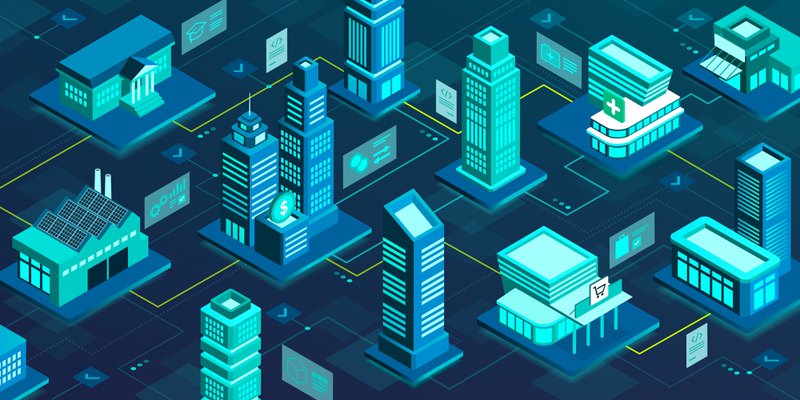
Edge data centers feed instant responses to the Internet of Things (IoT) devices and other applications. Edge data centers differ considerably from cloud data centers. The edge refers to locations close to where people live and work, rather than distant centralized facilities. This restricts edge data centers to smaller areas with fewer (if any) technicians on-site. Edge servers then act as fast relays for the larger centralized data centers.
The spread-out locations and lack of infrastructure make edge data centers tougher to cool. For example, real estate and electricity may cost much more for an edge site in a busy urban area. Other edge sites face harsh environmental conditions, further complicating efforts to keep systems cool.
Fortunately, there are purpose-built immersion cooling systems for the edge such as the GRC ICEtank data-center-in-a-shipping-container. You can install or move this virtually anywhere, yet it contains impressive computing power comparable to what you can exert in a centralized cloud data center.
Liquid immersion cooling for an edge site does away with the need for complex and expensive (and failure-prone) air cooling systems. You don’t need airflow for the ICEtank and the servers are protected by the liquid against the effects of air, water, and dust.
High-Performance Computing Data Centers
While computing performance has increased dramatically over the years, the term “high-performance computing” (HPC) refers to the harnessing of computer power such as using supercomputers or computer clusters to solve the most complex computational problems in science, engineering, and technical business. Applications of HPC can include designing medicines or predicting oil and gas reservoirs.
As you might expect, cooling requirements for high-performance computing are extremely difficult to meet. HPC involves the use of supercomputers containing power-hungry processing units. These can pack fifteen times more heat into a space than standard cooling can ventilate. As a result, HPC has largely abandoned air cooling, setting a precedent that less intensive computing will follow as processor power continues to increase.
High-performance computing data centers require premium cooling even more than standard data centers. The solution can be found in GRC’s liquid immersion systems for HPC. They handle over 100 kilowatts per rack to accommodate the supercomputing that air just can’t manage.
The immersion units don’t need raised floors or the massive electrical infrastructure of air cooling, so you can now conduct high-performance computing without the restrictions. Liquid can dissipate 100% of the heat from HPC. Liquid immersion cooling is also silent and easy to maintain, so technicians find it a pleasure to use.
Cryptocurrency Mining Data Centers
The meteoric rise of cryptocurrencies like Bitcoin, has brought with it an equally accelerated rise in their processing needs. Mining farms have given way to custom data centers for cryptocurrency. Next year, we’ll see gigawatts of new crypto mining capacity in Texas alone funded by private and public institutions. A single immersion-cooled crypto-mining data center will have 46,000 computers.
Blockchain hashing for crypto and other purposes uses more electricity than some entire countries. In the process, crypto mining expels tons of heat. For crypto mining to be profitable, you have to control costs. Conventional air cooling can use up around as much electricity as the actual processors themselves. The massive processing loads of cryptocurrency result in unmanageable cooling costs.
The practical response to this energy-intensive activity is to use GRC’s liquid immersion cooling for blockchain. Whether in a data center utilizing the HashRaQ, or in a shipping container using the HashTank, immersion makes it feasible to mine crypto or do any other sizable blockchain computing.
Cryptocurrency is driving the wider adoption of liquid immersion cooling systems. We’re heading in the direction of all crypto-mining using immersion cooling. And eventually, the same will go for less intensive data center types.
Data Centers Are Still Air-Cooled…but Until When?
Industry trends are converging to force data center operators of all sorts to transition from conventional air cooling to more energy-efficient and sustainable methods. Increasing CPU power use, heat generation, cost of power, regulatory compliance, and green IT initiatives merge to push us to rethink data center cooling.
This is where immersion cooling comes in, as a new technology that is a thousand-fold more efficient than traditional air cooling. While most data centers are now air-cooled, and people think of it as the default, the days of using air cooling are numbered. Liquid immersion is spreading through the market as a more affordable, sustainable, and effective cooling solution.
GRC’s Conversion-to-Immersion Program lets you upgrade any brand of server from air cooling to immersion cooling. Whatever combination of hardware you use, you can step into the future to deliver faster performance for less cost. Liquid-cooled servers also last longer and decrease emissions.
Liquid immersion cooling makes sense for countless use cases. If you have high energy costs or need high rack density, you already have a convincing case for immersion. Whatever the case may be, it all boils down to one simple truth: the future is liquid.
Find New Ways to Cool Down Your Data Center With GRC
GRC produces the industry’s go-to liquid immersion cooling systems. Whether you run an enterprise data center for your organization, a colocation, or a cloud or hyperscale data center to serve the public, liquid immersion cooling can transform your business and your bottom line.
It’s only a matter of time until the data center industry as a whole has switched from air cooling to liquid cooling. Facilities that transition sooner stand to earn more profits and lessen their environmental impact, leading to a more successful future for their business and the world as a whole.
When you’re ready to join the growing momentum and upgrade to liquid immersion cooling, contact the experts. Talk to GRC now!
The Internet of Things Explained
The Internet of Things (IoT) encompasses the connection of electrical devices to the internet; whether they be standard computers, heart monitors, or traffic sensors. This simple, yet immeasurably important, concept is transforming industries far and wide. More and more devices are joining the Internet of Things resulting in a deluge of data for the data center industry to tackle.
One of the main ways that data centers are handling the flood of traffic is with liquid cooling systems. Immersion cooling removes over a thousand times more server heat than previous air cooling methods, enabling data centers to stay ahead of the IoT curve.
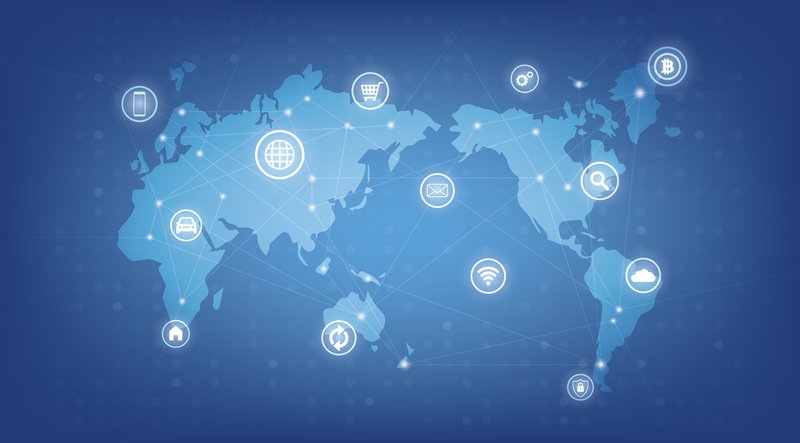
Just how big is the Internet of Things? Believe it or not, our usage will top 75 billion connected devices by 2025. That’s three times the number of devices there were a mere three years ago.
Regardless of type, purpose, or location, all IoT devices collect sensor data and send it over the network to data centers. Those data centers then process and distribute the information. IoT enables the data center industry to automate processes, enhance sustainability, and manage hardware.
Automation
Like most organizations and businesses today, the data center industry is joining in the mass migration to automation. By automating as many procedures as possible, data centers can increase their productivity while decreasing their costs. The IoT contributes to this data center automation.
The transition of data centers has been made easier by the affordability of IoT devices. Thousands of devices can be installed in a data center to monitor and manage resources. As a result, the entire data center becomes more autonomous, as it’s able to maintain itself without human intervention.
Some tasks the data center industry can automate include identifying and fixing technical problems and delivering applications. By allowing IoT devices to handle the more mundane tasks, expensive human labor is reserved for use only when absolutely necessary.
Sustainability
Globally, data centers use hundreds of terawatt-hours of electricity per year—more than the entire United Kingdom! The industry uses 3% of the planet’s power, and that number is rapidly rising. To counteract the negative environmental effects of this heavy energy use, data centers are turning to the Internet of Things.
Fortunately, the IoT can transform data centers into environmentally friendly establishments. The two keys to this transformation lie in the production and consumption of electricity. Furthermore, data centers can maintain their hardware to prevent electronic waste.
Data centers now use IoT sensors to detect variations in temperature and humidity. Preventing overheated servers is important to keep them running efficiently rather than endlessly burning through resources. IoT sensors can also find leaks, power surges, and other threats to the efficient operation of IT infrastructure.
When it comes to reducing energy use and waste, the best step that a data center can take right now is to upgrade its cooling systems to liquid immersion. New liquid immersion systems from GRC operate using a fraction of the electricity required by other systems —and for a fraction of the cost.
On the production front, data centers can use renewable resources (like water and solar power) in place of fossil fuels. To achieve greater sustainability, some hyperscalers have already committed to solely using renewable electricity.
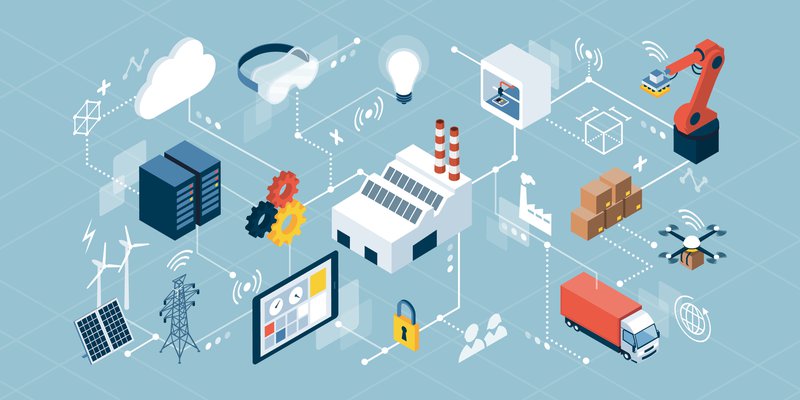
Management
Data centers have to manage not only their sustainability but also their hardware. With the advent of the Internet of Things, monitoring and maintaining a data center need no longer be tedious or costly. Since these buildings are already networked extensively, it makes sense to connect additional devices for data center management.
Sensors connect servers, routers, and other equipment to send real-time information. This information includes the physical location of devices for security, as well as ambient measurements (like temperature) to ensure that servers don’t overheat.
Liquid immersion cooling keeps servers running at a more even temperature while using less energy than traditional air cooling. This leaves more of the power envelope available for data center infrastructure management (DCIM).
In conjunction with DCIM, the IoT gives data centers longer uptimes, higher energy efficiency, lower operational costs, and less risk of losing equipment. Sensors can even operate wirelessly to offer managerial data including charts and 3D visualizations.
Storage
The Internet of Things produces many zettabytes of data. Sensors on the billions of IoT devices expel streams of data, much of which is processed by cloud servers in the data center. The data center industry has to respond with reliable infrastructure to deliver fast and secure information processing. To meet the challenge of this extraordinary compute demand, data centers need to cool the servers efficiently.
Liquid immersion has proven itself to be the top choice for cooling data centers. For the heaviest workloads surpassing the threshold of conventional air cooling systems, GRC’s innovative pods reduce heat, wear, and cost.
Big Data and the Internet of Things
The amount of data now surging through data centers is substantially larger than even just a few years ago. Earlier processors, storage, and cooling systems can’t keep up with Big Data—much of which stems from the Internet of Things. This forces data centers to invest in innovative technologies.
With IoT devices working around the clock, data centers must maintain enough capacity to pump through the information fluxes. They need enough storage devices on the network to both hold data during analysis and maintain output.
Considering all of those storage devices—along with the processors, co-processors, and other hardware—it just flat out makes sense to use more efficient cooling systems. Luckily for you, liquid immersion cooling is the most efficient cooling system in which a data center can invest.
Conclusion: Keep Your Data Centers Green with Immersion Cooling
With the ongoing expansion of the Internet of Things, oceans of data are pouring into (and ideally, safely through) the world’s data centers. Big data requires more storage capacity, more servers, and more cooling. The only economical, environmentally friendly cooling solution fit for the era of IoT is liquid immersion cooling.
GRC’s edge data center cooling works in remote locations where IoT devices require processing. Being in a remote location speeds up processing. However, installing conventional air cooling systems in such locations is difficult, to say the least. Liquid immersion cooling not only provides unbeatable performance, it’s also easy to install anywhere.
Whether you have servers at the edge or in any other data center, install liquid immersion cooling to cut energy use and your total cost in half! A greener planet and longer-lasting hardware—that’s what we call a win-win! Contact GRC to learn about immersion cooling and what it can do for you today.